Schools
A Closer Look: Pleasanton Schools Do Well in STAR, But Achievement Gaps Persist
Though STAR test results showed overall improvement in Pleasanton schools, there is room for improvement.


Local schools scored well above the state average in all areas of the California STAR tests.
But some achievement gaps persist, especially between high achieving and low achieving students. That gap grows as the kids go into their high school years.
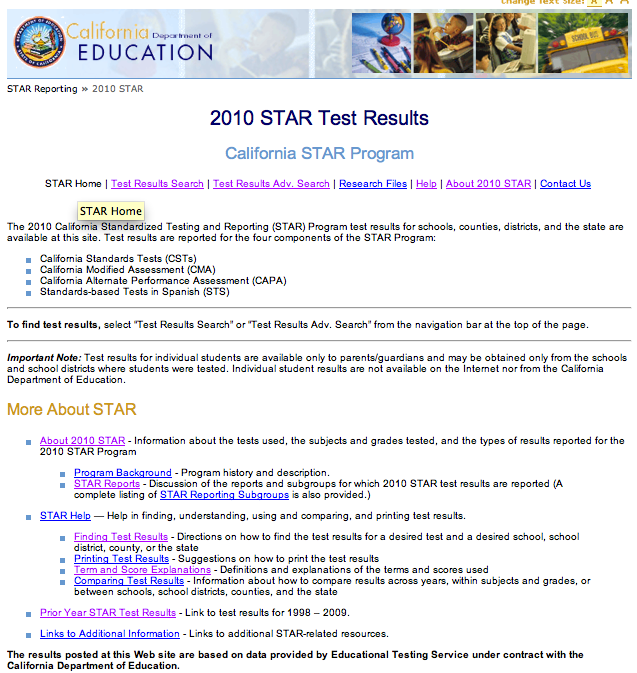
The state department of education released the results of the 2010 Standardized Testing and Reporting (STAR) program last week. These scores are used to calculate the Academic Performance Index (API), which measures a school's performance on a year-to-year basis. The scores will also affect the adequate yearly progress (AYP), another way of measuring yearly progress at the federal level.
Find out what's happening in Pleasantonfor free with the latest updates from Patch.
During this week's district meeting, officials discussed areas of improvement.
According to the test results, 80 to 90 percent of elementary students in Pleasanton are scoring in the advanced and proficient levels in mathematics. Additionally, students who are the most high achieving, for example seventh and eight graders who take advanced classes such as Algebra 1 and Geometry, do extremely well.
Find out what's happening in Pleasantonfor free with the latest updates from Patch.
About 90 percent of seventh graders and 70 percent of eight graders who take Algebra 1 scored in the advanced and proficient categories.
But the bulk of those who wait to take Algebra and Geometry in high school, are scoring more in the proficient and basic levels. Only 12 percent of tenth graders and 4 percent of eleventh graders who took Algebra 1 scored at advanced and proficient levels.
Similarly, only 19 percent of tenth graders and five percent of eleventh graders who took Geometry achieved the advanced and proficient scores.
Superintendent Parvin Ahmadi acknowledged this drop-off in scores going into high school for those who delay harder math courses. Ahmadi said the scores show a need to prepare students for algebra 1 at the middle school level. She said, this preparation should start even in the elementary school levels.
"We know that when we keep waiting and waiting, keep watering down the curriculum ... it doesn't really work," she said.
Ahmadi said a new math curriculum that focuses on concepts and the big picture will help get elementary school kids ready for advanced math classes. The new curriculum is currently being implemented in the second grade and will be rolled out to the following grade levels.
The board also took a look at the performance of minority groups. Similar to state numbers, local results show a gap between white and Asians students and black and Latinos students.
In the advanced Algebra 1 seventh grade class or the Geometry 8th grade class, there were no African American or Latino students.
But when looking at the general math scores of seventh graders, there are about 46 percent African American and 47 percent Latinos who scored in the advanced and proficient levels.
Cindy Galho, Assistant Superintendent in Educational Services, said the district should identify those higher performing students who may be placed in the advanced classes.
Officials say it's important to keep test results in context. Ahmadi said it was important to look at a variety of measures to get a full picture.
"When you look at the data, it's important to look at what it tells you, but it doesn't tell you everything," said Ahmadi.
Get more local news delivered straight to your inbox. Sign up for free Patch newsletters and alerts.