Health & Fitness
The Sad Truth
Feelings like anger and frustration seem to like to buffer–to shield?–the essence, the fulness of sadness until my whole being switches to willingness and says, "Okay, let's go there."

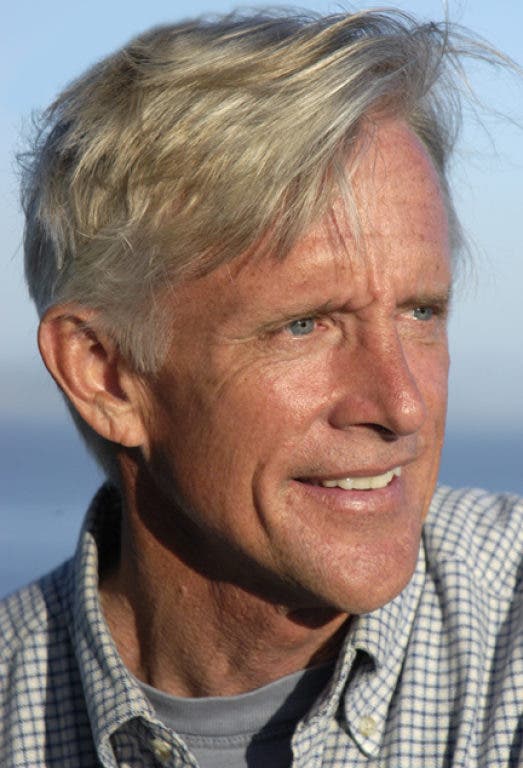
I hit the deck in sadness and tears recently after sitting in on a very good lecture given by the CRC Health Group and Dr. Robert Navarra, a national speaker, author and therapist with expertice among many things, in couples counseling for families where addiction is present.
Tears because after the lecture–and for about 24 hours–I accepted my own invitation to revisit some sadness about my family–the one I was born into and the one I helped procreate–and the years we were struggling to find our way down into and through the ongoing addiction recovery process.
I'm always amazed at how sadness seems to bond–to hide within the womb of other emotions as if to protect itself from full exposure. Feelings like anger and frustration seem to like to buffer–to shield?–the essence, the fulness of sadness until my whole being switches to willingness and says, "Okay, let's go there."
Find out what's happening in Redwood City-Woodsidefor free with the latest updates from Patch.
Once there and the, "front lines" of my emotional makeup lessen...soften...and give birth to what else wants to express itself, sadness permeates my entirety and my physiology can no longer be duped. A short lived feeling that I won't survive this unadulterated dose and state of sadness gives way to a liberation not much different from my observation, (memory?) of a new born baby wailing with the angst and ecstacy of his new reality.
All systems are go with stress hormones being replaced by endorphins and the proverbial question surfaces, "Why don't I acknowledge this healthy feeling more often?"
Find out what's happening in Redwood City-Woodsidefor free with the latest updates from Patch.
So what did the good doctor say to evoke all of this good, touchy-feely stuff? He spoke about an evolution and renaissance in addiction couples counseling. The learned doctor spoke of a new focus on seeing healing coming from a systems approach, a new appreciation for how addiction needs to be seen as the personal responsibility of the addict, but also through the lenses of the relationships in the family that may be perpetuating suffering for everyone in the family.
The onus, the arrow is taken off the bullseye of the addict and addiction is seen for what it is; a dynamic infrastructure of relationships and complex interplay of an entire system begging for the same liberation of healthy emotional expression.
Many...most families where addiction exists don't survive as a cohesive unit because of our culture's former penchant for compartmentalizing by identifying the symptom, "the problem" and nailing it down–if treatment is even sought.
And that's where my anger, frustration and then profound sadness surfaced. Where was this smart doctor–this integrated, holistic approach 50 and then 25 years ago when my families needed it? What were we, what was health care in general thinking in those years? Why wasn't the efficacy of this systems approach self evident to mental health professionals then?
Well, as the recording artist, Seal sings in one of his songs, "Life–it don't always live that way."
The fact that addicted families have four times the divorce rate compared to families without this distinction may be changing and changing soon, I hope.
And so I am happily optimistic after this experience and hearing Dr. Navarra that more integrated, holistic, system approaches are being implemented and on the horizon instead of our tendency to keep doing the same things and expecting different results. With applied brain science and a deeper appreciation for interrelatedness and these kinds of approaches, whole, addicted families are now emerging in tact, healthier and better for the experience.
Thank you, Dr. Navarra for this unanticipated and genuinely human experience of deep, authentic feeling because you decided to stand up and speak and because I decided to be in relationship with you in your audience. Thank you.
Dr. Herby Bell is a chiropractor, Recovery Coach, owner and director of Recovery Health Care, an integrated approach to addiction treatment in Redwood City, California. For more information please call 650 474 2121 or email:herbybell@me.com