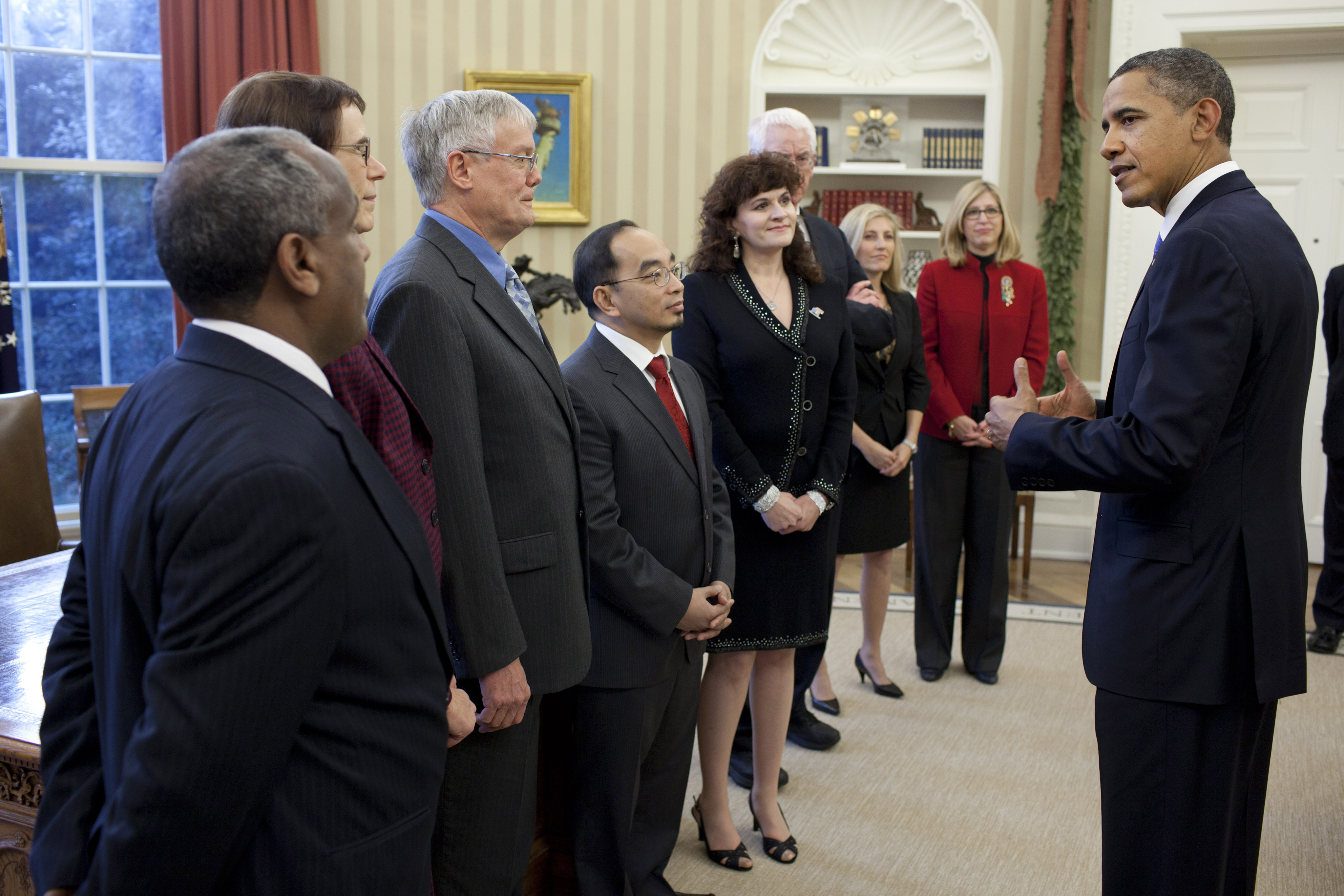
The presentation outlined a successful summer research internship at the school
Cañada College Professor Amelito Enriquez was honored last month at the American Society for Engineering Education Conference for his presentation detailing a partnership between the college, San Francisco State University, and the National Aeronautics and Space Administration (NASA) Ames Research Center that provides internship opportunities for Cañada students.
The paper, titled “Promoting Academic Excellence Among Underrepresented Community College Engineering Students through a Summer Research Internship Program,” received the Best Paper Award from the ASEE Two-Year College Division. The annual conference was held June 23-26 in Atlanta, Georgia.
Find out what's happening in Redwood City-Woodsidefor free with the latest updates from Patch.
The partnership between the two schools and NASA was developed through a three-year grant funded by the NASA Curriculum Improvements Partnership Award for the Integration of Research (CIPAIR) program. The 10-week summer research internship program provides opportunities for freshmen and sophomore students at Cañada to participate in engineering research under the supervision of SFSU faculty and a graduate student mentor.
Research topics covered during the internship include performance-based earthquake engineering, circuit design for biomedical applications, embedded system design, and transistor reliability issues in nano-scale circuits.
Find out what's happening in Redwood City-Woodsidefor free with the latest updates from Patch.
Enriquez said the program was developed to study its impact on student retention. “A recent report prepared by the President’s Council of Advisors on Science and Technology, indicates that the United States needs to produce one million additional STEM (Science, Technology, Engineering, and Mathematics) professionals in the next decade in order to retain its historical preeminence in science and technology,” Enriquez said. “The report proposes that addressing the retention problem in the first two years of college is the most promising and cost-effective strategy to address this need.”
John Paulino, a former Aragon High School graduate, spent two summers in the internship program while studying at Cañada. He is now studying mechanical engineering at UC Berkeley and has been named a NASA Student Ambassador and mentors other engineering students.
“Being a NASA Student Ambassador allows me to connect with a network of great professionals, interact and work with my peers, prepare to enter the STEM workforce, and represent and help NASA inspire and engage future scientists and engineers,” Paulino said.
For Jesus Garcia, the summer internship at SFSU helped him learn how to conduct research and work with groups of researchers. "These are two very important skills for engineers," he said. "The internship also helped me become a better analyst, critical thinker, and problem solver. This internship is a perfect opportunity for students who have no previous experience to gain real-world knowledge in the field of engineering."
Garcia studied under SFSU Professor Cheng Chen, investigating a phenomenon called Soft Oxide Breakdown in the performance of integrated circuits. He later presented his findings at a regional ASEE conference.
“The first two years of implementation of the program have generated high quality research outcomes from the participating community college students,” Enriquez said. He said post-program surveys indicate success in strengthening students’ identity as engineers, in increasing student interest to further engage in research activities, and in enhancing student self-efficacy for successfully transferring to a four-year university, completing a baccalaureate degree in engineering, and pursuing a graduate degree.