Schools
Cañada Hosts Engineering Program for Vets
This spring, Cañada College will take part in the Bay Bridge to Engineering project.
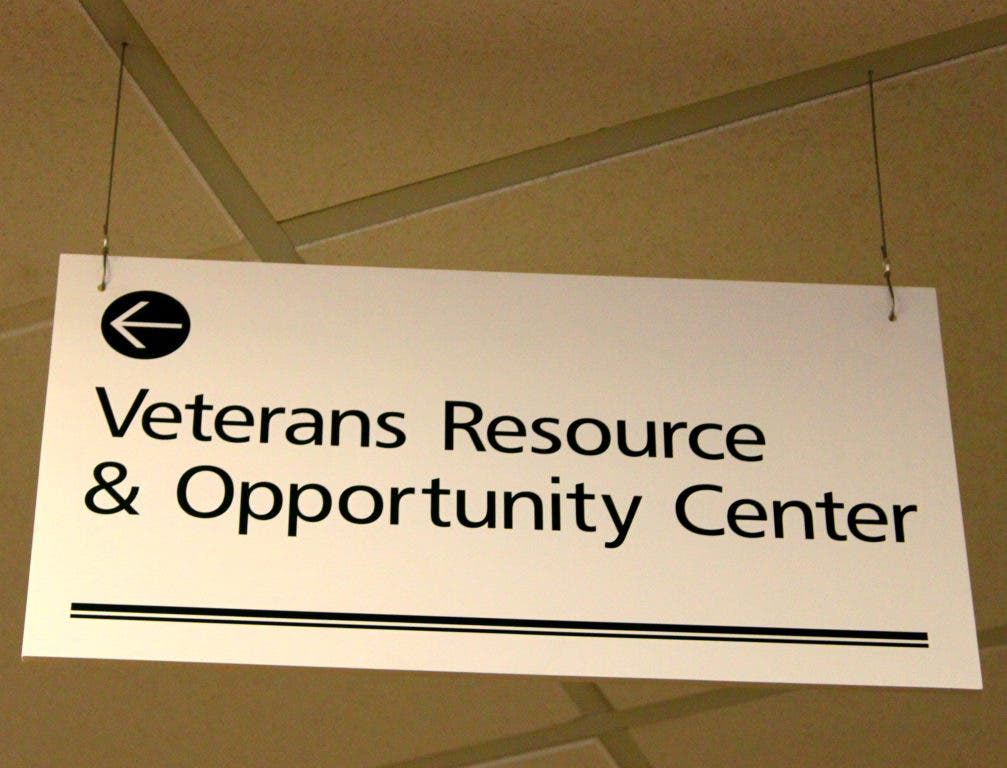


Coming back from war and reintegrating back into society is an unfathomable challenge that most will never relate to. Coming back and finding a job is even more difficult.
has partnered with the San Mateo Workforce Investment Board to provide recently separated veterans with the opportunity to launch a clear-cut career in engineering.
A $465,000 grant awarded to the SMCWIB from the California Employment Development Department will fund the San Mateo County project Bay Bridge to Engineering.
Find out what's happening in Redwood City-Woodsidefor free with the latest updates from Patch.
“I think it’s a natural career path for veterans,” said Cañada professor of mathematics and engineering, Amelito Enriquez. “They’re very mechanically inclined and do very well in high pressure positions.”
Approximately 35 student veterans will participate in the 22-month program that is set to begin this spring.
Find out what's happening in Redwood City-Woodsidefor free with the latest updates from Patch.
The program will assist student veterans with the course work required for intensive lower division engineering education.
Enriqeuz, principle investigator for the grant, said though engineering is a plausible career choice for veterans, the hardworking years required for an engineering degree often offsets potential students.
“The most important part is getting through the math,” he said. “There are a lot of prerequisites.”
Each incoming student is required to take a math placement test to assess his or her mathematical skills. If the test is done poorly, students are faced with a mound of prerequisite math classes before they can be considered Engineering majors.
Enriquez said because of placement testing veterans who have not been in the classroom for some time often face an intimidating roadblock.
“If they haven’t done math in a while they might not do so well,” Enriquez said. “That can be really discouraging.”
If placed in a low skilled math class, students may need to pass approximately10 math classes, Enriquez said, and this may take four to five years to complete.
“A lot of times the way we do things in our system is not necessarily the best way,” Enriquez said of the educational system. “Sometimes it’s only one or two concepts students don’t understand.”
By the end of the program, student veterans will be able to transfer to a college or university in one academic year and in three years will be eligible for a bachelor’s degree in engineering.
Though the personal benefits of an engineering profession include a high salary, Enriquez said educating more engineers would also benefit the U.S.
“Our future as a nation depends on getting more engineers,” he said. “Engineers are responsible for driving innovation and technology in this country.”
Though being an engineer might not sound like a flashy profession, Enriquez said, it gives communities a competitive edge.
“There is no hip or cool role model for engineering,” Enriquez laughed.
The program is currently in the recruitment phase to find recently separated and Gulf War student veterans who have been residents of California for at least one year. Applicants must also have a high school diploma or equivalent.
The program will begin placement testing this month and will begin an intensive math program to prepare for spring classes in October.
“We have a very successful program,” Enriquez said of the preliminary math program.
Enriquez said that though this particular program is geared toward student veterans, Cañada College hopes to develop the program to include more students.
“I would like to continue the program to anyone who is returning to college,” he said. “We’re trying to make it accessible to people who want to change their careers.”
In the future, more students may be able to venture down an engineering path without fear of becoming lost in the educational equation.
“When you design a new program,” Enriquez said. “You have to step outside the box.”