Neighbor News
Can You Cure Your Body With Your Mind?
Danea Horn's assertion that the body is not benefitted by the brain finds unexpected support from a pioneer of prayer-based healing.

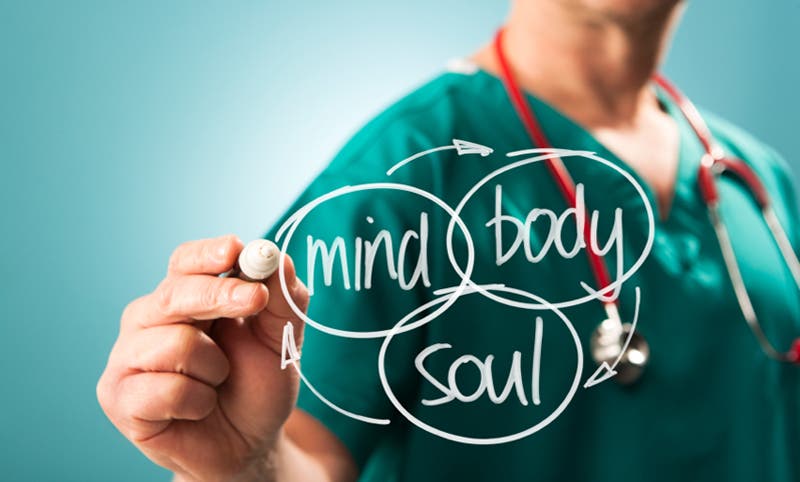
Ironically, Horn’s conclusion that the mind is not something that can or should be relied on to cure the body is not far off from what Mary Baker Eddy – the 19th century religious reformer she largely credits with coming up with such an idea – thought herself.
Referring to the human mind as opposed to what she calls the divine Mind or God, Eddy insisted, “This mind is not a factor [in healing the body].”
Find out what's happening in Redwood City-Woodsidefor free with the latest updates from Patch.
This is not to say she completely dismissed the role of an individual’s consciousness in healing. Eddy did see a big difference, however, between a mind fixated on – even intimidated by – a predominantly matter-based view of existence and the thought that is willing to see things from a more divinely inspired perspective.
“Discard all notions about lungs, tubercles, inherited consumption, or disease arising from any circumstance,” suggests Eddy in Science and Health, “and you will find that mortal mind, when instructed by Truth, yields to divine power, which steers the body into health.” Not only did she find this approach effective in dealing with her own ailments but also the ailments of those who came to her for healing.
Find out what's happening in Redwood City-Woodsidefor free with the latest updates from Patch.
In remarks made last year at The Commonwealth Club in San Francisco, Horn pointed to the “deep seeded need for control” that makes the idea of using our minds to heal our bodies all the more alluring. But it is the relinquishment of just such a mental power grab that Eddy saw as essential to healing. In other words, “Not my will, but thine, be done.”
The downside to such a notion is that we may assume it absolves us of any responsibility, putting the blame on God for any and all outcomes, good or bad. For Eddy though, handing things off to the Divine wasn’t so much of a “Here, you do it” kind of proposition as it was a conscious recognition of His will operating in one and all, giving us all the ability to see whatever situation we’re confronted with in a life-affirming, health-inducing light.
The good news for Horn is that she is doing much better and has even written a book designed to help other women cope with the stress of illness. Interestingly, of the 10 strategies she outlines, her encouragement to “find gratitude” echoes something St. Paul suggested a good two thousand years ago that links this particular frame of mind with better health:
“Finally, brethren, whatsoever things are true, whatsoever things are honest, whatsoever things are just, whatsoever things are pure, whatsoever things are lovely, whatsoever things are of good report; if there be any virtue, and if there be any praise, think on these things... and the God of peace shall be with you.”
Eric Nelson writes each week on the link between consciousness and health from his perspective as a practitioner of Christian Science. He also serves as the media and legislative spokesperson for Christian Science in Northern California. Read similar columns on his website and follow him on Twitter @norcalcs.