Politics & Government
DID YOU KNOW that The Difference Between Affordable Housing and Fair Market Housing Is Often a Function Of Income
According to HUD "An estimated 12 million renter and homeowner households now pay more than 50 percent of their annual incomes for housing."



According to the US Department of Housing and Urban Development “families who pay more than 30 percent of their income for housing are considered cost burdened and may have difficulty affording necessities such as food, clothing, transportation and medical care. An estimated 12 million renter and homeowner households now pay more than 50 percent of their annual incomes for housing. A family with one full-time worker earning the minimum wage cannot afford the local fair-market rent for a two-bedroom apartment ANYWHERE in the United States.” Emphasis mine. (http://portal.hud.gov/hudportal/HUD?src=/program_offices/comm_planning/affordablehousing/)
The McKinsey Global Institute (MGI) report, A blueprint for addressing the GLOBAL affordable housing challenge, ”defines the affordability gap as the difference between the cost of an acceptable standard housing unit (which varies by location) and what households can afford to pay using no more than 30 percent of income.” (http://www.mckinsey.com/insights/urbanization/tackling_the_worlds_affordable_housing_challenge) So although one can think of affordable housing as housing that should cost less than fair market housing the reality is that if there aren’t substantial differences in incomes, the difference between what an individual can afford and what the market demands is usually low.
As James Surowieki notes ”in 1960, the country’s biggest employer, General Motors, was also its most profitable company and one of its best-paying. It had high profit margins and real pricing power, even as it was paying its workers union wages. And it was not alone: firms like Ford, Standard Oil, and Bethlehem Steel employed huge numbers of well-paid workers while earning big profits. Today, the country’s biggest employers are retailers and fast-food chains, almost all of which have built their businesses on low pay—they’ve striven to keep wages down and unions out—and low prices.” (http://www.newyorker.com/magazine/2013/08/12/the-pay-is-too-damn-low)
Find out what's happening in Redwood City-Woodsidefor free with the latest updates from Patch.
The current federal minimum wage is $7.50 which means that a full-time worker earning minimum wage and working forty hours per week is earning $300 gross per week for about $1300 per month. Even in the most affordable of areas there aren’t really any available two bedroom apartments for $390 the equivalent of 30 percent of income for that worker. Increasing the minimum wage to $15 will only double the amount available for rent to $780 which in the San Francisco Bay Area still doesn’t buy one very much. Once upon a time minimum wage was only for entry level jobs; however today with the destruction of the labor movement more and more minimum wage jobs are also held by workers in what are their prime earning years when they are not only supporting themselves but a family.
In addition to the problem with the base minimum wages, employers nationwide have been flouting employment laws either by forcing workers to misstate hours worked (http://peoplesworld.org/walmart-workers-sue-for-unpaid-wages/), not properly compensating them for hours worked (http://patch.com/california/redwoodcity-woodside/lost-wages-68-million-coming-bay-area-workers) or even importing workers from overseas so as not to have to pay prevailing higher wages (http://peoplesworld.org/labor-with-unlikely-allies-tackles-exploitation-of-high-tech-workers/).
Find out what's happening in Redwood City-Woodsidefor free with the latest updates from Patch.
Historically the difference between the fair market rent rate and an affordable rent rate for an apartment in most US cities was small. Metropolis like New York City and San Francisco that did have a big difference between fair market rents and affordable rents implemented rate control programs that they hoped would solve the problem. However with time these programs have become huge bureaucracies that instead of creating a level playing field have in their own way created winners and losers. Winners include renters with rent controlled units, losers include not only landlords who cannot at times raise rents sufficiently to properly maintain units and renters that do not have rent controlled units as they must compete for an even smaller number of market rent rate units.
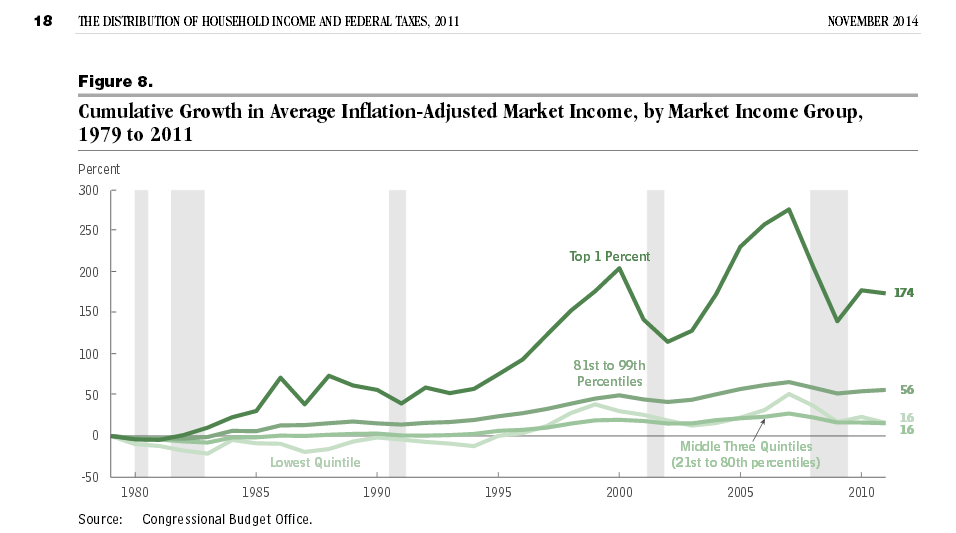
Assuming that the problem of affordable housing is based on supply and demand of housing, affordable housing activists have decided that the way to assure affordable rents is to increase supply drastically and let the market lower the rates back to where the differential between fair market rate and affordable is either small or negligible. This belief leads to a push for more and more building and increasing density. Unfortunately the problem of affordable housing is not due to an imbalance in the supply and demand of housing, it is actually a problem as Paul Krugman has called it of the great divergence of incomes.
For low, low income people minimum wage incomes means that the actual hard costs of paying the monthly rent requires more and more people to share small spaces. For the really affluent whose income is disproportionately high in relation to their housing expenses; it means that they can own several homes most of which stand empty year around as regardless of their affluence they can still only be at one place at a time. In fact so strong is the divergence between low income people and affluent elite’s that not only have high outright earnings but also power that a City Manager, like the City Manager of Redwood City who earns almost twenty thousand dollars a MONTH (more than a minimum wage earner earns in a year) not including benefits, tries to negotiate for a housing allowance of eight thousand dollars (
http://agendas.redwoodcity.org/sirepub/cache/2/serb2v4acj31xj2uhsvrnbnu/15438804132015030555324.PDF) further driving up the base cost of housing.
The movement for a $15 an hour minimum wage is a good start and in some areas is making progress but it needs a lot more support. In addition real incremental seniority pay structures and other traditional union benefits that lead to what is now being called a living wage need to also be adopted. Maintaining essentially flat entry level incomes for the duration of a worker’s lifetime of work would not have allowed Ford workers to create a thriving middle class.
What do you think? Should affordable housing activists focus on rebuilding the labor movement and getting workers locally and nationally the wages that will allow them to afford fair market rates?
CBO Report links:
http://www.cbo.gov/sites/default/files/10-25-HouseholdIncome_0.pdf