Politics & Government
DID YOU KNOW That Drought is not just a California Problem?
Worldwide "unsustainable development pathways and governance failures have affected the quality and availability of water resources."


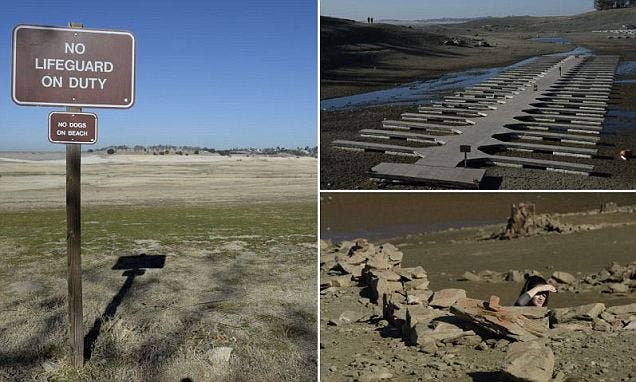
This past week, Governor Brown announced the first time ever mandatory California statewide water rationing. Shocking as it may be to some the reality is that it doesn’t go far enough. It doesn’t yet include broad sectors of the economy such as agriculture. And as a very broad blanket policy does not consider the fact that it will be hardest to achieve for those residents who have been the most frugal prior to its announcement and enforcement. Nonetheless the reality is that we can all do more. At the very least, Governor Brown’s announcement means that there is finally a real serious acknowledgement that at least California has a problem. For too many years we, our elected officials and government bureaucrats have wanted to believe not only that the rains and the snows would come but that they would come in sufficient quantity.
The reality however is that this is not a California specific problem. This is a looming problem worldwide. As the United Nations has acknowledged the world faces a huge shortfall that if not properly prepared for will lead to a forty percent shortage of water by 2030. (http://america.aljazeera.com/articles/2015/3/20/un-world-faces-40-percent-water-shortfall-by-2030.html) “Unsustainable development pathways and governance failures have affected the quality and availability of water resources, compromising their capacity to generate social and economic benefits,” the United Nations report noted. “Economic growth itself is not a guarantee for wider social progress.”
Brazil, the Saudi Arabia of water is having problems. Being home to the Amazon and other mighty rivers, huge dams and one-eighth of the world’s fresh water, hasn’t prevented Sao Paolo, Rio de Janeiro and Minas Gerais from facing the consequences of increasing population, cutting down forests and destroying wetlands. “Climate change has arrived to stay,” Geraldo Alckmin, the governor of São Paulo State, said this month. “When it rains, it rains too much, and when there’s drought, it’s way too dry.” (http://www.nytimes.com/2015/02/17/world/americas/drought-pushes-sao-paulo-brazil-toward-water-crisis.html)
Find out what's happening in Redwood City-Woodsidefor free with the latest updates from Patch.
Part of the problem has been price. For too long water has been free or priced at a flat rate regardless of quantity used. Unfortunately this has meant it has been wasted and used without a consideration of it’s incredible value to humanity. This is finally now changing but we need to do more. In the few communities that have smart water meters residents know how much water they use to water their lawns if they have them, flush their toilets, wash their dishes, wash their bodies and clothes and drink. One thing that has already been done with a lot of success is recycling water at a local level. This means that for example new homes not only have fresh water piping serving their primary cleaning and drinking needs but also secondary grey water piping systems. This means toilet and lawns can use water that has already been used once in the home for showering and doing laundry and dishes.
Nonetheless, in addition to considering our direct water usage we need to see the full picture and also consider indirect water usage. In particular water used outside the home and water consumed through diet. An individual who lives in a small apartment (no lawn) and has properly recycled water systems in place may be a far larger consumer of water vis a vis his neighbor in an older home with a lawn and without recycled water piping if his diet consists of eggs and bacon for breakfast a large cheeseburger for lunch and a steak, potato and salad for dinner. The fact is that different foods require different amount of water to grow. Meat is probably the most demanding. A more water conservative diet would need to include a lot less meat ( full disclosure I am not a vegetarian) and a lot more grains. (http://www.waterfootprint.org/Reports/Report-48-WaterFootprint-AnimalProducts-Vol1.pdf) In addition there are certain industries like healthcare and hospitals that use huge amounts of water to operate.
Find out what's happening in Redwood City-Woodsidefor free with the latest updates from Patch.
Going forward we need to get a much better understanding of how much water our lifestyle choices are consuming. So although the governors mandatory regulation applies only to the residential water coming in through the local water wholesaler if we apply it to all aspects of our lives we can without the need of an executive fiat really include agriculture and all the other sectors of the economy.
Photo credit: katenews2day.com