Politics & Government
FrankenDNA
CRISPR/Cas9 method allows Mary Shelley's Frankenstein, at the DNA level, to come alive.


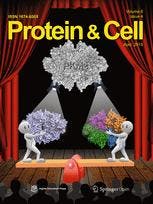
Using the CRISPR/Cas9 method, a team of Chinese researchers from Sun Yat-sen University in Guangzhou, were attempting to modify a mutant form of a human gene called HBB. Certain mutations prevent people from producing enough hemoglobin to transport oxygen through the bloodstream, resulting in beta thalassemia. The team wanted to see whether they could delete the mutated portion of HBB and replace it with the correct DNA. The point however is that once it is feasible to remove mutated portions of human genes and replace them with either good or even enhanced DNA, eugenics in the sense of selective breeding and or sterilization will be dead. Instead it will be possible as Mary Shelley will have effectively predicted in her book Frankenstein to assemble the best of each DNA section and replace whatever it is we don’t like.
The CRISPR/Cas9 method is much simpler than earlier gene editing technologies in which scientists had to synthesize complex proteins to carry out the same work. Some experts predict that the scientists who figured out how to use CRISPR/Cas9 edit genes will win a Nobel Prize for their discovery. This means that scientists are already fighting over who gets the credit: Dr. Jennifer Doudna or Dr. Feng Zhang or someone else. Dr. Jennifer Doudna heads the Doudna Lab at UC Berkeley in the San Francisco Bay Area. Dr. Feng Zhang has his Lab at the Massachusetts Institute of Technology in Boston. In the United States at least the US Patent office will decide whether or not they allow a patent and if so to whom does it belong. There is strong public sentiment that a patent of this type should simply not be allowed.
Nonetheless it is the Chinese study published in Protein & Cell magazine (http://link.springer.com/article/10.1007%2Fs13238-015-0153-5) that is making waves. In their study the researchers were able to target the HBB gene, however their success at obtaining the desired result was less than optimal. Sometimes they ended up making changes in the wrong places. The team noted “our work highlights the pressing need to further improve the fidelity and specificity of the CRISPR/Cas9 platform, a prerequisite for any clinical applications of CRSIPR/Cas9-mediated editing” Translation it is still too early to roll out in the real world. However the science is developing fast and the ethical ramifications are huge.
Find out what's happening in Redwood City-Woodsidefor free with the latest updates from Patch.
The National Institute of Health (NIH) just last week noted: “NIH will not fund any use of gene-editing technologies in human embryos. The concept of altering the human germline in embryos for clinical purposes has been debated over many years from many different perspectives, and has been viewed almost universally as a line that should not be crossed. Advances in technology have given us an elegant new way of carrying out genome editing, but the strong arguments against engaging in this activity remain. These include the serious and unquantifiable safety issues, ethical issues presented by altering the germline in a way that affects the next generation without their consent, and a current lack of compelling medical applications justifying the use of CRISPR/Cas9 in embryos.” (http://www.nih.gov/about/director/04292015_statement_gene_editing_technologies.htm)
What do you think? Should NIH be funding this type of research? Should private organizations be funding this type of research? Or should we just let it happen overseas?