Neighbor News
How A Standing Ovation Could Help Josh Hamilton Beat Drug Addiction
'The opposite of addiction is not sobriety. It is human connection.'

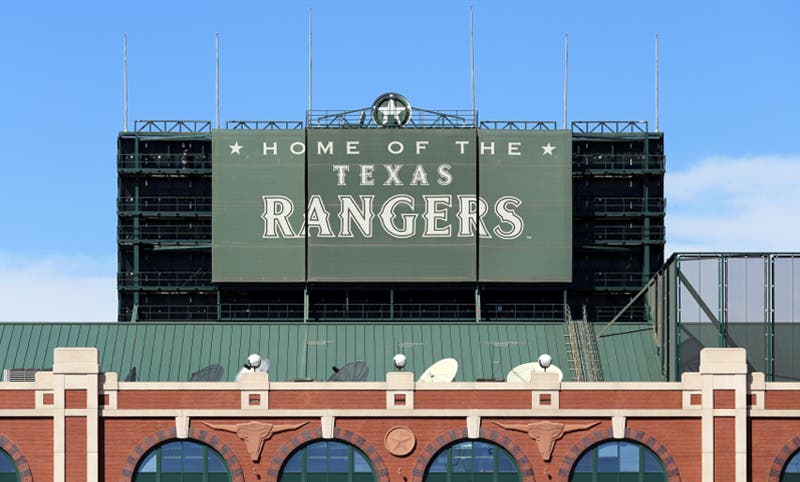
Before his first at-bat he received a standing ovation, then proceeded to hit the first pitch he saw for a double. A day later he hit two homers, lifting his Texas Rangers over the visiting Red Sox 7-4. And then, just two days after that, he hit a pinch-hit, walk-off double to beat the Sox 4-3.
Not bad for a guy who’s been battling drug and alcohol addiction off and on since at least 2001, including a relapse during the offseason that left him in trade limbo for the past two months. The question remains, however, whether such a homecoming will do much to keep Hamilton on the straight and narrow.
Find out what's happening in Redwood City-Woodsidefor free with the latest updates from Patch.
If you ask Johann Hari, the answer would likely be yes.
In a column he wrote for Huffington Post, the author of “Chasing The Scream: The First and Last Days of the War on Drugs,” says that more than anything else, it’s our connection with and support for one another that keeps addiction in check.
Find out what's happening in Redwood City-Woodsidefor free with the latest updates from Patch.
Hari cites a well-known experiment where a rat is left alone in a cage with two bottles of water, one of which is laced with drugs. Predictably, the rat prefers the drugged water and continues to drink from that bottle until he dies. But in another experiment the rat is joined by lots of other rats in a cage filled with colored balls, plenty of food and tunnels to scurry in and around. In this environment the rats overwhelmingly prefer the plain water. None of them dies. Even rats who have become addicted while living alone are able to recover once they rejoin their friends.
Apparently the same principle holds true for humans.
According to the Archives of General Psychiatry, about 20 percent of U.S. soldiers serving in Vietnam became addicted to heroin. But once they returned home, some 95 percent of them simply stopped, with very few going through rehab. As Hari describes it, “They shifted from a terrifying cage back to a pleasant one, so didn’t want the drug any more.”
The moral of the story is that addiction isn’t as much about the drug itself as it is one’s environment. “The opposite of addiction is not sobriety,” writes Hari. “It is human connection.”
The problem is, not too many of those struggling with addiction have a ballpark full of cheering fans waiting to welcome them home. Some don’t even have a handful of friends and family members. There is, however, a fundamental spiritual connection that remains for everyone to discover – or rediscover – for themselves.
This was certainly the case for David Fowler, a former drummer who once shared the stage with bands such as The Jefferson Airplane and The Grateful Dead.
“I was taking lots and lots of drugs. In fact, at one point I estimated I had taken LSD well over 350 times,” writes Fowler in a published account.” I was also taking crystal meth – a dangerous drug that had a very negative physical effect on my heart and nervous system.”
Fowler’s addiction continued to escalate until early one morning when he found himself hallucinating in the backyard of his house after downing a drug-infused cocktail.
“Something deep inside of me started to call out for God” he writes. “I was screaming, ‘If there is a God, I need Your help.’”
“I wasn’t afraid of dying, but I was afraid of not knowing who God was, and who I was in relation to God – that was my biggest fear.”
“After the 20 minutes were over, I said, ‘Can I come back tomorrow?’ She said, ‘Of course,’ and when I left her office that day, I noticed there was a different spring in my step,” writes Fowler. “Something had shifted dramatically. I didn’t know exactly what it was, but I knew something had shifted. I also knew that I no longer had any desire for drugs.”
“The answer to my questions about God came to me as a really firm realization that God was right where I was, and that God was taking care of me.”
Even if he wouldn’t describe it in these exact terms, it’s possible that Josh Hamilton felt a similar connection as he stepped to the plate and heard the crowd cheering his return. He must have felt encouraged, perhaps even forgiven. One thing’s for certain: he felt loved. This, in and of itself, is enough to support anyone’s continued progress, and a high sign to us all as to what we can be doing to support another’s efforts to free themselves from addiction.
Eric Nelson writes each week on the link between consciousness and health from his perspective as a practitioner of Christian Science. He also serves as the media and legislative spokesperson for Christian Science in Northern California. Read similar columns on his website and follow him on Twitter @norcalcs.