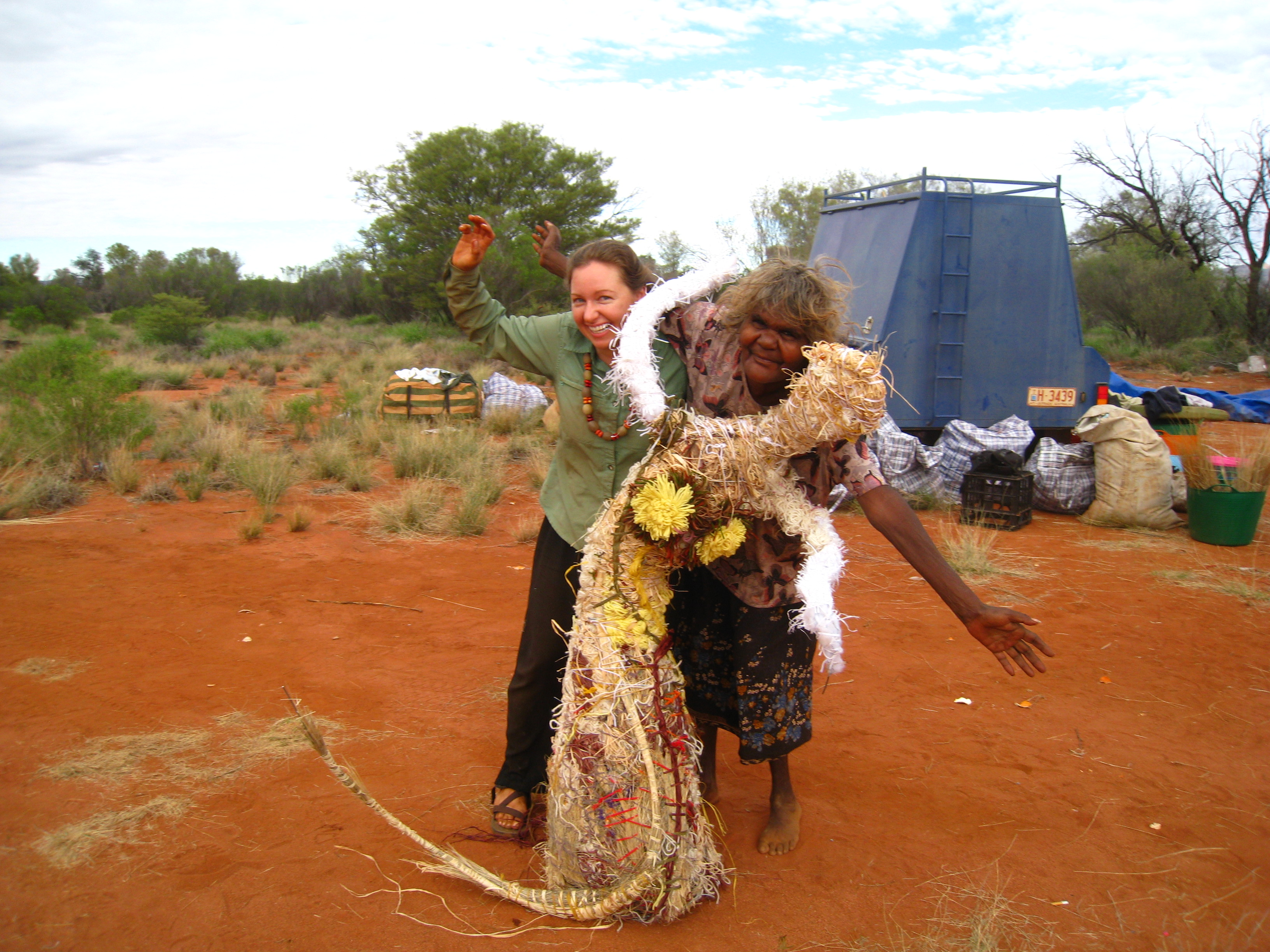
Over the past year, Cañada College Anthropology Professor Jessica Einhorn has eaten honey ants, witchetty grubs, and goanna. She’s lived without a daily schedule and clock and carried a stick with her on walks to keep the inevitable pack of dogs away.
In the process, Einhorn has learned much about the Western Desert people Australia and how their culture and traditions are similar to those of the North Fork Mono people of Central California.
“It’s really been an amazing journey over the last year,” said Einhorn. She’s lived several months in Alice Springs, Haasts Bluff, and Amata, remote communities in the northern Australian desert, and with Native Americans in Coarsegold, California. Her research focuses on cross-cultural comparisons between the Pintupi and North Fork Mono and their struggles to pass on their traditions to the next generation through fibre arts.
Find out what's happening in Redwood City-Woodsidefor free with the latest updates from Patch.
“I have been honored to learn from indigenous fibre artists in Central California and Northern Australia that make baskets, belts, and necklaces,” she said. Einhorn said she studies the comparison between both cultures as they try to pass on their traditions through these objects. “North Fork Mono and Pintupi people have taught me about their traditional food, plants, hunting and gathering locations, and deep cultural and socio-economic roots of a practice that is part of not only their religious belief system, but of one that forms the core of their ethnic identity.”
Einhorn hopes her research can affect legislation to protect old growth oak trees in the North Fork area. She has been working with other scientists to locate, document and protect the old oak trees. Acorns from the trees have been a traditional food source for the North Fork Mono.
Find out what's happening in Redwood City-Woodsidefor free with the latest updates from Patch.
“The research I’m doing is multilayered,” Einhorn said. “One of the outcomes will be to protect the trees for acorn gathering and re-create habitats with native plants through burning as well as to document the basket makers’ perspective on the challenges of gathering today to be able to keep their traditions alive through basket making.”
In April, Einhorn presented her research at the Society for American Archaeology Conference. She argued that to understand a better meaning of Central California rock art, we need to look at the meaning of symbols found in traditional baskets made today. “I have shown through my research that many of the same symbols found in rock art in California can also be found in baskets. This has had an impact on archaeological theory. I’m currently collecting more data to turn the paper into a publication.”
Einhorn said everything she has learned will be shared in her anthropology classes at Cañada. “This experience has had an extreme impact on me for life, and I look forward to discussing challenges and knowledge I’ve gained with my students.”
Einhorn will give a presentation about her research at Cañada’s Center for Innovation and Excellence in Teaching and Learning (Building 9, Room 154) at 3 pm on Monday, Oct. 7. Her talk will be titled, “Acorns, Honey Ants, and Gasoline: Reflections on Indigenous Australian and Californian Basket Makers Today”. The presentation is free and open to the public.