Politics & Government
A Master Class on Sustainability
Learn more about water, energy and the 4 R's (reduce, reuse, recycle & rot). Learn how to do more with less and spread the word!


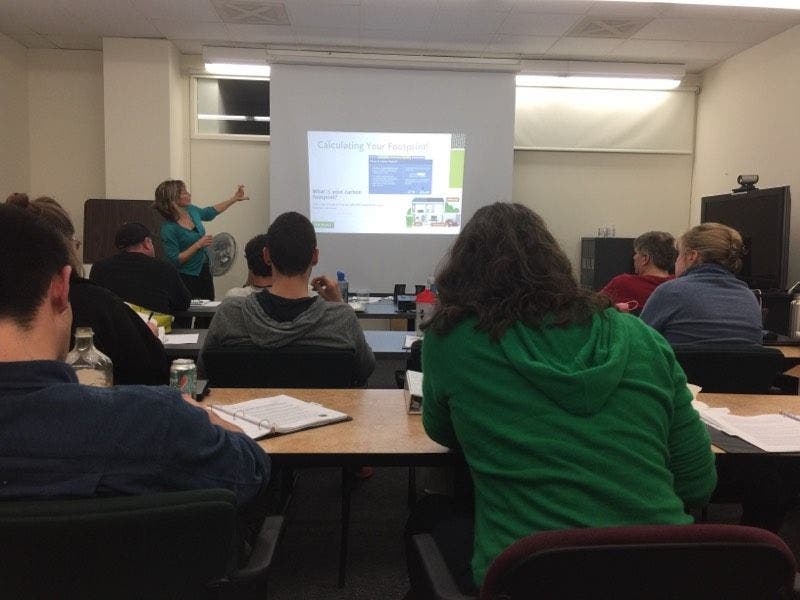
Just this past week, I was among a small group of less than thirty people who signed up and started to attend the Master Resource Conservation Course offered by the Sustainability Academy (formerly known as the RecycleWorks Volunteer Academy.) The Sustainability Academy is "a no-cost education and outreach program designed to raise awareness around sustainability and empower San Mateo County community members with the knowledge and skills to promote resource conservation in their communities."
The academy includes:
WEBINARS
Find out what's happening in Redwood City-Woodsidefor free with the latest updates from Patch.
• Energy, water, pollution prevention, transportation, sea level rise –
8-WEEK COURSES
Find out what's happening in Redwood City-Woodsidefor free with the latest updates from Patch.
• Master Compost and Solid Waste
• Master Resource Conservation Course - the particular course I signed up for
and
HALF-DAY WORKSHOPS
• Sea Level Rise (Mar 25), Green Home (May), Green Business (June)
The Master Resource Conservation Course involves meeting once a week for a three hour meeting for eight weeks. For the benefit of 24 hours of free training, attendees must commit to volunteer back into their communities a total of 40 hours in areas related to sustainability. A list of potential volunteer projects includes blogging about sustainability which is what I have picked to do.
In the first class taught by our friendly instructor, Laura McKaughan, an environmental consultant specializing in coordinating education and outreach projects for private industry, government and non profits; we set the stage for future learning by starting with the basics. Things like terminology:
• Resource Conservation - The careful utilization of a natural resource in order to prevent depletion.
• Wasteshed - as in waste not watershed
• 4 R’s - Reduce, Reuse, Recycle and Rot (in that order of priority and benefit to the environment)
• Material Recovery Facility (MRF) - facilities such as our local Shoreway facility in Redwood Shores that sorts through the collected recycled materials
• Climate Change vs Global Warming - understanding that although sometimes used interchangeably they imply different things. In the sense that global warming is a part of climate change but climate change actually encompasses a lot more of the phenomena that we are seeing develop.
The class was peppered with mini-quiz questions including:
Compared to when dinosaurs lived, the quantity of water on Earth has:
A. Decreased by more than 50%
B. Increased by more than 25%
C. Remained unchanged
If you know the answer great. If you don't, remember regardless of the answer the fact is that the number of humans living on the planet has exploded since when the dinosaurs lived. So the reality is that even given the fact that the correct answer is C, we have a problem.
Given that my interest in water is one of the main reasons, I decided to take this course, the next tidbit that I wasn't completely unaware of but hadn't really internalized is that even though we have a lot of water on the planet the fact is that only a bare three percent is fresh, drinkable water. Most water on earth is of course salt water, or not easily accessible or just plain polluted. Pictures of water in places such as India were particularly disheartening.
In addition to learning about water, we learned about energy sources including coal, sun, hydroelectric and wind. Clearly one of these is a particularly bad polluter namely coal. Coal is not only a problem because of the damage it causes upon use but because of the environmental damage done in retrieving it. Deep mining systems were bad enough; however new methodologies of extraction including mountain top removal which although healthier for the people involved in working in those areas turns out to be a lot more destructive of those mountain ecosystems including the local flora and fauna and may actually turn out to be worse than mines. (Not convinced just click here.)
This was just the beginning. Interested in learning along with me. Here is a link to the first session course slides.
Unfortunately as the instructor had warned us we also have homework. What is our homework? Calculating our own carbon footprint. Here are two different calculators you can play with:
For real extra credit however what I, as a resident of San Mateo county, found was most interesting was the draft Vulnerability Report about to be released by the Sustainability office. (Check class slides #41-42.) Given that this past week we learned that a crack on an Antarctic ice shelf has grown seventeen miles in less than two months, it probably understates the risks!
Come back next week for more knowledge and information.