Business & Tech
Mels Bowl: A Trip Down Memory Lane
As Mels Bowl faces closure, many take time to share their fondest memories of the place.
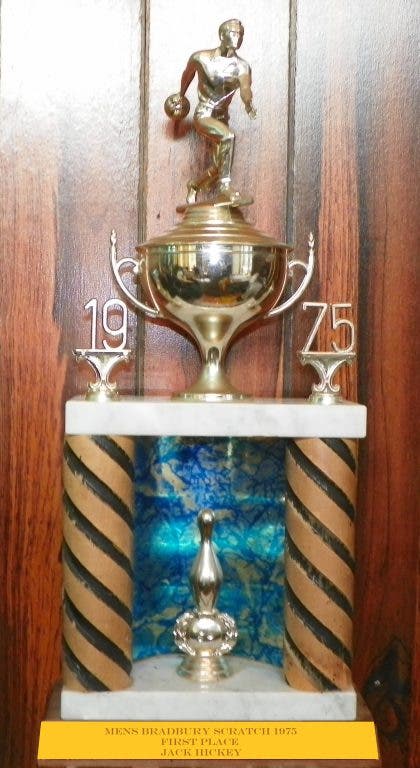

The doors are closed at Mels Bowl in Redwood City, but the lanes are open—the memory lanes, that is.
Mels, a landmark for more than 40 years, shut down May 8 to make way for a planned 141-unit, four-story apartment complex. By then, the bowling alley was officially called AMF Redwood Lanes, the label imposed by the American Machine and Foundry Company that was founded in 1900 to make gear for the tobacco industry. The company now bills itself as the “world’s largest owner and operator” of what it calls “bowling centers.”
The towering sign outside says “Mels Bowl,” and that is what everyone calls it. Note that there is no possessive apostrophe, which is apparently the way Mel wanted it, in the same manner as the Hells Angels, a spelling I think few would want to dispute with the motorcycle riders.
Find out what's happening in Redwood City-Woodsidefor free with the latest updates from Patch.
Just who was Mel? He was Mel Weiss, who leased the land for the bowling alley in the late 1950s from the grandsons of the Boicelli family, who bought the property in 1900, according to Maureen Riordan, senior planner for Redwood City.
Weiss is more famous as the co-founder of the Mels Drive-In restaurant chain. He and Harold Dobbs built their first carhop eatery in San Francisco in 1947, and eventually had spin-offs throughout much of northern California. The empire reigned for almost 20 years until fast food outlets invaded, providing the nail in the coffin of the San Francisco drive-in, which is best remembered as the setting for “American Graffiti,” a cinema classic that opened in movie houses as the bulldozers razed the drive-in. Weiss’ son, Steve, opened a replica Mels in 1985.
Find out what's happening in Redwood City-Woodsidefor free with the latest updates from Patch.
It’s doubtful that the wrecking ball will become a gutter ball at Mels bowling alley. Most likely, it will score a strike. The draft environmental impact report is expected to be ready in September, with the final report coming after a 45-day period to hear from the public.
The report will have to be reviewed by the Redwood City Historic Resources Advisory Committee, according to Charles Jany, principal planner for the City.
“The committee will then make recommendations and the report will go to the planning commission,” Jany said.
Ken Rolandelli, who has headed the committee for years, told Redwood City Patch any architectural significance of Mels is slim.
“I do think the sign is unique, however, but I’m not sure others do,” he said.
The bowling alley was designed by Goodwin Steinberg, whose resume included bowling alleys in San Jose and Alameda.
Whatever its design merits, Rolandelli has fond memories of the Redwood City bowling alley.
“I started bowling there when I was a freshman at Sequoia,” he said.
The closing of Mels started memories rolling for others as well.
“We loved being in the bowling lane and meeting friends,” Jan McCormick commented on Redwood City Patch.
The Redwood City alley “was the place that started my bowling obsession,” Lani Chin of San Francisco blogged. “I could almost always get a pair of lanes and practice without much interruption or distraction.”
Steve Nagarjuna of Sacramento, the “Steve” in “Steve’s Bowling Blog,” said he moved to Redwood City in 1974 and bowled there for 30 years before leaving for the state capital.
“In 1974, the Professional Bowlers Tour still made summer stops at Mels, and I watched some of the greats of that era compete there,” he wrote. “There were also wonderful scratch leagues and tournaments conducted there that filled the house for the first few years.”
He said business gradually began to fade as scratch and handicap leagues lost bowlers.
Nagarjuna said the closing of Mels is “sad news for a guy like me who spent untold hours bowling and having fun there.”
Many would agree.