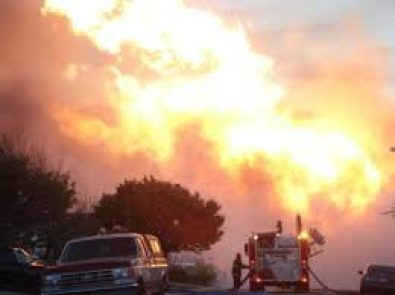
Six bills by Senator Jerry Hill that grew out of the fatal Pacific Gas & Electric Co. gas pipeline explosion in San Bruno were signed into law by the governor this week, bringing to 13 the number of blast-related safety, ethics and ratepayer relief measures the Peninsula Democrat has authored in the four years since the 2010 blast that killed eight people and destroyed 38 homes.
Additionally, Senator Hill has announced his intention to introduce legislation in December to require that the bulk of the penalty against PG&E for the San Bruno explosion—a sum now slated to go to the General Fund—go instead toward safety improvements, the creation of a pipeline safety trust to advocate for pipeline safety before the CPUC and federal government, and an independent monitor to track PG&E’s pipeline safety expenditures.
The following bills, signed into law on Thursday, take effect on January 1, 2015:
Find out what's happening in Redwood City-Woodsidefor free with the latest updates from Patch.
SB 434 – Public Utilities Commission-Created Nonprofits (Chapter 546, Statutes of 2014)
Last year’s Resources Budget Trailer Bill prohibited members of the California Public Utilities Commission (CPUC) from sitting on nonprofits they helped create as commissioners, if those nonprofits were created before January 1, 2014. Senate Bill 434 is a cleanup bill that applies the prohibition to any nonprofits that may be created in the future.
Find out what's happening in Redwood City-Woodsidefor free with the latest updates from Patch.
SB 636 – Due Process in CPUC Penalty Proceedings (Chapter 548, Statutes of 2014)
Preserves due process in CPUC penalty proceedings by dictating that CPUC staff may serve in an advocate role or in an advisory role, but not both concurrently. In June 2013 the General Counsel of the CPUC dismissed all of the attorneys prosecuting PG&E because they argued that it was illegal and unethical to advocate that PG&E should not be penalized. While an ethical separation of roles is already the general practice at the CPUC, agency guidelines allow this practice to be waived whenever convenient.
SB 699 – Electric Grid Security (Chapter 550, Statutes of 2014)
Requires the CPUC to adopt physical security rules to protect electric facilities. On April 16, 2013, a coordinated attack by snipers on PG&E’s Metcalf substation south of San Jose knocked out 17 giant transformers. Jon Wellinghoff, chairman of the Federal Energy Regulatory Commission at the time, called the attack “the most significant incident of domestic terrorism involving the grid that has ever occurred” in the United States. More than a year later, no one has been arrested or charged in the attack. This August, the substation’s defenses were penetrated again, this time by thieves who cut a hole in the fence and made off with construction equipment. The theft went unnoticed for five hours.
SB 900 – Safety in Electricity and Gas Rates and Regulations (Chapter 552, Statutes of 2014)
Requires the California Public Utilities Commission to use safety performance information in the general rate cases of natural gas and electricity companies. Requires the CPUC to consider safety in proceedings generically. The CPUC is currently engaged in rulemaking on safety in rate cases, which in large part has been satisfactory, but the CPUC has been focused on the utilities reporting their risks and has not yet committed to reviewing their safety performance. The CPUC has, for several years, claimed that it considers safety in every proceeding. Hill’s subcommittee report, “Slow Progress in Safety Regulation: Improving Priorities and Safety Plans of the California Public Utilities Commission,” found this not to be the case.
SB 1064 – NTSB Recommendations on Rail Safety (Chapter 557, Statutes of 2014)
Applies the provisions of AB 578 (2012) to rail safety, requiring the CPUC to review and adopt recommendations made to it by the National Transportation Safety Board (NTSB) regarding rail safety. On September 5, 2013, a rail car on the Angel’s Flight Railway in the Bunker Hill district of Los Angeles derailed, leading to a dangerous rescue of the rail car’s occupants that was precarious for both the passengers and the firefighter who came to their aid. There were no safety ropes, railing, or walkway to prevent them from falling to the concrete 25 feet below. NTSB had investigated a fatal collision of Angels Flight in 2001 and recommended that a guide way be constructed alongside to facilitate safe evacuation. The CPUC did not take this advice, nor did it bring the question before the full Commission. Safety recommendations of the NTSB are too important for the CPUC to ignore.
SB 1409 – CPUC Safety Investigation Transparency (Chapter 563, Statutes of 2014)
Requires the commission to publish in its annual report a succinct description of each staff safety investigation pending before the commission or concluded during the prior calendar year. The description shall include the month of the accident, the reason for the investigation, the facility type involved, and the owner of the facility.
Senator Hill’s October 2013 subcommittee report, “Slow Progress in Safety Regulation: Improving Priorities and Safety Plans of the California Public Utilities Commission,” found that the Commission had dragged its feet in investigating fatal electrocutions, finishing investigations in the deaths of a San Mateo man when a power line fell in his front yard after nearly two years and releasing the investigation of three San Bernardino residents electrocuted when another power line fell in their backyard after more than three years.
--Information from the office of Sen. Jerry Hill
--Photo: Patch Archive
Get more local news delivered straight to your inbox. Sign up for free Patch newsletters and alerts.