Folk art and faith have long been intertwined. Never more so than when it comes to adorning religious figures.
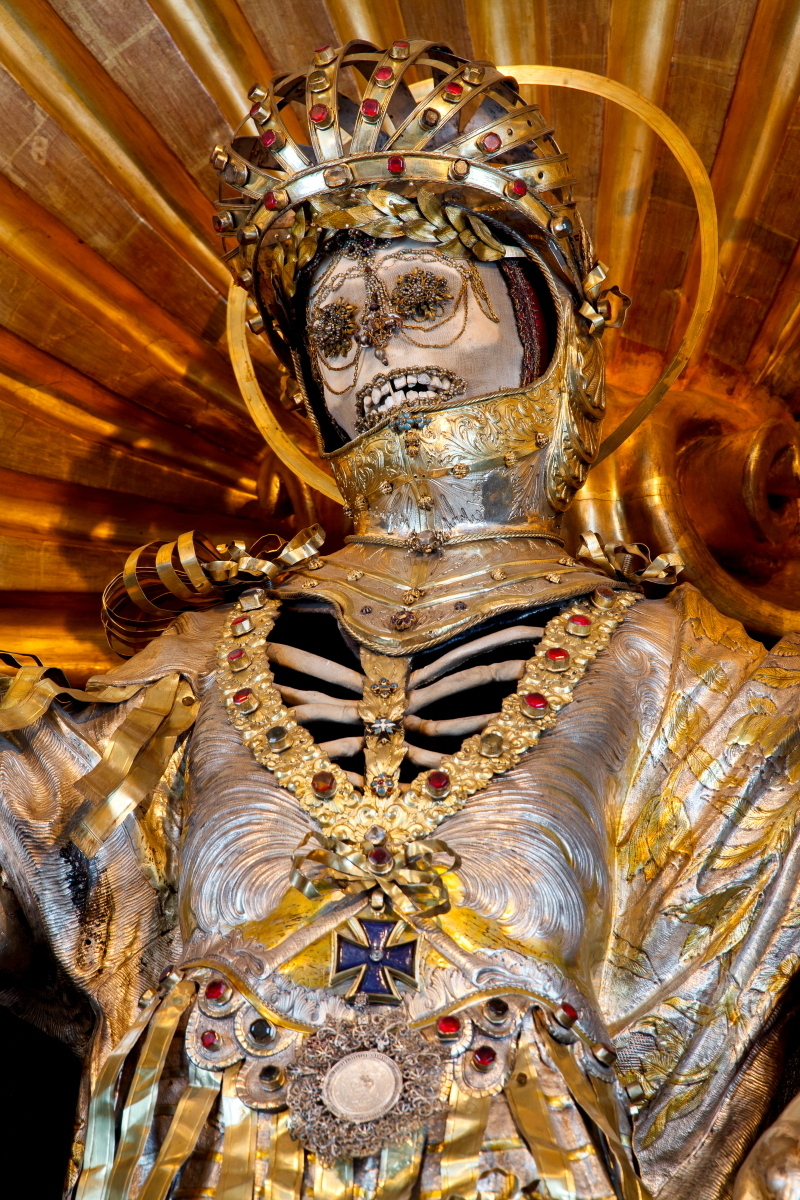
In some European countries Catholic martyr’s bodies were celebrated as art in certain churches. Paul Koudounaris, author and photographer, first discovered these beautiful bones on a research trip in 2008, where a German villager offered to show him. The bones would typically be placed along side an aisle or wall possessing almost human-like qualities. The first skeleton Koudounaris laid eyes on he described as “freakish” and “spectacular”. The body was propped upright, decorated in king worthy robes, holding out a glass vial of it’s own blood, and shining with jewels.
According to Koudounaris, author of Heavenly Bodies: Cult Treasures and Spectacular Saints from the Catacombs (Thames and Hudson) the trend of bejeweling these religious people began in the 16th century when hundreds of bodies were dug up from Roman catacombs, decorated, and sent to Catholic churches to restore the morale after the Protestant Revolution. These bodies whose graves were marked with an ‘M’ became treasures that every Catholic church wanted.
Find out what's happening in Rohnert Park-Cotatifor free with the latest updates from Patch.
Skilled nuns and often monks would prepare the bodies, often giving them personal touches that included their own personal jewelry, bedazzling them in gold, gems, and fine fabrics celebrating the life they previously lived. The clothes would have peep holes cut out to show the bones. After the hard work, the holy treasures would finally be introduced into the church for the town to celebrate and enjoy. The patrons would rejoice, even baptizing their children under the martyr’s name. Communities believed their figures protected them from harms way and brought them only good luck and fortune. In the 18th century many were lost due to Austria’s Emperor Joseph II’s determination to get rid of all superstitious objects. It is believed that patrons struggled to accept the loss of these treasures that had been in their towns for over a century.
While many of these bejeweled bones were destroyed in the 18th century, some still exist today, such as the 10 fully preserved bodies in the Waldsassen Basilica in Bavaria. Koudounaris described the skeletons he saw as, “The finest pieces of art ever created in human bone.” These beautiful forms of art, celebrating beloved folk heroes, were a monumental piece of many European Catholic churches in the 16th century, and can still be found today.
Find out what's happening in Rohnert Park-Cotatifor free with the latest updates from Patch.