Community Corner
New Book Showcases Sonoma State University's First 50 Years
Sonoma State University: Memories and Historical Highlights — a 208-page book with essays, stories, and photos in color and in black-and-white — commemorates 50 years of academic life in Rohnert Park.
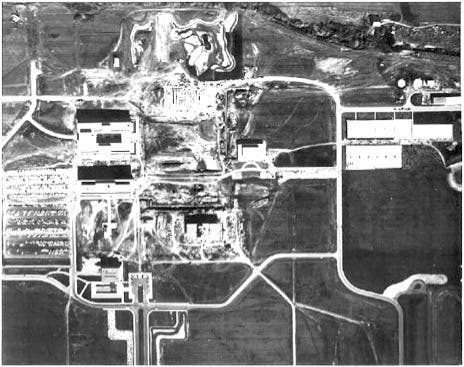

Once known as Granola U. and Frisbee State, Sonoma State University is now renowned for its School of Business, soccer teams — both women’s and men’s — and the new Green Music Center that has already made the campus a destination.
I’ve taught at the school since 1981, in the English Department, the Communication Studies Department, and in an innovative program known as First Year Experience. For 30 years, I’ve lectured, graded papers, held seminars, attended meetings and though I like to think that I’ve shaped the school, the fact is that the school has made me who I am today. I’m a creature of Sonoma State.
Reading Sonoma State University: Memories and Historical Highlights, prompted me to conjure up my own recollections. The book will probably conjure your memories, too, even if you’ve only spent a semester there.
Find out what's happening in Rohnert Park-Cotatifor free with the latest updates from Patch.
Four individuals share much of the credit for bringing the book into existence: Barbara Biebush, Janice Hitchcock, Lucy Kortum, John Palmer, and Sue Thomas. Students lent a big hand, as did Susan Kashack, Dayle Reilly and many others.
Sonoma State University: Memories and Historical Highlights offers a bittersweet journey down memory lane. It has the look and the feel of a glossy coffee-table volume; it’s a perfect gift for graduates who have moved on to careers and families and for new students and their parents eager to know the history of the campus.
Find out what's happening in Rohnert Park-Cotatifor free with the latest updates from Patch.
It might give an incoming freshman a keen sense of the place, or make a parent less anxious about a son or daughter entering college and away from home for the first time. Copies of the first printing are still available, but they’re going fast.
Nearly all of the contributors to the volume are on their best behavior. There isn’t a rude noise from among the faculty members who have made a career of criticizing President Ruben Arminana, who has been at the helm of the university since 1992, far longer than any of his predecessors.
Arminana provides a short introduction that’s a model of generosity and candor, and that doesn’t steal the show or upstage any of the 60-plus contributors, many of them former faculty members. As Arminana points out, the strongest section of the book is about the “pioneering spirit” of the “early days” and includes the school’s many “struggles” and “successes.”
When the college opened in 1961 there were 274 students and 20 full-time faculty members. Originally an outpost of San Francisco State, it was initially called Sonoma State College, and housed at 265 College View Drive in Rohnert Park before it moved to 1801 E. Cotati Avenue. Ambrose Nichols was the much beloved first president. At first, there was no student housing on campus, but a dormitory off campus, “Jack London Hall,” named after Sonoma County’s best-known writer and the author of The Call of the Wild.
At the start, nothing seemed to come easily to the school. One academic battle followed another as new departments, from French to ethnic studies and women studies came into existence, some of them kicking and screaming. Mark Anderson writes about Media Services, Yvette Fallandy about the French Department, Gerald Haslam about ethnic studies, J. J. Wilson about women’s studies and about the time that feisty women staged a sit-in, and “just out and out intimidated them” — the foes of the fledgling program.
Dan Markwyn, a professor of History at SSU for more than 30 years who has been compiling his own history of the school, notes that there have been “tensions between Sonoma State and surrounding communities,” “budgetary challenges,” and “administrative instability.” Yes, the authors are on their best behavior but most of them don’t pull any punches, either.
Like the facts in the book, the photos speak for themselves. They show how much music there has been on campus: jazz bands, symphonies, and choirs, and that music still echoes on the campus. For all its instabilities, Sonoma State has managed to instill a sense of harmony between students, faculty and administration. The words and images in this elegant, inspiring book ought to make the next 50 years less unstable but perhaps no less challenging than the first 50 years just now ending at last.
To purchase Sonoma State University: Memories and Historical Highlights contact Susan Kashack at (707) 664-2122. The price of the book is $29.95. Payment can be made over the phone by credit card (Visa and Mastercard), and also by writing a check made out to "Sonoma State University" and sending it by U.S. mail to Kashack at Sonoma State University, 1801 E. Cotati Avenue, Rohnert Park, CA. 94928.