Kids & Family
Rancho Grad's Research Making Inroads on Global Warming Issue
Rohnert Park native Francesca Hopkins is turning heads with a new study about a feedback loop between carbon decomposition and rising temperatures that could have serious implications for Earth's future.


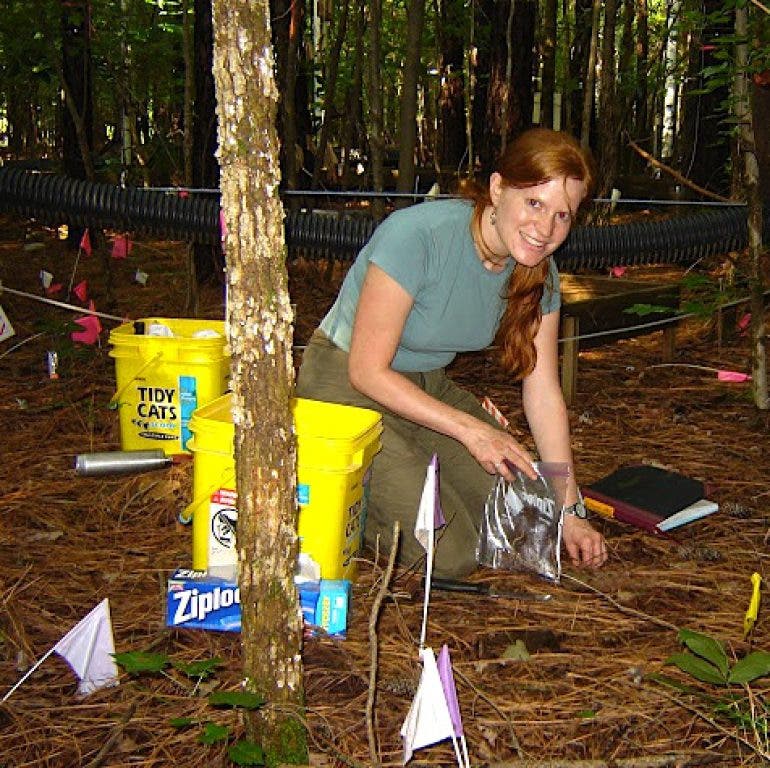
Rohnert Park native and grad Francesca Hopkins’ research on carbon emissions is turning heads in science and policy circles following the release of a study that showed that carbon decomposition in soil is accelerated by increased temperatures.
In much the same way as melting ice caps can't reflect heat back at the sun and must instead absorb it, contributing to global warming, Hopkins’ research showed that the decomposition rate in soil increases with temperature, resulting in bigger releases of carbon dioxide.
The more carbon dioxide released, the higher temperatures, something called a feedback loop, and which has serious implications for the Earth.
Find out what's happening in Rohnert Park-Cotatifor free with the latest updates from Patch.
“The warming we’ve already created is causing the soil to respire more quickly and that causes more carbon dioxide in the atmosphere, which causes more warming,” said the 30-year-old Hopkins, who attended U.C. Berkeley and is now completing her PhD at the University of California at Irvine. “It's a vicious cycle.”
In June, Hopkins’ study was published in the Proceedings of the National Academy of Sciences and noted by the New York Times Science blog.
Find out what's happening in Rohnert Park-Cotatifor free with the latest updates from Patch.
As part of her research, Hopkins traveled to North Carolina and Wisconsin, where she collected soil samples, all stored at different temperatures. When the temperature of soil samples was increased by 20 degrees Celsius, carbon production increased by eight times. By that estimate, the amount of carbon dioxide that microbes in soil exhale will double by the end of the century.
“What we showed with our work is that the carbon in the topsoil is vulnerable, so the feedback people have thought exists is plausible and that we could be in store for more warming,” Hopkins said. “In other words, the higher end predictions (for global warming) will probably be correct."
Since the release, Hopkins has been contacted by the European Commission, interested in turning her findings into policy.
“I want the public, especially young people, to understand why we’re concerned about this because it’s going to have a huge impact on their lives,” she says.
Get more local news delivered straight to your inbox. Sign up for free Patch newsletters and alerts.