Sports
At University of Sports, the Game's About More than Winning
Aaron Locks, who started the health club in 2008, said he wants to teach sports the right way, from a young age.
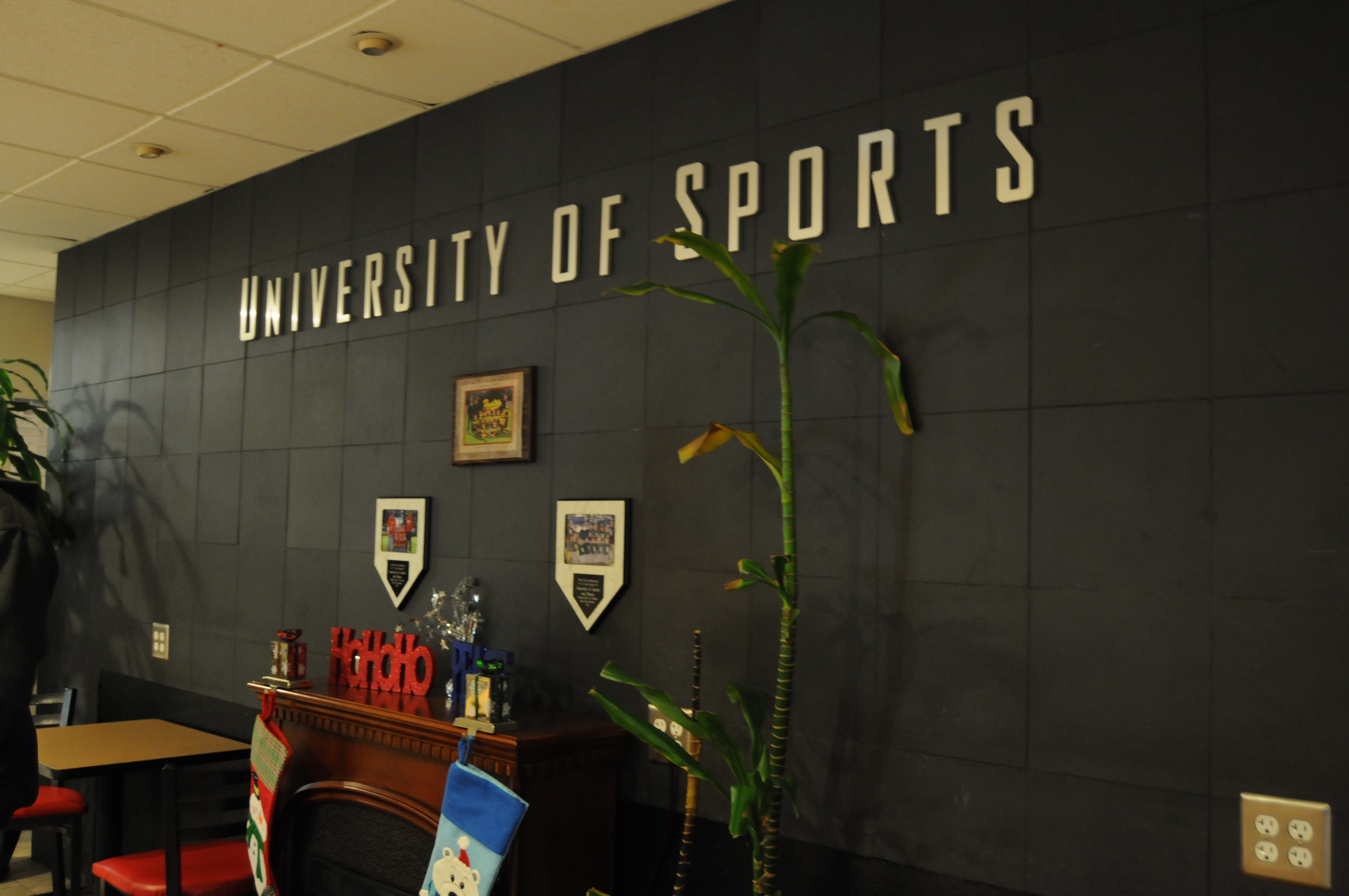


University of Sports President Aaron Locks says sports is about more than winning — it's about instilling values at a young age, having fun and developing self esteem.
It's an ethos Locks and his staff back up on a daily basis, through the gym's sports camps and adult leagues.
"I believe youth sports are over-coached and under-taught," said Locks, who has worked with more than 100,000 youngsters since opening the University of Sports health club and youth sports organization in Rohnert Park in 2008.
Find out what's happening in Rohnert Park-Cotatifor free with the latest updates from Patch.
"There is so much focus on winning that other important things get overlooked. We think the youth sports experience should be positive, active and fun," Locks said. "We stress reinforcement and encouragement at every one of our camps and clinics."
That's exactly what Back 2 Basics Basketball Academy provides. Sunday, March 20 marked the first day of the basketball camp's season at University of Sports, and it fits in nicely with their goals.
Find out what's happening in Rohnert Park-Cotatifor free with the latest updates from Patch.
"Our whole program consists of kids from sixth grade all the way up to 11th grade," said basketball coach and Back 2 Basics founder Louis Jenkins. "So many of the workouts are combined in one location like this. Also, the co-ed part is starting to grow, so we have more girls that are joining the program too."
Ituri Baker, a teenage hoopster, is in his second season with the basketball academy, and his father, Yonely Baker has seen the difference in his youngster because of it.
"I think it gave him a little bit of maturity because of the hard work," Baker said about the impact of Back 2 Basics on his son Ituri.
"It made me like basketball even more because you get to learn new stuff every day as you come out," Ituri said.
The improvement is not all sports either. According to Ituri's father, the hard work on the court has also impacted his son's work ethic and school studies.
"[It's] the dedication to sit down and know that he has to do it, to sit down and focus on his homework," Baker said.
Locks says he wanted to make a real difference — that's one reason why he left his coaching position for the Golden State Warriors, where he worked alongside legendary coaches such as former UCLA men's basketball coach John Wooden.
"In 1989, I stopped working for the Warriors," he said. "We were giving autographs, not teaching sports. I opened the University of Sports so that families can work out and enjoy fitness together."
"Our first year, we only had 127 kids and three weeks of basketball camps and two weeks of baseball camps. That started an adventure," he added.
"We tell people that we don't promise you the stars, but that we'll teach you to learn the skills to shine on your own," Locks said. "We don't promise kids that they'll make their high school teams. We guarantee that they'll have fun and learn about the game."
A staff of 71 that cover the fitness and youth sports programs at University of Sports. In addition to the health club, the gym offers up youth and adult programs in basketball, volleyball, football, baseball, cheerleading, softball — even a referee academy.
"We talk about how we can maximize the youth sports experience," Locks said. "Every kid who comes through our program learns to be accountable for their actions. Say, a young person comes to our basketball camp, they'll get 30 hours of instruction. That youngster will come away a better basketball player, have a better basketball IQ and be a better human being. They'll learn how to understand success and failure."
The people who run the camps say they couldn't do it alone.
"Our staff is really great," said Camps Director Jenny Ogston. "They put sports really secondary to having fun. That's what separates our camps from others."
Locks oversees the youth sports program that teaches youngsters to dream big, work hard and enjoy life.
Avery Cargill was one of the few girls on the court during the Back 2 Basics practice on a recent day.
Cargill's mom, Lynn, says she's seen her daughter's confidence improve dramatically since starting the program.
"For her, it's big changes because she was for a long time the only girl, and she was the youngest out there," Lynn said. "So, the big changes I saw was her confidence level, her fundamentals and her courage. She wasn't scared to play with boys."
Paige Dumont, lead sports director a former Sonoma State University star who played professional baseball, has worked with Locks for years.
"Aaron and I work a lot harder to help kids develop better attitudes and effort," Dumont said. "We emphasize fundamental skills and teamwork."
The "word of the day" is a key at every sports camp, Dumont said.
"We give the campers a new word every day to talk about and think about —respect, truth and honesty, teamwork and fun," Dumont said. "Then, we encourage them to relate how they can put those words into practice, not just in sports, but in school and at home."
While University of Sports camps focus on skills that can lead a player to lead a team to victory, the program pays most attention to helping each athlete advance personally in their chosen sport.
"We keep things positive. If kids get negative, negative, negative, they won't get there." Locks said. "It's just human nature. If you get cheered and encouraged, you'll get there eventually."
Locks, a 1985 graduate of Southern Oregon University, uses how young athletes are treated after failing to achieve as an example of how the University of Sports' approach differs from those used most often in athletics.
"When I played, our coach made us run as a punishment for making mistakes. After a while, I had no interest in running. We never use basketball (or any sport) or running as a punishment," he said. "We don't want kids to view running as punishment. At some point, there's a need to focus on results, but if we get the kids to focus on effort, they'll grow."
But, the games and the sports are still serious.
"Discipline, somehow, became a negative word in our society the last few years," Locks said. "We get kids to buy in to what we teach. We instill discipline in different ways. We say, 'eyes!' and clap twice. We teach kids to stand with their toes on the line, looking at us when we talk."
Locks understands that a successful youth sports experience must address parents and kids.
"My number one challenge is mom and dad," he said. "I like to use our parents to help rather than sit and watch."
Locks acknowledges that youth sports have become a profit-making enterprise where parents have to make difficult decisions in choosing programs for their children.
"It's a business, but it's not all about money. I never turn a kid away for lacking money to take part in a program," he said. "We've given out more than $70,000 in scholarships to help kids."
"I truly believe I can make an impact on kids' lives and find a way to make it positive."
Ted Sillanpaa contributed reporting to this story.