Health & Fitness
Omicron Looms Over CA: 5 Things To Know
State officials this week brace for another coronavirus variant to make landfall in California. Here's what we know.


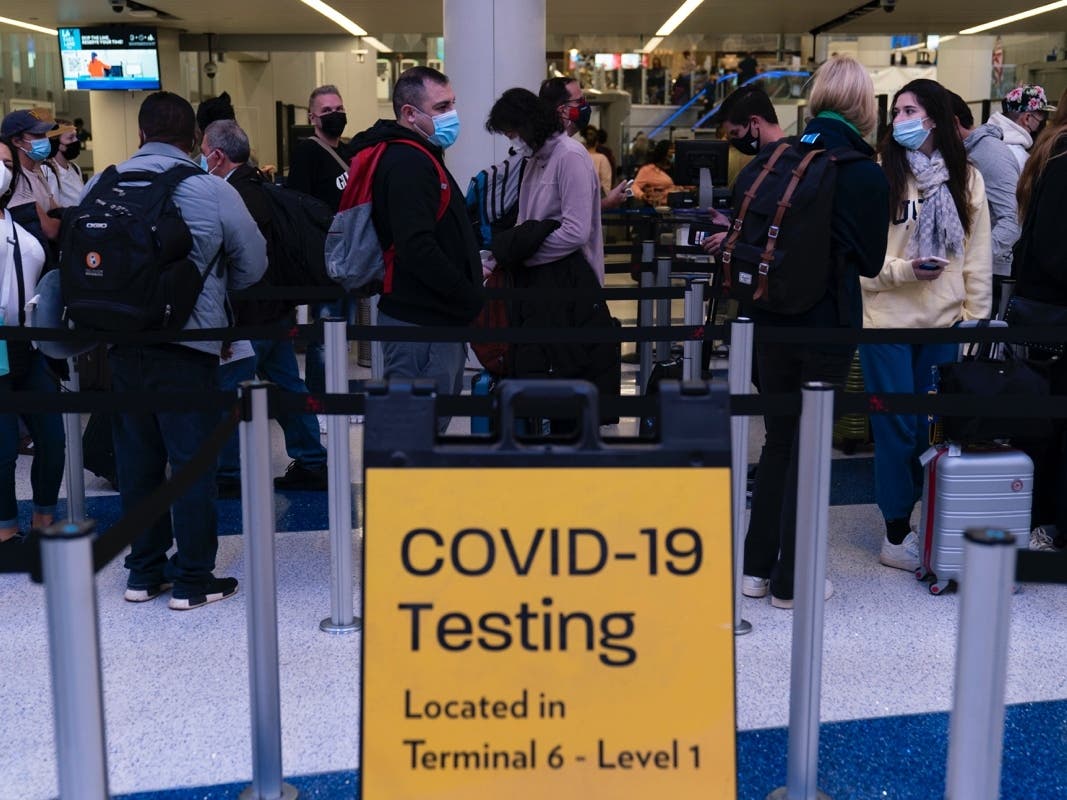
CALIFORNIA — Health officials in California were already bracing for a potential winter surge of COVID-19 when news of another coronavirus variant surfaced this month.
The new omicron variant has not yet been detected in the state or in the U.S., but officials were keeping an eye out for it. The variant was recently found in Canada after first being identified in South Africa and then in Europe.
"California is closely monitoring the new omicron variant, which has not yet arrived in California or the U.S.," state Public Health Director Tomás Aragón said. "Vaccines continue to be our best way through the pandemic by safely protecting us against severe illness from COVID-19 and its variants."
Find out what's happening in Rosevillefor free with the latest updates from Patch.
Here are five things to know about the omicron variant.
1. Variant Of Concern
The omicron variant was dubbed a "variant of concern" by the World Health Organization on Friday, but little is actually known about it.
Find out what's happening in Rosevillefor free with the latest updates from Patch.
"This variant is a cause for concern, not a cause for panic," President Joe Biden said as U.S. financial markets rebounded Monday after falling sharply on Friday. The White House said there were no plans to curtail Biden’s travel as a result of the new variant.
The uncertainty that surrounds the variant looms over the state's progress in scaling back transmission.
"I know, America, you’re really tired about hearing those things, but the virus is not tired of us," Dr. Francis Collins, director of the National Institutes of Health, said, according to The New York Times. "And it’s shape-shifting itself."
2. Transmissibility
White House officials said Sunday it could take "two more weeks to have more definitive information on the transmissibility, severity and other characteristics of the variant."
On the same day, the White House's chief medical adviser, Dr. Anthony Fauci, told ABC that the variant "appears to be" more transmissible than other variants.
"It has the molecular characteristics that would strongly suggest that it would be more transmissible," Fauci said, adding that the variant has "a disturbingly large number of mutations."
READ MORE: Is California In For Another Winter COVID-19 Surge?
3. It Could "Evade" Some Vaccine-Induced Antibodies
Although little is known about the variant, Fauci told ABC's "This Week" on Sunday that it could "evade some of the protection of monoclonal antibodies and convalescent plasma and perhaps even antibodies that are induced by vaccine."
But Fauci said he didn't think there was any possibility the variant would completely evade protection from current vaccines.
"It may diminish it a bit, but that's the reason why you boost," he said.
Based on the possibility that mutations in omicron could evade an immune response and boost its ability to be transmitted between people, "the likelihood of potential further spread of omicron at the global level is high," WHO said.
“Depending on these characteristics, there could be future surges of COVID-19, which could have severe consequences, depending on a number of factors including where surges may take place,” it added. “The overall global risk related to the new VOC Omicron is assessed as very high.”
In response to the dire warning, California official urged anyone at least 5 years old who has not been vaccinated to get vaccinated and those who had their last shot six months ago to get a booster shot.
"We are doubling down on our vaccination and booster efforts to ensure that all Californians have access to safe, effective, and free vaccines that can prevent serious illness and death," Aragón said in a statement.
4. Omicron Will Most Likely Hit California
Although no cases have yet been detected in the Golden State, officials were certain that it's only a matter of time.
"As we all know, when you have a virus that has already gone to multiple countries, inevitably, it will be here," Fauci told ABC's "This Week." "The question is, will we be prepared for it? And the preparation that we have ongoing for what we're doing now with the delta variant just needs to be revved up."
The California Department of Public Health announced Sunday that it would bolster COVID-19 testing availability at airports serving travelers from southern Africa.
State officials said they also planned to track the variant through genetic sequencing.
5. Is Omicron Stronger Than Delta?
Omicron is likely highly contagious, but it's unclear whether it will take delta's place as the most transmissible variant.
"What we don’t know is whether it can compete with delta," Collins said in an interview with CNN’s "State of the Union" Sunday.
Going into the winter and holiday season, the main concerns this year lie with those who remain unvaccinated against the coronavirus and the possibility that influenza could come roaring back after lying dormant last flu season, according to Dr. John Swartzberg, a professor of vaccinology and infectious disease at the University of California, Berkeley.
"We are going into a very unstable time now with the holidays coming up, with the weather colder and people being inside," Swartzberg said. "We know what happened last year. About 10 days after Thanksgiving, we saw just that horrific surge, and this year, the booster will help tremendously."
The Associated Press contributed to this report.
Get more local news delivered straight to your inbox. Sign up for free Patch newsletters and alerts.