Health & Fitness
4th COVID Shot? At-Risk Californians May Be Eligible Soon
Federal officials recently recommended a fourth vaccine shot for immunocompromised Americans. What to know.


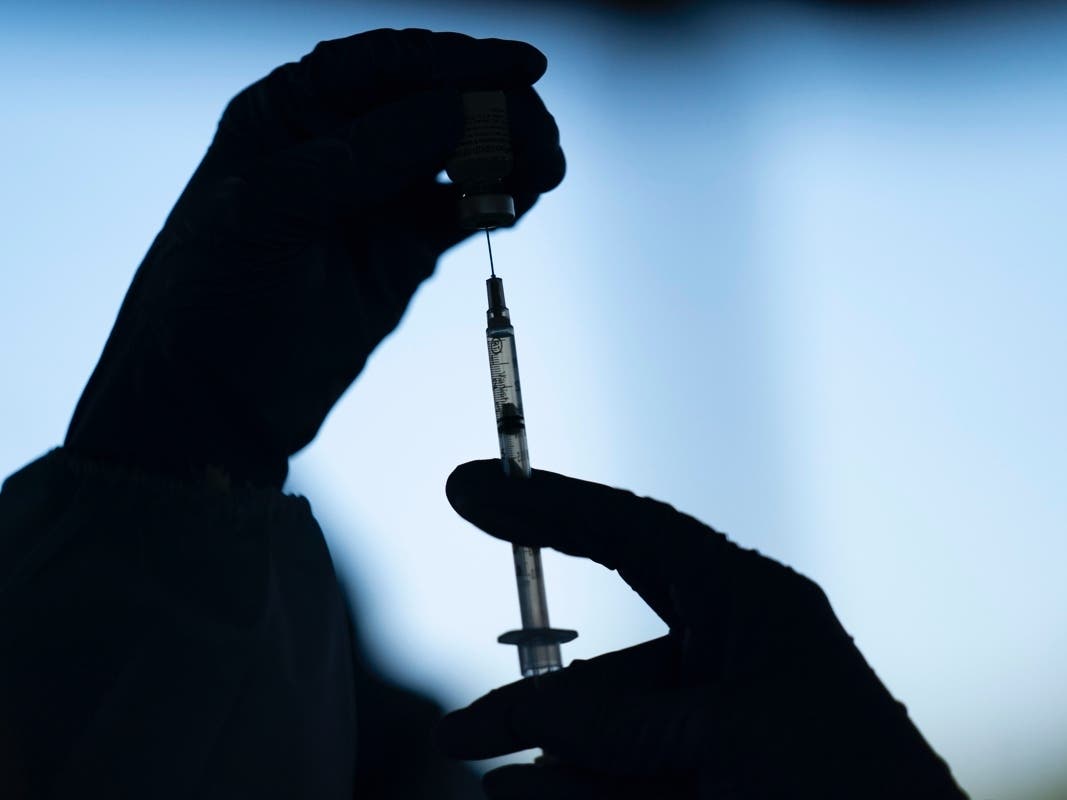
CALIFORNIA — Immunocompromised Californians may need to consider getting a fourth COVID-19 vaccine shot as immunity granted by the booster shots wane, according to new federal guidance.
At risk Americans who received an MRNA booster shot or third vaccine shot were recommended to get another vaccine shot three months after their last jab, according the Centers for Disease Control and Prevention.
Previous guidance recommended waiting at least five months.
Find out what's happening in San Diegofor free with the latest updates from Patch.
The new recommendation would apply to those over 18 who've had the Moderna vaccine and those aged 12 and older who got the Pfizer vaccine.
A fourth shot would likely need to be approved by the Western States Scientific Workgroup before it is widely available in the Golden State.
Find out what's happening in San Diegofor free with the latest updates from Patch.
Officials from the California Department of Public Health did not immediately respond to Patch for comment.
"There are data to show that some immunocompromised individuals will generate what appears to be a more effective immune response to COVID-19 vaccinations if given an extra dose," Dr. Timothy Brewer, a professor of infectious disease at the David Geffen School of Medicine at the University of California, Los Angeles, told Patch on Tuesday.
Israeli researchers found that a fourth COVID-19 jab granted a five-fold antibody rise, according to a new preliminary study, Al Jazeera reported.
The CDC hasn't said whether people at lesser risk of severe COVID-19 infection should get the fourth dose, and the Food and Drug Administration hasn't considered authorizing one.
Additionally, the CDC's recommendations for more doses puts the agency at odds with the World Health Organization. The WHO acknowledges that data indicates the COVID-19 vaccines' waning effectiveness over time. But the organization believes increasing vaccine access for the entire world needs to be the top priority for ending the pandemic.
"Blanket booster programs are likely to prolong the pandemic, rather than ending it, by diverting supply to countries that already have high levels of vaccination coverage, giving the virus more opportunity to spread and mutate," said WHO Chief Tedros Adhanom Ghebreyesus told media in December.
According to the CDC, half of those eligible for a booster shot have not gotten one — a figure the nation's top health official recently decried.
"Why would people who had enough understanding of the risk to go ahead and get the primary series — why we don’t have more getting the booster. I don’t have an easy explanation for that," Dr. Anthony Fauci said at a White House briefing last week. That’s one of the reasons why we keep trying to put the data out. Because, as Dr. Walensky showed in her slide, the data are really stunningly obvious why a booster is really very important."
Encouragement to get a third and fourth shot of the vaccine has continued as COVID-19 transmission remains high, even though the omicron surge seems to be tapering off, according to recent state data.
"As the serious side effects of the vaccines are rare and we have been experiencing high community transmission of COVID-19 disease, the benefits of an additional dose of a COVID-19 vaccine outweigh the risks for many immunocompromised persons," Brewer said.
As for the three month marker for a fourth shot, Brewer said he is "not aware of good data to specify the timing, but three months seems a reasonable choice."
Here's what the CDC says about getting a fourth dose:
Additional Primary Shot
The primary COVID-19 vaccine course consists of two doses of the Pfizer and Moderna shots and one Johnson & Johnson shot.
- If you received Pfizer: People 5 and older who are moderately or severely immunocompromised should get an additional primary shot, given 28 days after their second dose, according to the CDC.
- If you received Moderna: People 18 and older who are moderately or severely immunocompromised should get an additional primary Moderna shot, given 28 days after their second dose, the CDC says.
- If you received Johnson & Johnson: The CDC doesn't recommend an additional primary shot at this time.
Booster Shot for Immunocompromised
- If you received Pfizer: Teens ages 12-17 should only get a Pfizer booster. Adults should get either the Pfizer or Moderna vaccine in most situations. The booster should be given five months after the additional primary shot, according to the CDC.
- If you received Moderna: People 18 and older can get a booster shot of the Pfizer or Moderna vaccine, given give months after the additional primary shot, the CDC says.
- If you received Johnson & Johnson: Adults can get the Pfizer or Moderna vaccines as a booster shot in most situations, given two months after their first shot, according to the CDC.
Who Is Moderately or Severely Immunocompromised?
The CDC considers people to be moderately or severely immunocompromised if they have:
- Been receiving active cancer treatment for tumors or cancers of the blood.
- Received an organ transplant and are taking medicine to suppress the immune system.
- Received a stem cell transplant within the last two years or are taking medicine to suppress the immune system.
- Moderate or severe primary immunodeficiency, such as DiGeorge syndrome, Wiskott-Aldrich syndrome.
- Advanced or untreated HIV infection.
- Active treatment with high-dose corticosteroids or other drugs that may suppress your immune response.
The agency recommends talking to a health care provider about their medical condition and whether getting a fourth shot is appropriate.
The news comes as California prepares to lift its statewide mask mandate for indoor public places next week, ending one of the nation's strictest masking requirements.
The move, announced by state health officials on Monday, comes as the Omicron-fueled winter surge rapidly recedes across the state.
The new policy will go into effect Feb. 15.
"Omicron has loosened its hold on California, vaccines for children under 5 are around the corner, and access to COVID-19 treatments is improving," said state Public Health Officer Dr. Tomás J. Aragón. "With things moving in the right direction, we are making responsible modifications to COVID-19 prevention measures, while also continuing to develop a longer-term action plan for the state."
READ MORE: CA Mask Mandate Ending Soon, Governor Says
Patch editors Josh Bakan and Paige Austin contributed to this report.
Get more local news delivered straight to your inbox. Sign up for free Patch newsletters and alerts.