Health & Fitness
SoCal Coronavirus Shutdown Issued As ICU Bed Capacity Diminishes
As SoCal's intensive care unit capacity sunk below 15% for a second day, the state imposed a sweeping stay home order for 11 counties.


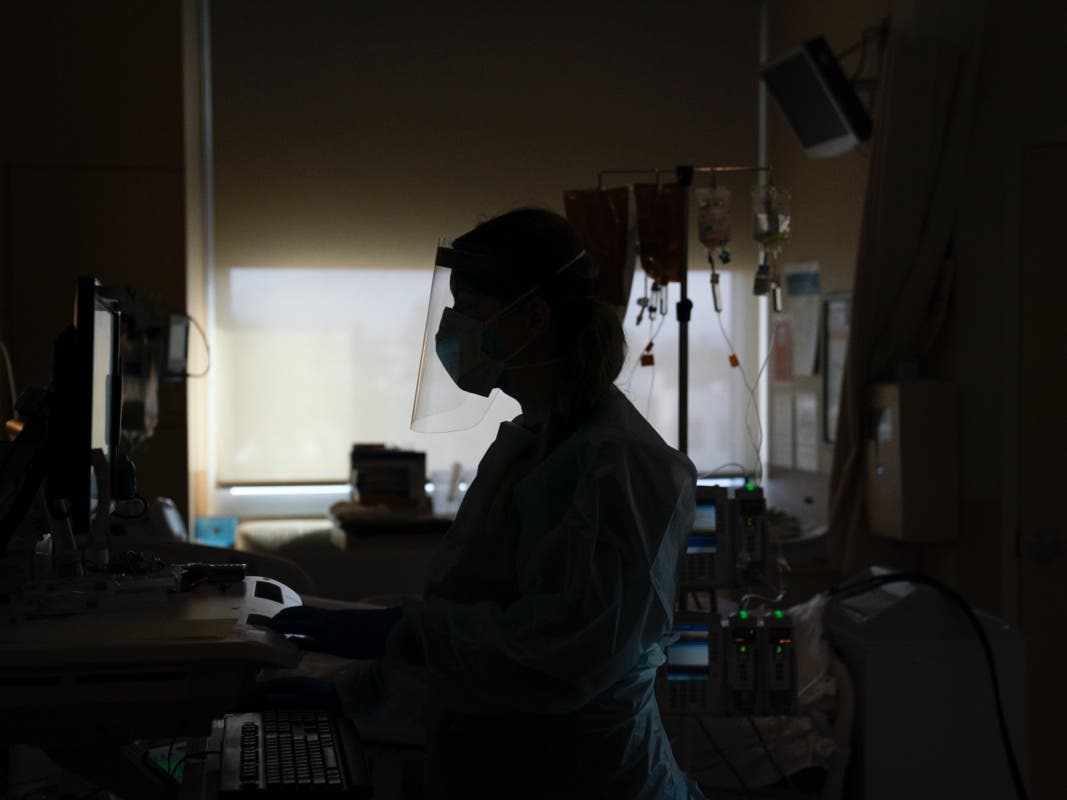
SAN DIEGO, CA — A drop in intensive care unit beds has triggered a sweeping stay-at-home order in Southern California. The new restrictions will shutter businesses across the region Sunday night.
The state-mandated "regional stay-at-home" order goes into effect at 11:59 p.m. Sunday and will remain for at least three weeks.
ICU capacity plummeted to 12.5 percent in the Southland's 11 counties Saturday, health officials said. This is the second day the region's ICU capacity dropped below the state's threshold of 15 percent for triggering the widespread shutdown, introduced by Gov. Gavin Newsom Thursday.
Find out what's happening in San Diegofor free with the latest updates from Patch.
Los Angeles County had 21% of its ICU beds available and Orange County had 20%, but those numbers were expected to decline later when the counties release their daily updates.
Newsom warned Thursday that the region could meet that trigger within days. The Southern California region consists of Los Angeles, Orange, Riverside, San Diego, Imperial, Inyo, Mono, San Bernardino, San Luis Obispo, Santa Barbara and Ventura counties.
Find out what's happening in San Diegofor free with the latest updates from Patch.
The stay-at-home order will ban gatherings of people from different households. Regions will be able to exit the order on Dec. 28 if ICU capacity projections for the following month are above or equal to 15 percent.
The San Joaquin Valley also fell under the new order after its ICU capacity dropped to 8.6 percent.
The following businesses and recreational facilities will close Sunday:
- indoor and outdoor playgrounds;
- indoor recreational facilities;
- hair salons and barbershops;
- personal care services;
- museums, zoos, and aquariums;
- movie theaters;
- wineries;
- bars, breweries and distilleries;
- family entertainment centers;
- cardrooms and satellite wagering;
- limited services;
- live audience sports; and
- amusement parks.
Schools with waivers can remain open as well as "critical infrastructure." Retail stores can keep doors open as long as capacity is limited to 20 percent. Restaurants will be forced to shutter dine-in operations and only remain open for takeout and delivery service.
Hotels and motels are only allowed to stay open "for critical infrastructure support only," while places of worship will be restricted to outdoor only services.
Entertainment production may continue — including professional sports — but without live audiences.
It remains to be seen exactly how state officials will enforce the restrictions. Some law enforcement agencies spoke out against the statewide curfew that went into effect in November.
And in Riverside, Sheriff Chad Bianco decried Newsom's approach to handling the statewide restrictions as the state governor warned Thursday that he would withhold funding from states that decide not to follow the orders and redirct funding to counties that were following the new protocols.
"Ironically, it wasn't that long ago that our same governor loudly and publicly argued how wrong it was for the president of the United States to withhold federal funding from states not complying with federal laws," Bianco said in a YouTube video released Friday. "The dictatorial attitude toward California residents while dining in luxury, traveling, keeping his business open and sending his kids to in-person private schools is very telling about his attitude toward California residents, his feelings about the virus, and it is extremely hypocritical."
Bianco further announced that his deputies would not be enforcing the order.
READ MORE: Riverside Sheriff Slams Newsom, Won't Enforce Stay-At-Home Order
San Diego County reported 2,039 new COVID-19 cases on Friday, with 791 coronavirus patients hospitalized, including 216 in intensive care — all hitting a record high.
The previous high for new infections was 1,859 reported Nov. 27. Friday was the 24th consecutive day more than 600 new cases have been reported and 12th in the past 14 days with more than 1,000 new cases.
The San Diego County Health and Human Services Agency has reported 88,181 cases since the pandemic began.
An additional seven COVID-19 deaths were reported Friday, raising the death toll to 1,047. Four women and three men, all with underlying medical conditions, died between Monday and Thursday. Their ages ranged from the mid- 20s to the early 100s.
Another 37 coronavirus patients were hospitalized, according to Friday's report.
Of San Diego County's 696 licensed ICU beds, 154 were available.
The number of patients with COVID-19 in San Diego County hospitals has increased dramatically from one month ago. There were 297 hospitalized on Nov. 3. The 791 also is more than double the previous peak in mid-July.
Of the 88,000-plus cases logged in the county since the start of the pandemic, 4,806 — or 5.5 percent — have required hospitalization and 1,061 patients — 1.2 percent — had to be admitted to an ICU.
The total number of people hospitalized for any reason in the county is 4,587 — fairly consistent with the past several months — but the percentage of COVID-19 patients in the region's hospitals rose from 6.7 percent a month ago to 17.2 percent on Friday.
A total of 25,289 tests were reported Friday, with 8 percent returning positive, raising the 14-day average to 6.7 percent.
A total of 14 community outbreaks were confirmed Friday: six in business settings, two in food/beverage processing settings, two in distribution warehouse settings, one in an emergency services setting, one in a government setting, one in a faith-based setting and one in a healthcare setting.
Over the previous seven days, 93 community outbreaks were confirmed. A community outbreak is defined as three or more COVID-19 cases in a setting and in people of different households over the past 14 days.
Many living in Southern California have already been living under such restrictions as Los Angeles County barred in-person dining Thanksgiving week to combat an alarming rate of community spread seen in the Southland.
Newsom said the order is "fundamentally predicated on the need to stop gathering with people outside of your household, to do what you can to keep most of your activities outside and, of course, always ... wear face coverings, wear a mask."
The governor also noted that the state still has a travel advisory in place recommending against non-essential travel and urging people to quarantine when they return to the state. When the regional stay-at-home order is triggered, it will strongly urge residents to cancel any non-essential travel.
Dr. Mark Ghaly, the state's Health and Human Services secretary, acknowledged there is no real mechanism for enforcing such a travel restriction, but the state will rely on public cooperation.
"We believe that really emphasizing this is what we hope our citizens will do because their communities are at particularly high risk, their hospitals are having difficulty keeping available ICU beds open, that people will restrict their travel statewide," he said.
The state's full stay-at-home order can be read here.
The City News Service contributed to this report.
Get more local news delivered straight to your inbox. Sign up for free Patch newsletters and alerts.