Schools
The Jolly Roger: Smart Meter Opponents Look to Legislation and Regulation
Jolly Roger reporter Emily Field looks at the fierce opposition to Smart Meters among local residents who challenge PG&E's use of the devices in Marin.
At The Jolly Roger Corner, you get a glimpse into Drake's oldest high school newspaper The Jolly Roger. Check out more articles, photos, reviews and insight into our local school at drakejr.com.
BY EMILY FIELD
PG&E’s argument regarding the installation of Smart Meters has been hotly debated throughout our influential and informed Marin County.
Find out what's happening in San Anselmo-Fairfaxfor free with the latest updates from Patch.
Some may call this resistance towards Smart Meters as a battle starting too late, but for some this is just the beginning. Because 8 million of these meters have already been installed in California residences, PG&E’s plan to position 10 million meters by 2012 is almost completed, and residents are taking a stand.
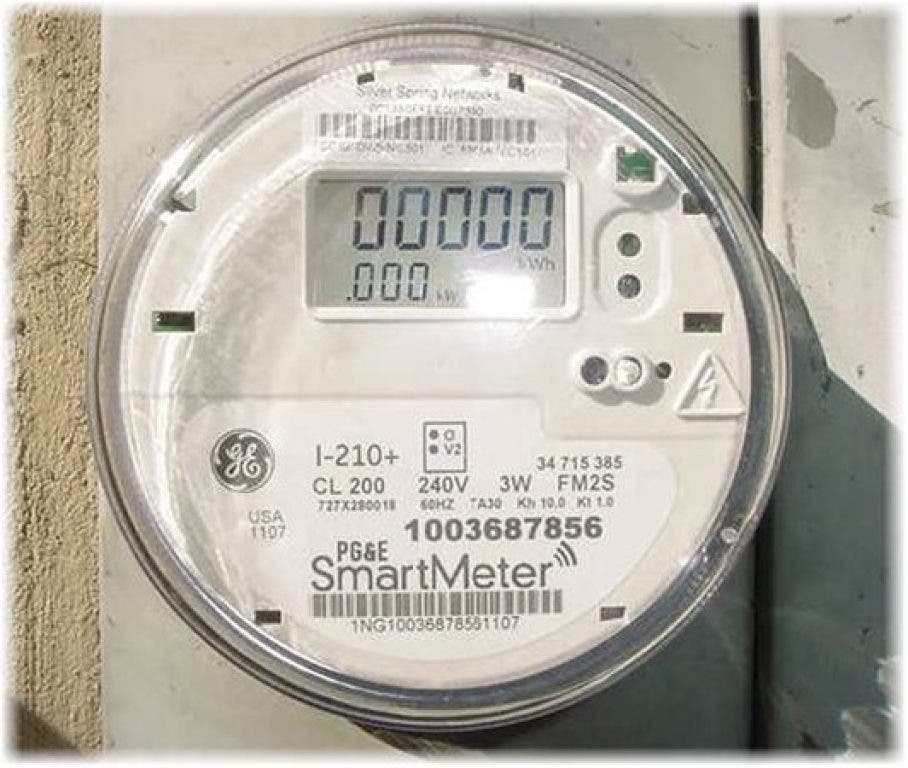
In its roll-out documentation, PG&E informed citizens it would install Smart Meters in their homes. PG&E argues that having a wireless device which monitors gas and electrical usage will help them become more efficient as a company. It will also help residents with the devices save money in a productive way, and they will enable communities to step towards the future in a greener, eco-friendlier direction according to their website. They hope to create a new generation of utility service based on the concept of a smart grid – device that would connect all smart meter users.
Find out what's happening in San Anselmo-Fairfaxfor free with the latest updates from Patch.
Although the implementation of smart meters continues, PG&E’s arguments have been proven wrong by anti-smart meter opposition groups, which have emerged throughout Marin County, California, and the greater northwestern region.
For members who strongly disapprove of the implementation of this plan it’s for much more than that. For Fairfax Mayor, Larry Bragman, the fight is about protecting the rights and health of those living in communities where the meters are being installed without permission. He believes it is also a fight to work towards better methods of monitoring usage without the use of electromagnetic radiation and wireless technology.
According to the World Health Organization International Agency on Research on Cancer’s (WHO/IARC) May 2011 report, radiofrequency radiation, also known as microwave radiation, is now classified as a possibly human carcinogen. This is at the same level risk as tobacco, DDT pesticide, and lead. This fact has led to uproar about wireless technology including cell phones.
However, Smart Meters have become a large focus of risk studies because it is a relatively new technology whose EMF (Electro-Magnetic Frequency) level is still undetermined, unlike that of particular cell phone brands who are required to state the EMF rating in fine print in phone contracts.
People may have probable cause to be worried about their health. “It takes a number of years to gather enough evidence to demonstrate whether any particular radiation emitting device or network has adverse health consequences,” said long-term global EMF activist Libby Kelley.
According to Kelley, the most compelling scientific evidence to influence whether wireless radiation and health problems are “the links between long term cell phone use (up 30 minutes a day is considered heavy use [according the WHO/IARC]) and the formation of a malignant brain tumor called glioma.”
According to Dr. Samet, a scientist from the University of Southern California who chaired the WHO/IARC committee, not only do cell phone pose a health risk, but other wireless devices such as Smart Meters or wireless routers like it which operate continuously.
The serious health concerns regarding these devices are being explored by Smart Meter opposition groups in Marin, according to advocate Katharina Sandizell-Smith of Fairfax. She has worked and continues to work on raising awareness about the possible health effects of the meters.
“Although these millisecond bursts meet FCC (Federal Communications Commission) standards, a lot of us believe them to be inadequate,” Sandizell-Smith said. “Due to these bursts of electromagnetic radiation, people living in homes fitted with the meters are suffering from headaches, heart palpitations, and sleep disturbances.”
“This is untested, dangerous technology and the smart meters are really a corporate mistake. People who didn’t have health problems are experiencing them, and those who were sick before smart meters were installed in their homes are getting worse,” said Sandizell-Smith.
She also believes that PG&E, who has refused to share information with the public on how much EMF radiation the devices actually emit don’t understand their own technology.
PG&E has the right to upgrade homes without homeowner’s permission, and because it is a radiation emitting device without a set EMF standard, many don’t believe it to be legal, and Sandizell-Smith certainly doesn’t.
As an active member of the West Marin group opposing the meters, she lobbied supervisors to get an ordinance passed that would stop the installation of smart meters. When PG&E didn’t listen to her plea, she organized a group to try and halt their installation trucks, and was arrested for doing so.
As a mother, Sandizell-Smith believes her arrest was justifiable because she believes she was protecting the safety of her own children and the surrounding community. “The arrest got a lot of publicity. We ended up on the cover of the New York Times,” she said. “It’s empowering when you get people to listen. It’s important to protect our health, and much of the community isn’t aware of the issues regarding smart meters. Once they find out more about them, they think twice before installing them,” she added.
Although the Smart Meter debate has been mainly focused on the health issues, Bragman’s concerns lie within the aspects of governance and democracy. He was shocked to discover that PG&E was violating the normal legislation which has been implemented in an effort to protect citizens’ privacy and regulate public rights of way.
“Five data collection units were installed without permission, without notice, and without any kind of hearing. This utility company came in without getting permission from the town of Fairfax and ignored the ordinance that has successfully regulated wireless devices,” said Bragman. “Other telecommunications have always abided by the ordinance and the use of a permit without violating town laws.”
Privacy remains one of Bragman’s primary objections to the smart meter program. Because these devices can record a highly detailed record of energy usage, PG&E can easily make inferences about activities going on within residential homes.
Bragman believes that the health and safety of the community must be protected, especially when longstanding reports from the Department of Health show that 3.2 percent of the population self-report as being EMF sensitive. “This must be and should be regulated. We have a duty to try and protect the community,” he said.
Recently, the Center for Safer Wireless held a Wireless Safety Summit on October 5 and 6 in Washington D.C., which Kelley attended along with hundreds of other individuals, legislators, and activists who similarly have concerns about wireless technology. The Summit, according to the Center For Safer Wireless’ online website, requests that Congress and the Administration take three actions immediately to ensure the greater health and safety protection from electromagnetic radiation hazards for precautionary reasons.
The first action requested by the Center For Safer Wireless Organization is to convene Congressional hearings which will feature testimony from scientific experts and public advocates regarding the experimental, clinical, and epidemiological evidence on human health and environmental effects of electromagnetic radiation.
The second is to ask the U.S. Surgeon General to issue a report calling for precautionary warnings on the use of cell phones, wi-fi, and other radio-frequency emitting devices that are creating chronic, involuntary exposure conditions (including smart meters). The third is to place an immediate moratorium on Federal funding intended to further deploy the smart grid infrastructure.
Although these might be far-fetched ideals, and depending upon the varied viewpoints of the public on wireless technology and smart meters, this is where the future is headed, reforms and important boundaries are already needed in an increasingly wireless world.