Article Source: County
Bay Area cities decades—even centuries—behind on affordable housing, say analysts
To the surprise of no one, California is not building enough. According to the report, "While 200,000 units of housing are needed annually to keep up with population growth, only 113,000 were permitted in 2017, and fewer than 750,000 units were permitted since 2007, accounting for only 40 percent of the projected need." What housing production there is woefully neglects low-income housing goals: "Forty-five point six percent of above-moderate income units have been permitted, whereas only 19 percent of moderate income 9.8 percent of low income, and 7.3 percent of very-low-income units have been permitted. Fifty-two percent of the jurisdictions reporting… have permitted zero units for the very-low-income category."
Find out what's happening in San Brunofor free with the latest updates from Patch.
Think about your life in 1990. Has much changed? Of course it has. It is time for our land use laws to be updated, too. Even in the City of San Mateo. That is why so many community members have been participating in the General Plan Update process, to create a plan for the future.
Unfortunately, there is an attempt to undermine that process. The City Council is being asked to "settle" with San Mateans for Responsive Government (SMRG) over its deeply flawed proposal to extend Measure P height and density limits, originally passed through voter initiative some thirty years ago.
Find out what's happening in San Brunofor free with the latest updates from Patch.
SMRG tried to thwart the city's effort to update its 2040 General Plan by proposing a 10-year extension of Measure P, before the City's broad-based community outreach had even begun. However, the measure was determined to be legally deficient by the City Attorney because it failed to fully describe to petition signers what the proponents sought to achieve.
So, SMRG approached the Council to fix its problem. The proposal, as currently written,may or may not reach the ballot. The Council may choose not to place it on the 2020 ballot due to its defects. Or the City could challenge the measure to remove it from the ballot. But instead, the Council has been meeting in closed session to determine if it should do a "deal" with SMRG to allow it to withdraw its defective measure and replace it with a Council-sponsored voter measure for the 2020 ballot that would clean up SMRG's mistakes, and shorten the extension from 10 years to 2. Absent this "settlement," SMRG apparently threatens to create a new, even more restrictive measure for the 2020 ballot to cap heights and densities.
To be clear though – there is no "threatened litigation" to settle!
If the Council wants to promote a democratic, transparent, and inclusive General Plan Process, as it has said in the past, why would it sponsor a ballot measure that could frustrate the ability to accomplish that important objective? We respectfully request that the council refrain from placing a "compromise" measure on the ballot. Furthermore, all discussions about any potential ballot measures should take place during the regular city council meetings so everyone can participate.
If you would like to get involved in the General Plan in San Mateo and help us overturn exclusionary housing policies like the SMRG measure, please contact me at estivers@hlcsmc.org
Evelyn Stivers, Executive Director, HLC
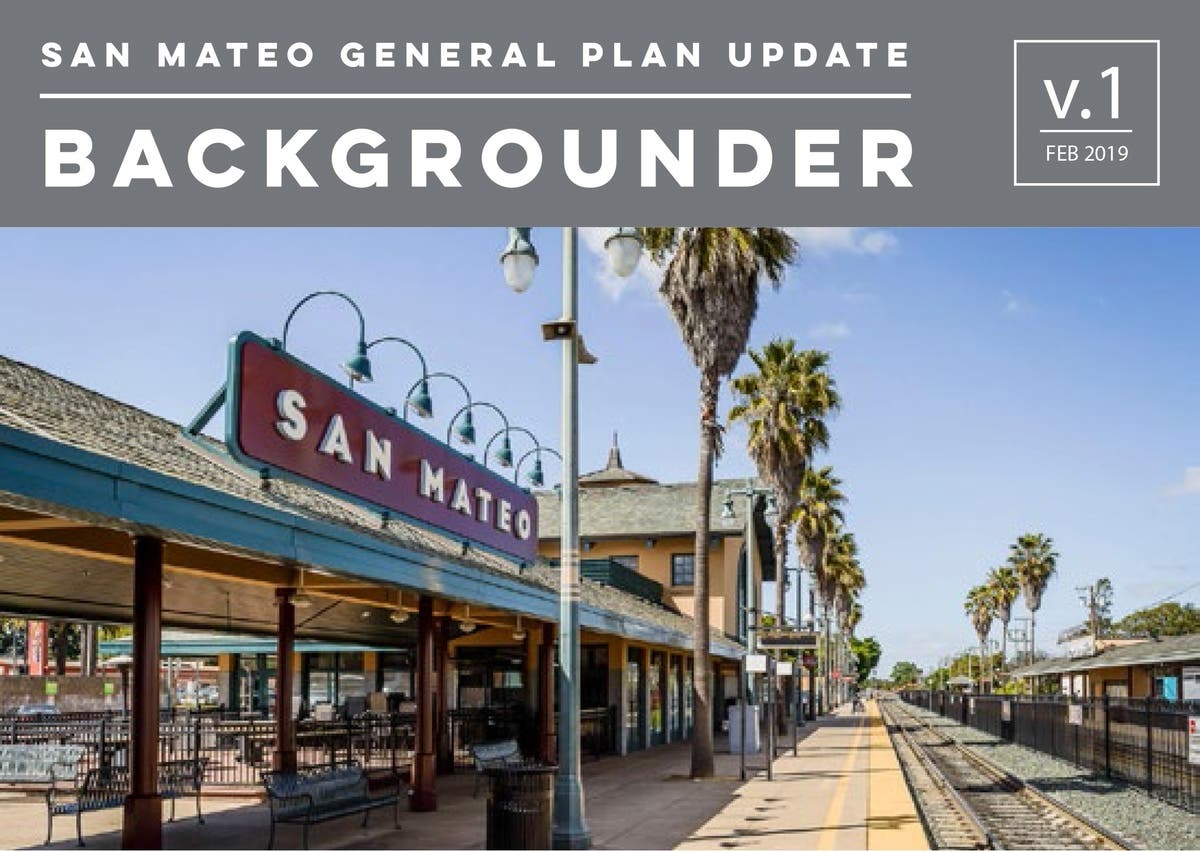
About the Backgrounder
As San Mateo moves to try and find solutions to the housing crisis, we at the HLC are committed to providing facts and data to help inform our decisions. We are not the only community facing crisis and we can learn from how communities throughout the country are solving problems. We hope you find this information useful as San Mateo embarks on its own process of redefinition.
Legislation Introduced to Enable the Bay Area to Tackle Housing Crisis as a Region
Plantizen
A regional attempt to address the housing crisis in the San Francisco Bay Area by the Committee to House the Bay Area (CASA) cleared three formidable hurdles in December and January. Recently, Assemblyman David Chiu introduced Assembly Bill 1487, for the creation of a regional housing agency to be called the Housing Alliance for the Bay Area (HABA), "with the ability to impose regional taxes to fund development, local planning and tenant assistance." Fortunately for CASA, a separate bill in the state Legislature could make it easier to pass a regional housing tax and would reduce the voter threshold below two-thirds for eligible taxes.
Photo Credit: San Bruno CA Patch Archives
Source Credit: County of San Mateo CA
CLICK on link below to Subscribe to News Alerts and a Daily Email Newsletter for San Bruno Patch
http://link.patch.com/join/3-0-subscribe?list=US_CA_SANBRUNO_282
#SanBrunoPatch