Community Corner
San Mateo County CA: Tick-Borne Disease and Tick Safety in San Mateo County
UPDATE: What you need to know and do regarding ticks.


Find out what's happening in San Brunofor free with the latest updates from Patch.
Good afternoon, residents of San Mateo County!
I’d like to take a moment to remind you about the risk of tick-borne disease in San Mateo County and recommend a few precautions to reduce your risk. While there is NOT an elevated level or risk of tick-borne disease in San Mateo County at this time, but tick-borne diseases ARE present here and appropriate precautions should be taken.
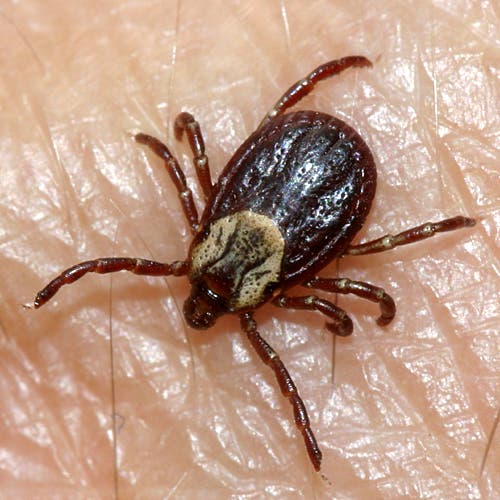
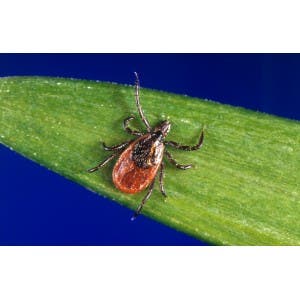
Ticks are present year-round, but are most abundant between the months of December and May. Data from our tick-borne disease surveillance program last year (2014/2015) indicate that up to 3% of western black-legged ticks (also called deer ticks) collected in San Mateo County are infected with one or more strains of bacteria capable of causing tick-borne illness in humans.
While this rate is consistent with previous years’ data and does not represent an elevated level of risk, these results do indicate that there is a risk of tick-borne disease here in San Mateo County. We recommend the following precautions when engaging in outdoor activities during tick season:
• When outdoors in areas where there may be ticks, wear long pants and sleeves. Don’t wear shorts, sleeveless shirts, or sandals. Tuck pants into socks or boots, and shirts into pants. Light-colored clothing makes it easier to see ticks before they attach to the skin.
• Use tick repellent containing DEET. Tick repellents should be applied according to the label instructions only. Tick-repellent clothing is also available. Children should not apply concentrations of DEET higher than 10%.
• Ticks are often found in brush, tall grass, or leaf litter. When hiking, walk in the center of the trail. Avoid grassy or brushy areas, and don’t hike off the trail.
• After outdoor activities in areas where there may be ticks, check yourself, your children, your pets, and your belongings carefully for ticks. Remember to check areas that cannot be easily seen, such as inside and around ears, on the scalp, and under arms. Showering soon after being outdoors can help rinse away unattached ticks, and will allow you to check all areas of your body.
• Prompt removal of attached ticks can reduce the chance of infection with a tick-borne disease. To remove a tick, use tweezers to grasp the tick as close to the skin and pull gently but firmly. Do not jerk or twist the tick. Never crush, burn, or smother a tick. After removal, wash your hands and the bite area with soap and water.
• If you find a tick attached to your body, save it for testing. Place the tick in a plastic bag containing a wet paper towel. The District laboratory CANNOT test individual ticks – please contact your healthcare provider or the County Health Laboratory, located at 225 West 37th St., Room 113, San Mateo, California.
• Consult a health professional if unable to completely remove a tick, or if a rash or fever develops after exposure to a tick.
For more information on ticks in San Mateo County, contact the San Mateo Mosquito and Vector Control District at (650) 344-8592 or visit www.smcmvcd.org/ticks.
Sincerely,
Megan Caldwell
Public Health Education and Outreach Officer
San Mateo County Mosquito and Vector Control District
(650) 344-8592 | www.smcmvcd.org
Follow us: Facebook.com/SMCMVCD | Twitter.com/SMCMVCD
Megan Caldwell, MPH
Find out what's happening in San Brunofor free with the latest updates from Patch.
Public Health Education and Outreach Officer
San Mateo County Mosquito and Vector Control District
1351 Rollins Rd. | Burlingame, CA 94010
Office: (650) 344-8592 x13 | Mobile: (650) 350-9360 | Fax: (650) 344-3843
Photo Credit: San Bruno CA Patch Archives
Source Credit: San Mateo County Mosquito & Vector Control District
www.RelayForLife.org/SanBrunoCA
I support the American Cancer Society’s mission and Relay For Life San Bruno CA
American Cancer Society’s MISSION Statement:
The American Cancer Society is the nationwide community-based voluntary health organization dedicated to eliminating cancer as a major health problem by preventing cancer, saving lives, and diminishing suffering from cancer, through research, education, advocacy, and service.
