Community Corner
How Everything and Nothing Has Changed Since 'All the President's Men'
The state of journalism today.


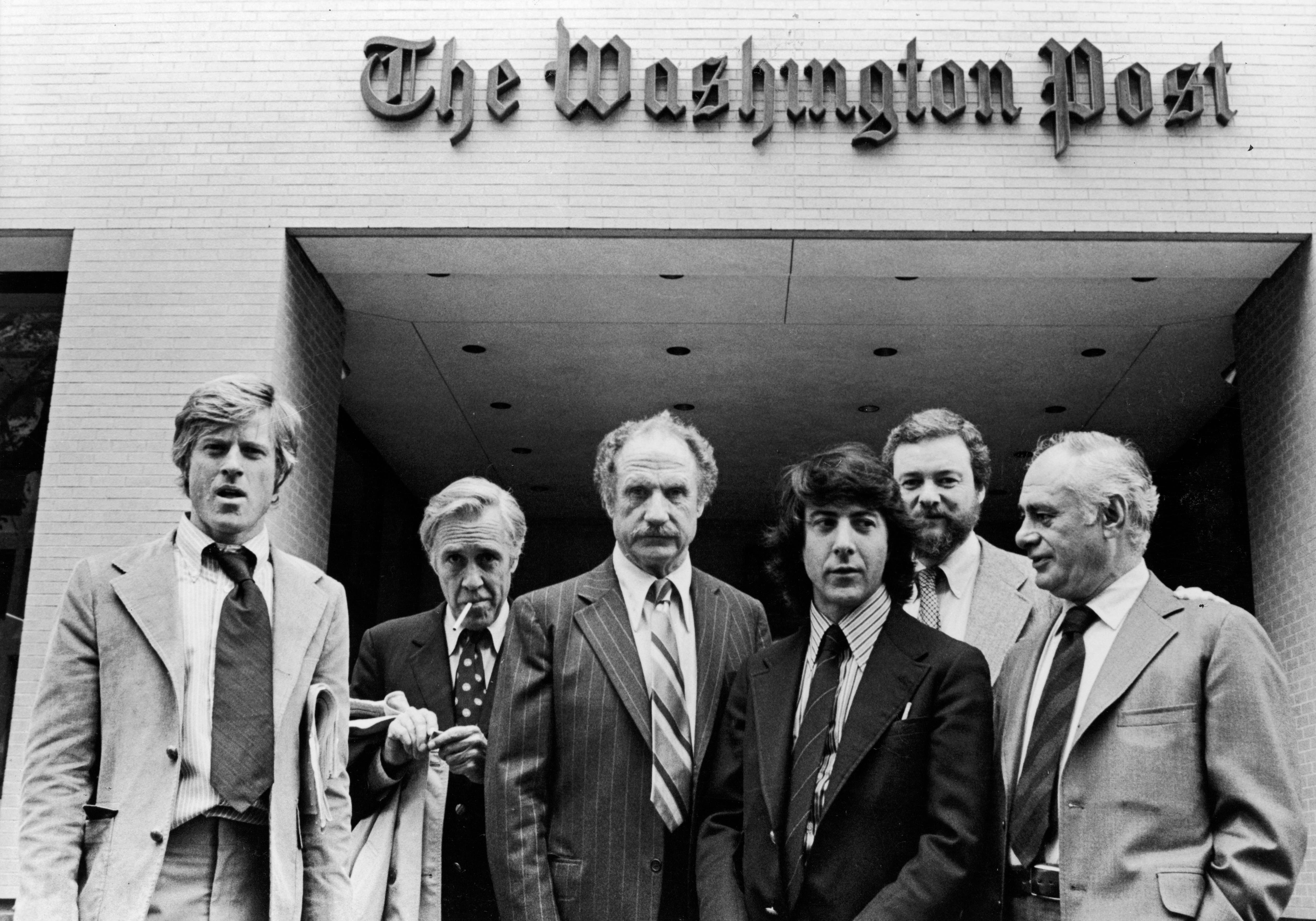
It’s not without a splash of irony that it’s taken me all day to write a little ditty about last night’s showing of All the President’s Men at the West Coast Film Festival in San Juan Capistrano.
Like many journalists of a certain age, the movie was an inspiration if not the catalyst for a career spent writing about others -- and if I was lucky, investigating a juicy news tip.
All the President’s Men holds up well, really well, for a movie nearly 40 years old. While we all had a good chuckle at Washington Post newbie Bob Woodward’s expense as he took out phone book after phone book, trying to hunt down the location of one of Watergate’s minor players, the drive to uncover something new, something seedy and hidden, is as fresh as it ever was.
Find out what's happening in San Juan Capistranofor free with the latest updates from Patch.
Ironically -- there’s that word again -- though, it’s harder.
We have more information at our fingertips than Woodward and Bernstein could have ever imagined in the early ‘70s. We can dig up court records, property records, family records and contact information faster than you can find the right page in a Thomas Guide.
Find out what's happening in San Juan Capistranofor free with the latest updates from Patch.
And yet, with the tightening of the traditional media market, we have less time on our hands to use those tools.
That’s because, as Bob Kline, former Warner Bros. exec and co-founder of the West Coast Film Festival, pointed out in a discussion before the screening, there are fewer and fewer newspapers these days. Back in the Watergate era, there were 1,800 newspapers of record across the country. Today, that number has dropped to 1,200.
Even more telling, in the 1970s, 90 percent of all households subscribed to a newspaper. Today, it’s about 30 percent, Kline said.
You don’t have to look farther than the Orange County Register. New publisher Aaron Kushner came on the scene with money to burn, and burn he did. First he inflated the paper’s staff size, bought a few more and double-downed on newsprint as the future.
The layoffs were predictable. It’s gotten so bad, the OC Weekly has a an “OC Register Death Watch” column.
But wait, there’s the internet, you say. Something I may have SOME familiarity with.
The problem is, there is no real treasure trove in the internet, especially if you’re media. Media is personnel heavy, and AOL learned the hard way, you can’t staff an internet news outlet the way you staff a newspaper newsroom. When I first started at Patch, I was incredulous I was playing the same roles as about 15 people in my first job at the Simi Valley Enterprise.
And that was just for one city. Now I provide the news for dozens of Patch towns, stretching from San Clemente to Malibu.
So while I’d love to go Woodward and Bernstein on a few choice organizations’ behinds, my attention goes to the breaking news. I cover the bases, aided by newswire, and usually collapse, exhausted each night. Only to wake up to the calamities that occurred overnight.
Fortunately, AOL sold Patch and the new owners do have some cost-effective tricks up their sleeves. As we roll them out, more time should be freed up to go chasing odd burglaries that don’t add up, metaphorically speaking. Our new editor-in-chief, Warren St. John, has old-school journalism combined with youthful exuberance running through his veins.
So watch out, you choice organizations across the Southland (and if you have any guilty conscience, you know who you are). The last remaining newspaper men and women and the few of us fortunate to make a living off the internet are still around, still looking for the next Deep Throat.
Catch the rest of the West Coast Film Festival movies by clicking here.
PHOTO Courtesy Warner Bros.
Get more local news delivered straight to your inbox. Sign up for free Patch newsletters and alerts.