Community Corner
Snake Safety: What to Do if You Encounter a Rattler
The Reserve at Rancho Mission Viejo hosts a seminar to teach residents what to do if they encounter a rattlesnake.



Updated at 5:25 p.m. with corrected information.
When hiking on the miles of trails blanketed in wildflowers this spring, don't jump at the sight of a bold-colored snake with bright stripes or markings—those are the innocuous ones.
"The first clue to knowing if a snake is harmless is the markings," said Steve Bledsoe, a self-described "vocational herpetologist."
Find out what's happening in San Juan Capistranofor free with the latest updates from Patch.
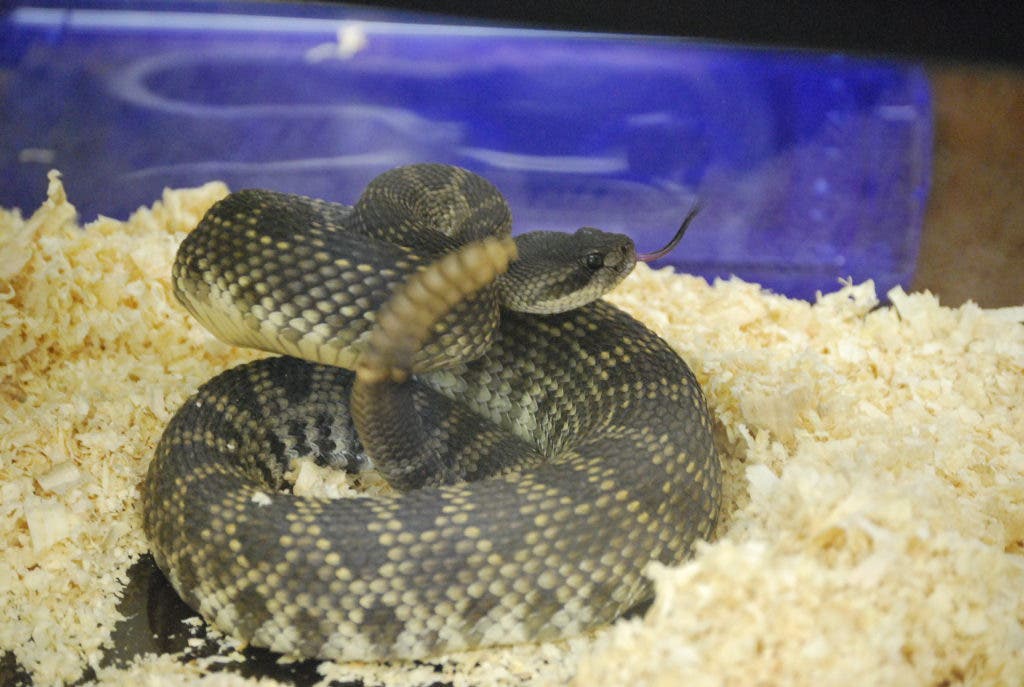
Orange County is home to three dangerous types of snakes: Southwestern Speckled Rattlesnake, Red Diamond Rattlesnake and the Southern Pacific Rattlesnake. That’s why the Reserve at Rancho Mission Viejo invited Bledsoe, a five-year member of the North American Field Herping Association, to give a free seminar on how residents can protect themselves if they come face to face with a rattlesnake.
The key to identification is the shape of the head, Bledsoe said. "Rattlesnakes have big hollow fangs and large glands where they store venom, which make the head appear diamond-shaped or heart-shaped."
Find out what's happening in San Juan Capistranofor free with the latest updates from Patch.
These venomous reptiles are also stealthy.
Rattlesnakes have heat sensing pits in the front of their heads—located between the nostrils and the eyes—that allows them to see a heat generated image of the person's body, before the person notices it's there.
“What do I do if I see one in the road and it's blocking my way?” one woman asked. Bledsoe responded, “If it won’t move, turn around and go the other way.
"The snake knows you're there and knows you're not food. It’s afraid of you and thinks you are a predator wanting to eat it." The heat sensor also gives the snake the ability to see its prey's footsteps and follow it in the dark.
So what do you do after you've identified the rattlesnake and it’s sitting right in front of you? Bledsoe said: "The most important thing is to stay cool after you've identified it. If you hear it, don't move until you can see it."
If the rattlesnake does bite you, don't panic, and don't try and suck the venom out. "The most important thing is to not do anything that gets the heart rate up—and get medical attention."
Bledsoe also dispelled some rumors about rattlesnakes. "Everybody always says that the babies are more dangerous. That's simply not true. When it comes to rattlesnakes, volume is the most important factor."
The audience was a cross section of farmers, hikers and snake lovers, like brothers Jared, 11, and Austin 7, who excitedly stared into plastic containers that held a variety of non-venomous snakes.
They proudly shared their newfound snake knowledge with the room. “That’s a California mountain snake! You find them in the mountains," they explained, referencing a California Mountain Kingsnake, then persuaded Herping volunteers to let them hold the wrigglers.
According to Bledsoe, 35 percent of bites are dry bites, and less than 1 percent of the reported 8,000 rattlesnake bites reported each year are fatal. "Snakes don't carry any diseases and are the No. 1 controller of rodents."
Seventeen out of 20 snakes native to Orange County are harmless. The Pacific Coast rattlesnake is considered the most dangerous because of its high likelihood to bite.
To learn more about reptiles and how to protect yourself and them, visit naherp.com.
Correction: This version of the article correctly identifies the three types of dangerous snakes in Orange County, as well as some of the features of a snake's anatomy.