Arts & Entertainment
Dead Heat Between Bay Meadows Movie, Prohibition Exhibit
Hundreds gather for a taste of San Mateo County's rich history.
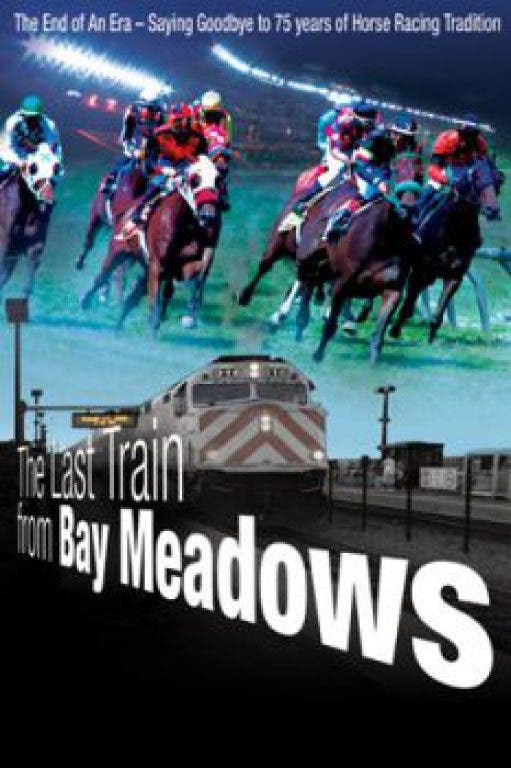
History moved at a fast pace Thursday night with the debut of a documentary film about San Mateo's Bay Meadows race track. Following the event was the opening of a museum exhibit on the Roaring Twenties, one of the more scandalous times in San Mateo County’s past.
“The Last Train from Bay Meadows,” which was the longest continually running racetrack in California before it closed in 2008, premiered at the historic Fox Theatre that forms one of the “bookends” of the increasingly popular Courthouse Square in Redwood City. After the showing, the first-nighters walked to the other end of the square to the old county courthouse, now the county History Museum, to preview the new “Broads, Bootleggers and Bookies” exhibit.
“About 700 people turned out tonight,” said Mitch Postel, president of the San Mateo County Historical Association, which sponsored both events. Postel spoke in the lobby of the downtown landmark theater as the crowd, some dressed in period costumes, streamed to their seats.
Find out what's happening in San Mateofor free with the latest updates from Patch.
He later told the audience that the association has become the repository of much of the material from the famous Bay Meadows, which operated for 75 years and is now slated to become a major multi-use development in San Mateo.
“We have more than 1,000 photos that are largely unidentified,” he said in asking for the public’s help in seeking caption information.
Find out what's happening in San Mateofor free with the latest updates from Patch.
The hour-long movie by filmmaker John Rubin of National Image Works recorded the history of the track from its first days shortly after the legalization of horse racing in California in 1933 to the end, which came after satellite betting meant that racing fans no longer had to go to the track to place a bet.
The track in San Mateo hosted some of the most famous horses and jockeys of the day. The jockeys included Russell Baze, winner of 10,000 races, who was in the audience. The horses included the legendary Seabiscuit, winner of the Bay Meadows handicap in 1937 and 1938.
The movie was a history lesson even if one didn’t like horses. Opening with big band music from the 1930s, it had several candid shots of movie stars such as Bing Crosby as well as professional athletes spending a day at the races. It also showed ordinary people cheering on their favorite. Among the little-known facts from “The Last Train from Bay Meadows”: 92 percent of the track’s profits went to war relief during World War II.
The movie also recounts the amazing saga of rider Ralph Neeves, who was trampled in a race in 1936 and given up for dead, to the point that a "Deceased" tag was put on his toe. A doctor friend wouldn't give up. He revived Neeves who lived to ride again.
“I learned a lot, and I’ve lived most of my life in San Mateo County,” said Al Schwoerer of Redwood City, a history buff who owns a 1930s fire engine. “I certainly learned something about horse racing.”
Corrupt County
The Fox, which opened as the new Sequoia in 1929, was a perfect setting for the film’s premiere. The old courthouse, which marked its 100th anniversary last year, is an equally perfect setting for “Broads, Bootleggers and Bookies.”
The exhibit, which runs through Dec. 31, explores a time when San Mateo County was labeled “the most corrupt county in California,” Postel said.
Rumrunners used the area’s foggy coast to smuggle whiskey from offshore ships while inland people made moonshine and bathtub gin. Police had their hands full conducting raids in an attempt to uphold an unpopular law. In an understatement, a sign in the section on law enforcement informs visitors that “enforcement was difficult.”
Other signage demonstrates several common descriptions of the era for "woman," such as “broad,” “babe," "dish" and "doll.” Another was “whisper sister,” meaning a woman who operated a speakeasy.
The exhibit has its own speakeasy, where visitors can hear bootleggers reveal how they hid liquor during raids, and see a variety of stills used to make booze.
Museum officials hope those who see the display will decide for themselves if San Mateo County earned its reputation for corruption.