Health & Fitness
San Mateo Fire Chief Recovers From Coronavirus, Now Helps Others
Joseph Novelli has fully recovered and is now donating plasma that contain antibodies that can be used to treat other coronavirus patients.


SAN MATEO COUNTY, CA – Joseph Novelli remembers the night sweats more than anything. It was, the San Mateo Fire Department Battalion Chief says, as if someone had taken a garden hose and doused him in water. As the night sweats continued for five straight nights, and the 104-degree temperatures set in that Novelli realized something wasn't right.
In Novelli's mind, there are two kinds of sick having grown up in a family of first responders: Big sick and little sick. This time, Novelli sensed, would be big.
Novelli, who fell ill on March 21, became the first San Mateo County firefighter to contract the coronavirus. Coming off three straight days of work, Novelli, 53, was not only concerned he might have the virus but was concerned about his fellow firefighters whom he had spent a significant amount of time around and had worked out with in close quarters.
Find out what's happening in San Mateofor free with the latest updates from Patch.
He went into quarantine for 18 days and the symptoms continued for eight more days, coupled with times when he found himself experiencing shortness of breath.
“There's a little bit of fear and worry," Novelli told Patch on Thursday. "You're certainly worried about the folks I work with and their families and how it's going to impact our Fire Department."
Find out what's happening in San Mateofor free with the latest updates from Patch.
Novelli said his illness created fear and anxiety around Station 23. Not only was he looking at how the coronavirus would impact him personally, but Novelli also looked through the lens as his job as the Battalion chief and what that meant for those he worked with on a daily basis.
Since his positive diagnosis, county fire officials have implemented a number of safety measures to protect other firefighters from testing positive. But over the weeks since his ordeal, Novelli has wondered that by perhaps going through the coronavirus so early, the timing of his diagnosis may have played a factor in keeping others safe.
"Initially, I felt like, 'OK, I've got it and I've gotten through it," he said, adding that his children and girlfriend nor any other of colleagues at the fire station have gotten ill.
In the weeks since, though, the fact did test positive has impacted Novelli's life. At times when he has been asked by business owners if he has had the coronavirus, Novelli has acknowledged his sickness, which has prevented him from gaining entry.
"It's kind of a double-edged sword," he said. "But all said, I'm glad I've had it ... and I'm lucky. I've made it through to the other side and so many other people haven't."
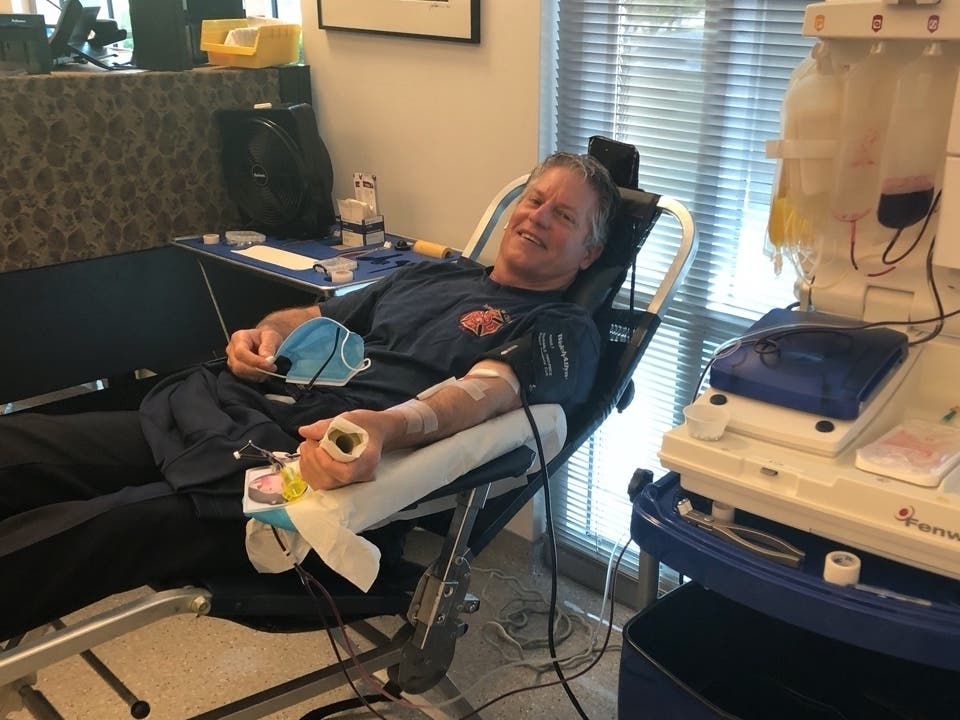
Eventually, Novelli fully recovered and returned to work with the fire department on April 29. But before he did, he contacted the Stanford Blood Center. As a recovered coronavirus patient, Novelli was told that his plasma contain antibodies that can be used to help treat a patient who has been diagnosed with the coronavirus. The antibodies, Stanford Blood Center officials told ABC7, may be an effective tool in fighting the coronavirus and can be used within 24 hours after plasma donations have been made.
Novelli said he is built to want to help people, which made donating plasma a no-brainer especially after learning it could help change the lives of those who need antibodies. After learning from his girlfriend's brother – who graduated from Stanford – that the university was looking for plasma donors, Novelli knew he wanted to help. He ended up being among the first people to be accepted into the Stanford program.
"I feel lucky to be able to do that," Novelli said.
The sessions last about 90 minutes and Novelli said he feels the same when he leaves as he did when he started the procedure. Novelli donated enough plasma this week that will help treat three or four COVID-19 patients. And for Novelli, the fact that his blood is AB-positive makes him a universal plasma donor. He said he plans to return to the blood center every 14 days or so to donate more plasma.
“As long as I can do it - as long as I'm not impacted too badly, I'm going to keep doing it until we have a better approach with a vaccine," he said.
Get more local news delivered straight to your inbox. Sign up for free Patch newsletters and alerts.