Community Corner
Allure of Absinthe Rediscovered: The Green Fairy Revival Explodes
A growing interest in absinthe is causing the famously banned beverage to turn up at many private parties and is now even being served on Virgin Airline Flights.
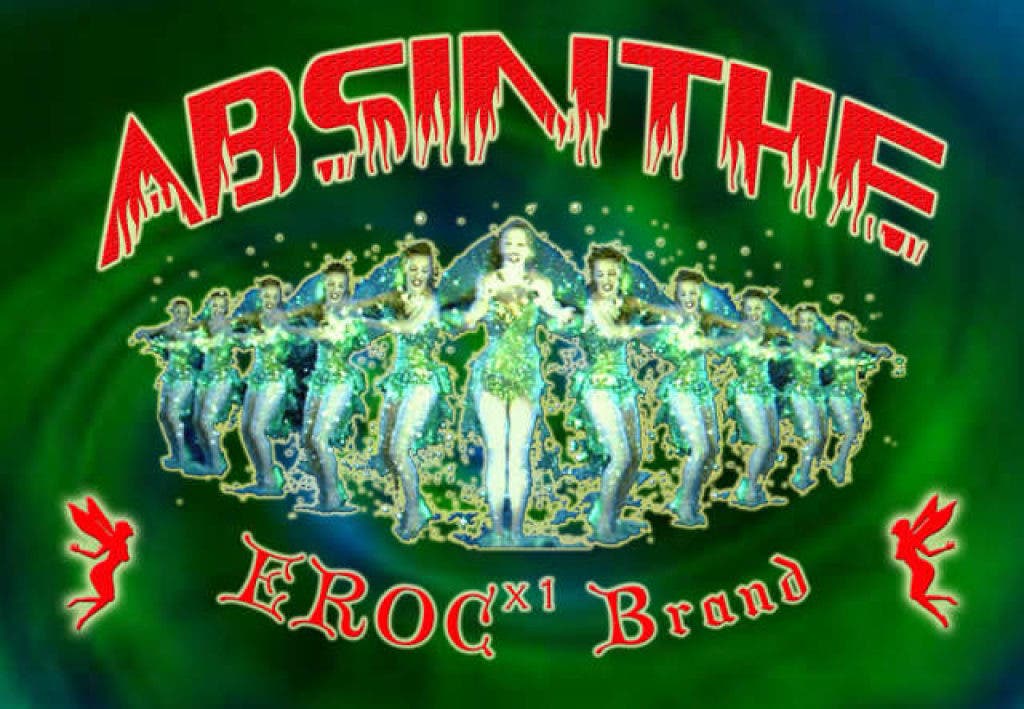


Despite the fact that traditionally-made absinthe has been illegal to sell in the U.S. since 1912, the strange green liqueur has been turning up lately at a lot of parties here in Santa Cruz, where it stands out among conventional alcoholic drinks like some kind of fairy tale treasure juice magically extracted by elves from enchanted emeralds.
In fact, the (usually) green (but sometimes clear), historically-vibrant beverage has become so popular that recently Virgin Airlines even started serving it aboard their flights.
This almost legendary, oddly-intoxicating blend of alcohol and synergistic aromatic herbs is experiencing an enthusiastic revival due to the fact that bans on absinthe have been lifted throughout most of Europe, it can now be easily purchased over the Internet, and it carries an almost mythic appeal, largely due to a mix of popular misconceptions about it.
Find out what's happening in Santa Cruzfor free with the latest updates from Patch.
Known around a century ago in France as “la fée verte,” or “the green fairy,” this iconic nickname often evokes sensationalistic imagery. For example, in the popular film Moulin Rouge!, drinking absinthe in one scene actually invoked the presence of a seductive, glittering fairy (portrayed by Kylie Minogue), who flies right off the bottle’s label and does an erotic dance.
This famous scene in the film gives the impression that absinthe has potent hallucinogenic properties, which was borrowed from largely inaccurate historical descriptions.
Find out what's happening in Santa Cruzfor free with the latest updates from Patch.
Many historical descriptions of absinthe claim that it drives people mad, is dangerously addictive, and that it was the cause of many social problems and adverse health effects in France and other parts of Europe around a century ago.
However, when it was popularized in the late 19th century, absinthe was also associated with the bohemian artistic movements of the time, and other descriptions romanticize the supposed mind-bending qualities of the controversial drink, claiming that it had psychedelic properties of some kind, and it was known to be popular among European writers and artists of the last century.
For example, Henri de Toulouse-Lautrec, Vincent van Gogh, Pablo Picasso, Aleister Crowley, and Charles Baudelaire were all said to have frequently used absinthe at times.
The origins of absinthe can be traced back to the end of the 18th century, when French physician Pierre Ordinaire distilled wormwood, along with various other herbs, in an alcoholic base, as an herbal remedy for his patients.
The first distillery to market the drink as a recreational beverage was created in France in 1805, where it quickly gained popularity, largely due to its inexpensive and strong effects.
There is a traditional ritual associated with drinking absinthe that is undoubtedly part of its mystique. It’s often served in ornate, gothic-style glasses, with a specially-designed, slotted spoon that is balanced on top of the glass.
A sugar cube is placed atop the perforated spoon, and a stream of cold water is slowly poured through the cube, which allows the sugar to melt through, as the water drops down, and mixes with the absinthe below. This is patiently done until the entire cube has melted, turning the green fluid a cloudy greenish-white. Then the mixture is stirred and enjoyed.
Experienced absinthe drinkers insist that burning a sugar cube over the drink, as some people do, ruins the taste.
The alcohol content in absinthe is generally high, often as strong as 160 proof, which is 80% alcohol. It tastes like its flavored with licorice or anise. The wormwood and other herbs add aromatic and flavorful properties to the drink, which some people enjoy, but it can be bitter, and the alcohol content is high, so sugar is often added to sweeten the drink.
Although some people prefer drinking their absinthe without sugar, almost everyone agrees that it is best enjoyed when generously diluted in water.
Absinthe is traditionally created by soaking the herb Artemisia absinthium, a species of wormwood, in alcohol, usually distilled from white grapes, along with green anise and florence fennel. Wormwood contains a psychoactive chemical known as “thujone,” which changes how alcohol effects the brain.
For many years it was thought that thujone pharmacologically activated the cannabinoid receptors in the brain, like the active components in marijuana do--due to its similar molecular structure to THC--and that this was responsible for its reported hallucinatory effects.
However, recent research has shown that although thujone has a low affinity for cannabinoid receptors, it’s primary mode of action in the brain is as a modulator for the brain receptors that are activated by chemical known as GABA. GABA generally has a calming effect on the brain, and it’s effects are pharmacologically mimicked by alcohol, valium and other tranquilizers.
Thujone effects how alcohol is metabolized, blocking and altering alcohol’s action on important parts of the brain that significantly change the experience, so that one retains far more mental clarity than one usually does when they drink alcohol on its own.
Some studies have also shown that high doses of thujone may possibly have some neurotoxic properties (i.e. kill brain cells) and it can cause convulsions, so to this day it remains controversial just how dangerous moderate use of it really is. However, health experts agree that the dangers have been greatly exaggerated in the past, and occasional and moderate use of it isn’t known to cause any lasting health problems.
Nonetheless, it’s still illegal to sell true absinthe in the U.S., although one can find products in liquor stores marketed as “absinthe” that have almost all of the thujone removed.
Technically, it’s illegal to purchase absinthe in the U.S. from vendors in Europe where it’s legal to sell absinthe with a higher thujone content, but many of the European companies ship to the U.S. without any problems that I’m aware of, because they are being sold for non-human consumption purposes--as historical display models or novelty items.
Although thujone is not approved as a food additive in the U.S, the herb wormwood that contains it is perfectly legal to grow and own, and thujone is not a controlled substance, like cannabis.
What does an absinthe high feel like? Most people describe the sought-after effects of absinthe as an alcohol-like buzz with greater lucidity. Many people say that they feel more clear-headed, as well as more dissociated while under its influence, than when drinking plain alcohol. According to some people, drinking absinthe also has qualities that make them feel a bit more “surreal,” or make reality seem a bit more “dreamlike.”
However, everyone who tries it generally agrees that the psychedelic effects have been greatly exaggerated, and it’s always a mistake to drink too much. The legendary hallucinogenic effects of absinthe are largely hype and myth.
Nonetheless, absinthe does appear to have some interesting and noteworthy psychoactive properties that distinguish it from the effects of pure alcohol.
More than a few people have reported experiencing a pleasant heightening of their senses from it, as well as enhanced feelings of creativity, sociability, and an enriched imagination. For some people, these novel psychological effects are found to be uniquely-euphoric and even useful.
To learn more about absinthe see:
If you enjoy my column, and want to learn more about psychedelic and cannabis culture, “like” my Facebook page:
www.facebook.com/pages/David-Jay-Brown/115740098445882?ref=ts
and follow me on Twitter:
http://twitter.com/#!/DavidJayBrown
Hear me interviewed on radio station KSCO-AM by Patch editor Brad Kava here