Politics & Government
Giant Digital Billboard Advances On Historic Santa Monica Promenade Building
A 5-1 council vote advances the project despite concerns over historic preservation, housing potential and the removal of healthy trees.


SANTA MONICA, CA — A massive digital billboard proposed for one of the Third Street Promenade's historic buildings moved a step closer to reality Tuesday, despite concerns about its impact on the building's character, future housing opportunities and the removal of two healthy street trees.
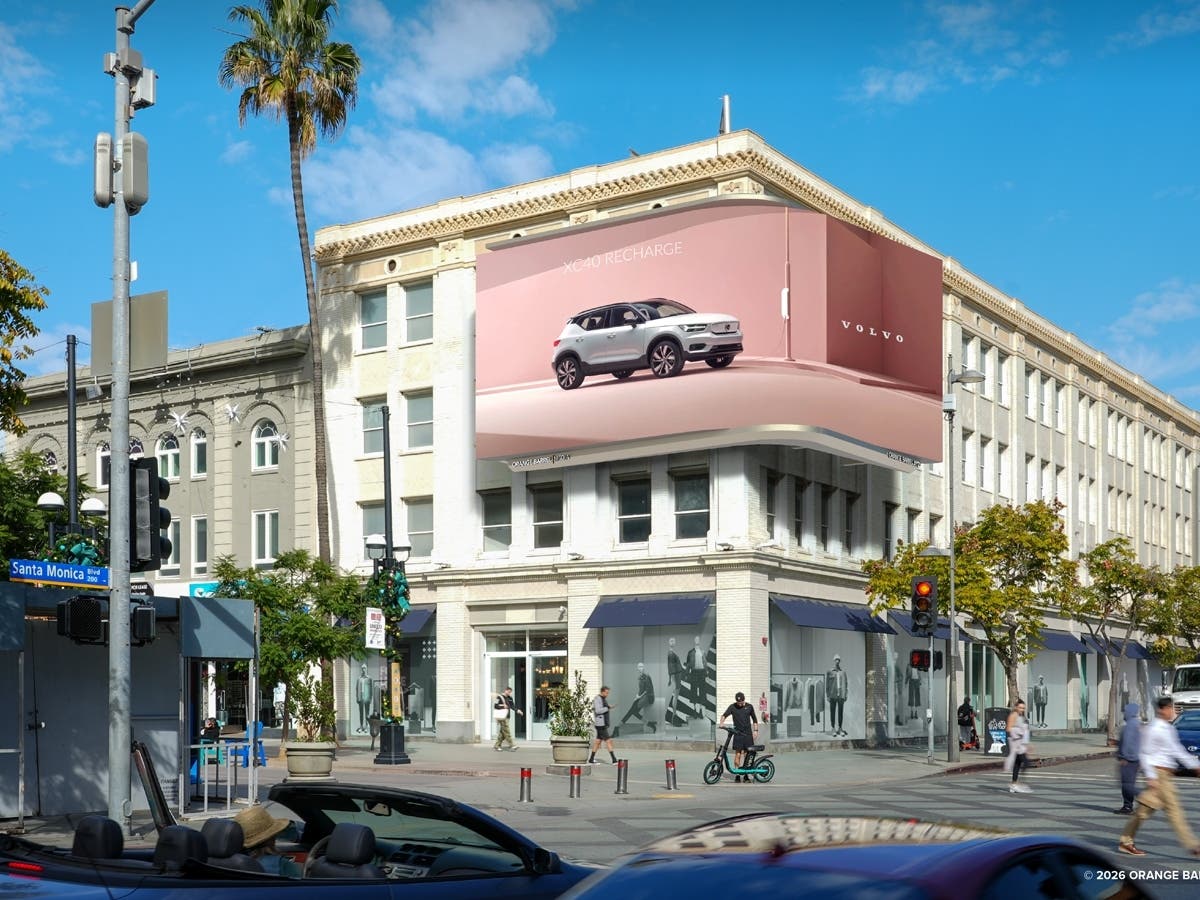
The Santa Monica City Council voted 5-1 on Oct. 27 to advance a development agreement that would allow a 1,000-square-foot animated advertising display to wrap around the southwest corner of the landmark Junipher Building at 1355 Third Street Promenade, at Santa Monica Boulevard.
Councilmember Lana Negrete cast the lone dissenting vote, while Councilmember Jesse Raskin recused himself because his law firm represents Outfront Media, another billboard operator in Santa Monica.
Find out what's happening in Santa Monicafor free with the latest updates from Patch.
The vote advanced the ordinance on its first reading, meaning further approval and permitting would be required before the billboard could be installed.
Under the proposed development agreement, the city would receive an upfront payment of $500,000, followed by annual payments equal to the greater of $500,000 or 20 percent of the billboard's gross advertising revenue, subject to adjustments specified in the agreement.
Find out what's happening in Santa Monicafor free with the latest updates from Patch.
But the prospect of substantial new revenue prompted an unusually candid objection from Negrete, who questioned whether the city was sacrificing the character of its most recognizable shopping district.
"It feels a little bit like selling our soul and the soul of the promenade in a way," Negrete said after the vote.
"I think economic recovery and historic preservation shouldn't have to compete with each other," she added.
A Century-Old Landmark Meets Modern Advertising
Built in 1912 and designated a city landmark in 2014, the Junipher Building stands at the northeast corner of Third Street Promenade and Santa Monica Boulevard. The approximately 18,400-square-foot commercial property, formerly occupied by Gap, has remained vacant since 2020.
According to the city's Oct. 27 staff report, the proposed curved LED display would measure approximately 18 feet high and 54 feet wide, projecting about eight feet over the Promenade and Santa Monica Boulevard.
The proposal also includes reconstructing a historic vertical blade sign inspired by signage that once adorned the building. Unlike the digital billboard, the reconstructed sign would be used exclusively to identify future tenants.
Orange Barrel Media, the advertising company working with the property owner, presented architectural renderings showing the display mounted away from the building's facade to preserve historic details while allowing some daylight to reach the upper floors.
A historic resources assessment commissioned by the city concluded that the installation would be reversible and would not materially impair the landmark's historic significance. Although portions of its upper-story windows and architectural features would be obscured, the assessment found that the building's defining architectural elements would remain intact.
Negrete remained unconvinced, questioning whether the billboard could complicate efforts to convert the building's upper floors into housing.
"I don't know who would want to live behind a sign," she said.
Healthy Street Trees Could Be Removed For Billboard Visibility
The proposal also calls for removing two existing street trees along Santa Monica Boulevard because their canopies would obstruct the billboard's visibility to eastbound motorists. Although the trees were assessed as healthy, the developer argued that their height would interfere with the advertising display and proposed replacing them with smaller-growing species.
The city's Urban Forest Commission recommended against their removal during a Sept. 9 review, expressing concern that allowing healthy trees to be removed for advertising visibility could establish a precedent for similar requests. Nevertheless, the proposed agreement includes a $23,000 contribution to cover removal, replacement, transplantation and additional tree planting, along with related sidewalk work.
The smaller existing tree would be transplanted elsewhere, while the larger tree would be removed. During Tuesday's hearing, Orange Barrel Media representative Gabby Germezi said the overall arrangement would result in eight trees, a net increase of six. The city's Public Landscape Division determined that the existing trees presented an unavoidable conflict with the billboard, while the Planning Commission recommended increasing the developer's contribution to provide for additional downtown plantings.
The competing recommendations underscore one of the project's central tensions: whether the economic benefits of a prominent advertising display justify changes to the Promenade's existing streetscape.
$500,000 Annually — And A Push To Fill A Vacant Building
The proposal is part of Santa Monica's Downtown Digital Display District, established under an ordinance adopted in January 2026 to permit up to 16 large-format digital displays at designated locations along the Third Street Promenade and Santa Monica Place. Seven displays had already been authorized under four development agreements, making the Junipher Building proposal the eighth. Two were operating by the time of Tuesday's meeting, with two more under construction.
The proposed agreement would run for 30 years, with two possible 10-year extensions. In addition to the upfront payment and ongoing revenue-sharing arrangement, the developer would contribute $30,000 toward evaluating future improvements to the Promenade.
The agreement also reserves 20 percent of the billboard's operating time, equivalent to approximately 12 minutes per hour, for city announcements, public art, historical programming and other community content. Financial provisions include annual escalation of the minimum payment, alongside potential reductions as additional digital displays enter operation.
The city would receive quarterly payments toward its annual minimum guarantee, with a year-end reconciliation determining whether its 20 percent share of gross revenue exceeds that minimum. The agreement also seeks to address the building's prolonged vacancy by requiring the entire ground floor and at least half of its rentable floor area to be occupied.
Failure to meet those requirements for more than 12 months could trigger a 25 percent increase in the minimum annual guarantee. Continued noncompliance could eventually allow the city to shut off the display or terminate the agreement, subject to the agreement's provisions and exceptions.
Councilmember Dan Hall questioned whether renovation-related exceptions could allow the property to remain vacant for an extended period. Staff pointed to a 24-month provision, with additional allowances for certain qualifying delays.
Support From Businesses, Concerns About The Promenade's Future
The proposal drew support from business and nonprofit representatives during public comment. Santa Monica Chamber of Commerce President and CEO Shauna Epstein described the development as an opportunity to bring activity back to a long-vacant commercial property.
Nicole Blaine, founder and executive director of Crow Comedy, also praised Orange Barrel Media for providing free advertising opportunities to local nonprofit organizations, saying the exposure could help attract residents to community programs. Councilmember Barry Snell, who moved to advance the proposal, expressed support but urged the developer to communicate with neighboring businesses about construction disruptions and potential effects on pedestrian activity.
Councilmember Natalya Zernitskaya questioned whether the city could continue displaying public art and civic information if the building failed to meet its occupancy requirements and commercial advertising was suspended. Rather than adding a different requirement to this particular agreement, council members discussed having staff explore a broader amendment to the city's digital display ordinance.
Negrete, meanwhile, said she remained troubled by the visual impact of the existing billboards and questioned whether the city had allowed enough time to evaluate their performance before approving more. Although she acknowledged the potential financial benefits, she said the city needed to consider what it might be giving up in return.
With Tuesday's first-reading vote, the proposal moves further through the approval process, but the billboard cannot yet be installed. For Santa Monica, the decision represents another step toward transforming the Third Street Promenade into a more visually dynamic commercial district — while raising a larger question about how much of its historic character the city is prepared to change in pursuit of economic recovery.
Related:
Get more local news delivered straight to your inbox. Sign up for free Patch newsletters and alerts.