Community Corner
Santa Monica's Rich Black History Showcased In 'Black Not Sorry' Tour
QR codes scattered about the city that read "Santa Monica is Black. Not sorry." tell the story of a Rich Black history.


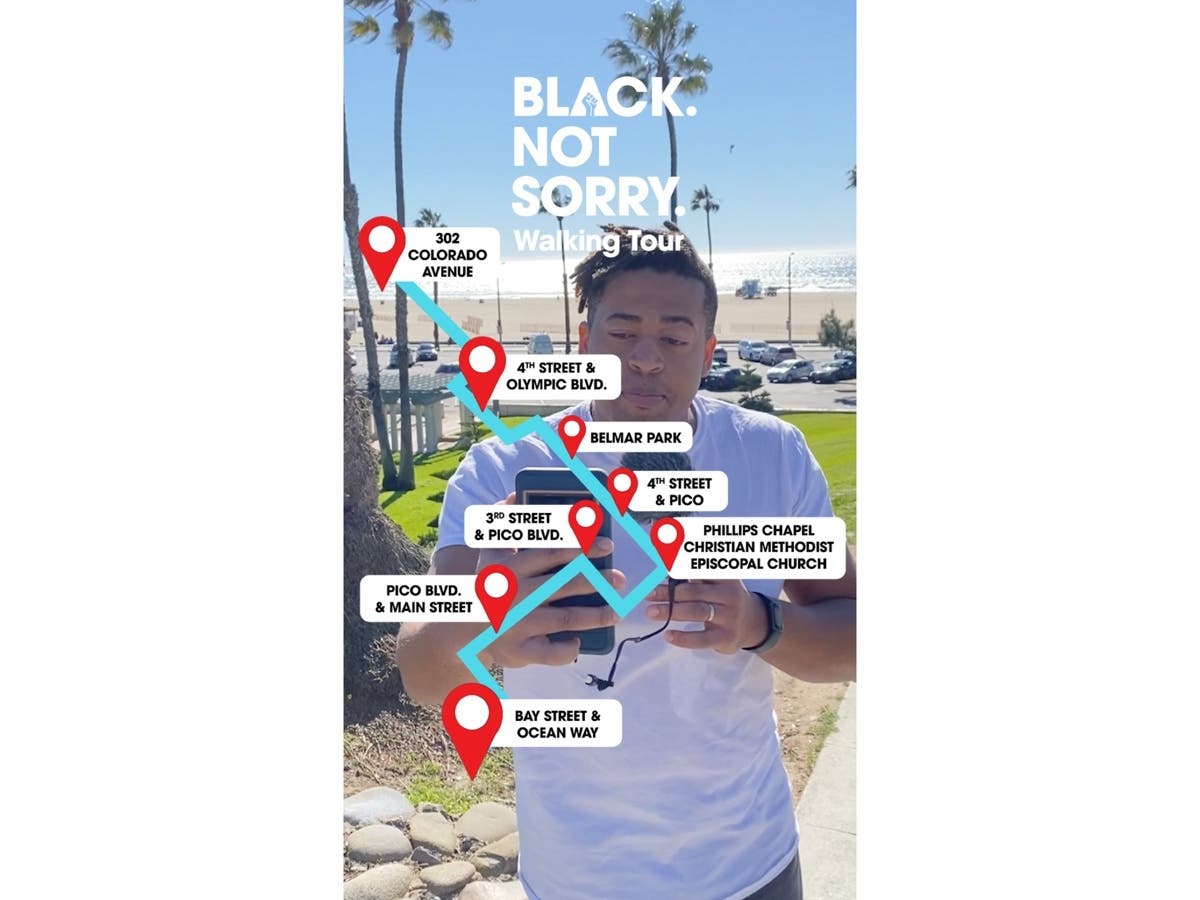
SANTA MONICA, CA — Scattered about Santa Monica, residents and visitors can find QR codes on stickers that say "Santa Monica is Black. Not sorry." along a walking tour dedicated to telling important parts of the city's rich Black history.
The tour, which has eight stops and is less than a mile long, was created by Santa Monica-based ad agency RPA in honor of Black History Month. Those who happen upon the QR codes can scan them to find short less-than-a-minute-long videos detailing why the specific location is significant in Santa Monica's history for Black people.
"[We are] able to give people a resource to know — not even just right now, but as time went on — about the rich black history around them that they may not even be aware of," said RPS Digital Producer A. C. Sanford, who narrated some of the historical stories for the videos.
Find out what's happening in Santa Monicafor free with the latest updates from Patch.
Santa Monica is a primarily wealthy, white community, according to U.S. Census data from 2021, with fewer than 5 percent of its residents being Black. This fact is partly what inspired RPA to want to tell these stories.
Romeo Cervas, VP Creative Director at RPA, said the experiences that Black people had throughout history in Santa Monica are not talked about enough. Historically, Cervas said, Santa Monica wasn't always a predominantly white space and had a rich African American history that seems to have been lost throughout time.
Find out what's happening in Santa Monicafor free with the latest updates from Patch.
Cervas said RPA wanted to do its part to bring those stories back to life.
"It wouldn't feel right if we didn't bring up this history and try to enrich ourselves," Cervas said. " And try to enrich not just people that live in the area, but just anybody that wants to take the walking tour."
The "Black. Not Sorry." walking tour starts at 302 Colorado Avenue telling the story of an old department store that wouldn't hire Black people for more than janitorial positions in 1947. From there, the tour travels through the city with multiple stops ending at the beach at Bay Street and Ocean Way, where people can learn about the "resilience of Black joy."
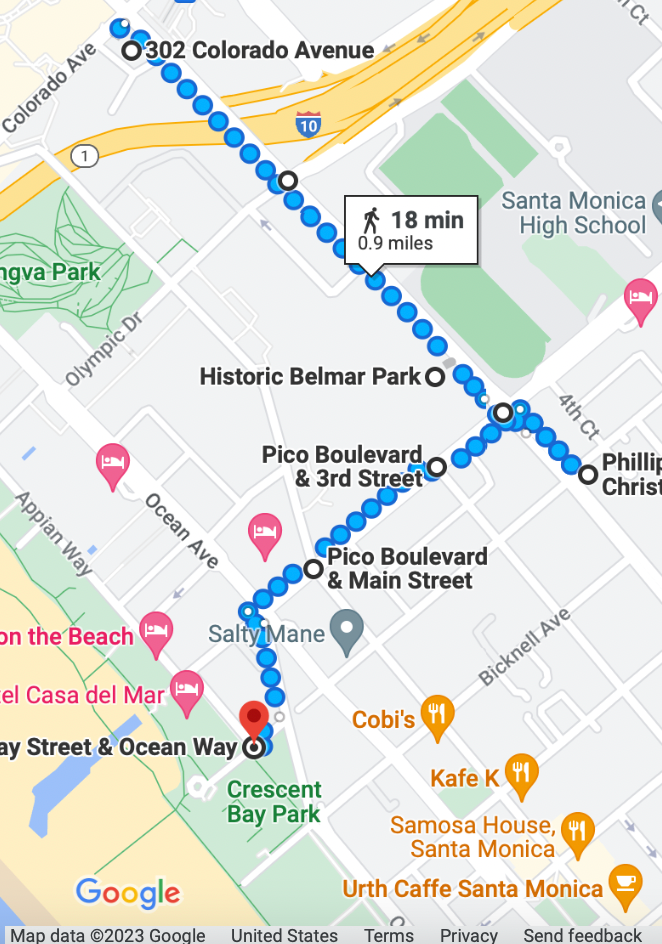
And Black joy is precisely what RPA wanted to celebrate with this informative experience, according to Sanford. He said the story of the beach at Bay Street, known as The Inkwell, is a perfect example of Black Santa Monicans throughout history seeking a place to be joyful and enjoy the beauty of the ocean.
"We can get confined, as African Americans, to thinking we have to stay in our lane, but people have gone before me and experienced that Black joy despite adverse circumstances," Sanford said. "All of that history is not lost on me. It's something I want to pass down to my children and something I really appreciate about this tour."
For the community, Sanford said he hopes this tour can help show that Black history is American history, even in locations in Santa Monica that residents may have not known were significant.
Ideally, RPA's goal is to not only reach the people who live in Santa Monica but visitors and people throughout the country. Sanford said the tour aims to spread stories about how African Americans contributed to Santa Monica's history so more people can appreciate the culture.
"I know for me as an African American, growing up in this country sometimes it feels like you're not seen. Like it would be better if you didn't exist; if you didn't take up space," Sanford said. "I do want people to recognize that Black history is American history, that African Americans have contributed a lot to this country and even Southern California."
Get more local news delivered straight to your inbox. Sign up for free Patch newsletters and alerts.