Community Corner
The Deeper Problems Behind the Rising Gas Prices
Here's a look at the underlying issues that drive violate fuel prices and what we can start doing about it.
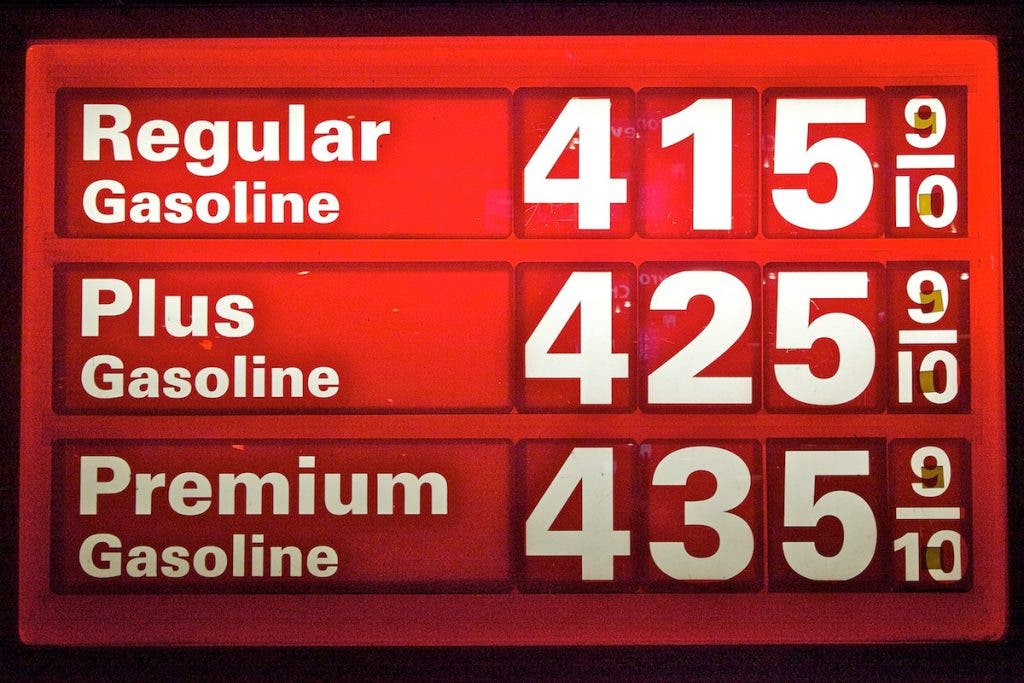
The recent, sudden ascent of gas prices has everyone interested in energy supply issues again. President Obama gave a speech articulating a plan on the thorny issue this past week, calling for a one third reduction in U.S. oil importing within a decade.
Opinions on what to do and why we are in the situation we have been in are flying left and right—and some of them are contradictory. Some are saying now is the time for electric cars, some are saying we must drill everywhere we can, and fingers of blame are being pointed at Wall Street speculators, oil companies, Muammar Gaddafi and the Libyan conflict, Obama’s policies ... anyone and everyone but the real culprit: ourselves.
We Americans are the world’s most voracious oil consumers. Despite decades of oil production decline since the '70s, America is still the third-biggest oil producer, behind Russia and Saudi Arabia. But the problem is we burn through it so fast, we have to import 60 percent of our supply. Oil production in the U.S. actually picked up in recent years thanks to new extraction techniques, but the proportion of oil coming from imports has continued to grow.
The expanding middle classes of populous developing nations like China and India are beginning to consume more oil, with car ownership rates and vehicle miles traveled exploding. If you think traffic in L.A. on the I-110 is bad, it’s nothing to compared to the nightmares on the National Expressway 110 in China connecting to Beijing. A 2010 traffic jam there lasted nine days straight, and ironically, Beijing—once a city known for its many bicycles—is now overrun by cars often rolling slower than the bikes ever did.
The ability of world production to keep up with demand is a precarious balance. The reason disruption in a country like Libya—which only produces about 2 percent of the world’s oil exports, and 5 percent of American imports—can so drastically shake the market place is because there is so little spare production capacity. There is very little margin for error. The only country that holds back any spare production capacity is Saudi Arabia, a country that does not allow any outside auditing to confirm just how much oil they are sitting on. As I dug more into the research on energy issues, it became shocking to me just how potentially fragile our global energy supply really is.
Energy security is not a left nor right issue, and many folks on both sides of the aisle get it wrong. We cannot simply “drill baby drill” our way to cheaper prices or self sufficiency so long as we needlessly waste so much of it and have so few proven reserves left to exploit. Nor can we get out of this mess by simply sticking up a few windmills and , and thinking happy thoughts. The problem is far too complex for any easy fix.
Alternative-energy sources are great and should be ambitiously pursued but at this time do not scale up to meet existing demand. Our extensive infrastructure is all invested in old ways. Biofuels could be a potentially viable alternative and are now being heavily subsidized. However, turning farmland into fuel-land puts pressure on world food prices. This is already a serious and growing problem as we continue to step up the conversion of corn into ethanol. If we maintain a heavily liquid-fuels-dependant lifestyle, by starving the masses of poor nations that depend on imported food, that is a deal with the devil I sincerely hope we do not make.
The problem of oil supply is really a problem of transportation, since the transportation sector of our economy is the biggest consumer of oil and the least diversified in its sources of energy. Our primary mode of travel is the automobile, so the problem of oil dependence is really a problem of automobile dependence most of all. Until all of our cars run on some alternative to oil, like electricity, the only way we can hope to even begin to break from oil dependency is to drive less. If we all stayed in the house, of course, this would accomplish that goal, but our economy would collapse and quality of life would be diminished. So a key part of energy sustainability is facilitating the transition to trips and interactions that build our economy by other means.
I think, first of all, we have to realize the gridlock and finger-pointing in D.C. may not produce sufficient policy changes to really break from oil. It is up to every state, every city, every citizen to start cracking this problem. We all have a responsibility. Some headway is being made locally in Santa Monica, with rising trips by bike. Also, in coming years, the should give a huge boost to transit. Our long-term plan under the lays a foundation for what should be a Santa Monica that is more resilient in the face of oil-supply disruptions and/or rises in price. However, there is much room for improvement, and our own Sustainability City Report Card gives Santa Monica a C+ in transportation.
Land use and transportation planning are closely related, and shape how we get around. While much talk may be made of new energy sources and cars of the future, better planning policy and simple trip-reduction measures will likely accomplish far more than any new technology. Simple acts like riding a bike to the local farmers market could go further toward energy independence and economic resilience than many projects costing in the billions of dollars.
Find out what's happening in Santa Monicafor free with the latest updates from Patch.
Almost everything I’ve written about for this column are components to solving our oil problems. We need more trips by bike, on foot, by bus, by train, by vehicle sharing, and we need development that makes those modes of travel feel attractive, safe and convenient to more people.
Ultimately what I think we need is a culture shift, one that is inclusive of all modes of transportation as symbols of our freedom of mobility—not just driving cars. The way I see it, riding my bike to get around is not just way to get exercise, save money or be environmentally conscious, it’s a patriotic act and one that feels far more liberating to me than navigating the L.A. area traffic in a car.
Either we will see a future marred by desperate competition for finite sources of oil or we can find a graceful exit toward an economy that sips it lightly and eventually can go on without it. I hope that we get it right, and before it’s too late.