Business & Tech
Arsenic-Tainted Wine: Overkill Or A Real Killer?
How much arsenic is acceptable? It's only regulated in drinking water, so "dangerous" level alleged in lawsuit is open to interpretation.


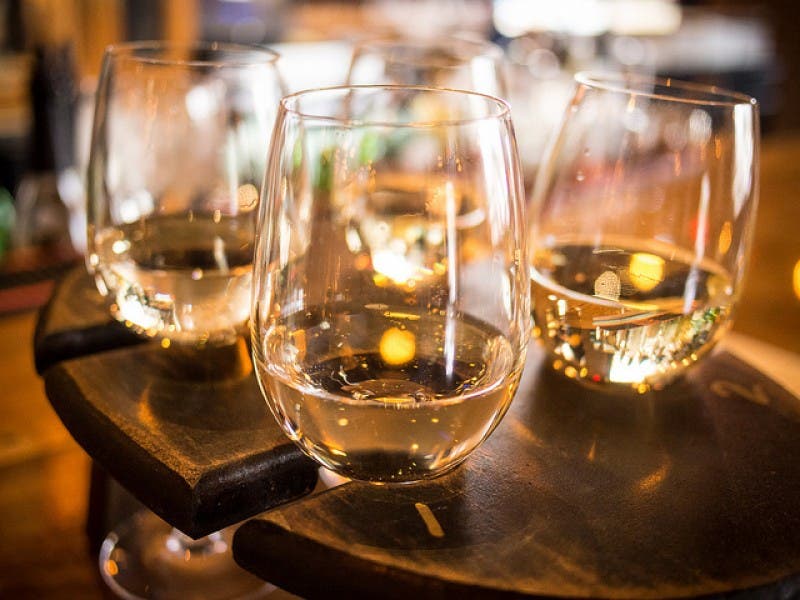
A class-action lawsuit alleges more than 83 inexpensive California wines contain “dangerous” levels of arsenic, but arsenic content isn’t regulated in foods and beverages, other than water. (Photo by Robert S. Donovan via Creative Commons)
_________________
Find out what's happening in Scotts Valleyfor free with the latest updates from Patch.
If you drank a bottle of the alleged arsenic-tainted California wine, there’s probably no need to rush to the attorney’s office to update your will.
Experts say you’re not likely to die from drinking a bottle of wine produced by one of the 28 California winemakers and sellers named in a class-action lawsuit filed in Los Angeles Superior Court for allegedly misrepresenting their arsenic-tainted wine as safe.
Find out what's happening in Scotts Valleyfor free with the latest updates from Patch.
The problem with arsenic – besides toxicity, of course – is you won’t be able to detect it by breathing in the bouquet and swishing the wine around in your mouth. Arsenic is odorless, tasteless and colorless – but potentially deadly over time.
Epidemiologist Allan Smith, associate director of the Arsenic Health Effects research program at the University of California-Berkeley, told CBS News the arsenic content of 50 parts per billion alleged in some of the wines named in the suit could be deadly over time.
“Arsenic is highly toxic, it’s astonishing,” he said. “It has as many effects inside the body as cigarette smoking.”
Wine Industry Claims Grandstanding
National Geographic describes arsenic – whose use as an instrument of murder traces back to at least the fourth century and is suspected in the deaths of Napoleon Bonaparte, King George III and other prominent historical figures – as “the poison of kings and the king of poisons.”
“Arsenic exploits certain pathways in our cells, binds to proteins, and creates molecular havoc,” the magazine said. “Small amounts taken over a long stretch produce weakness, confusion, paralysis. Take less than a tenth of an ounce (2.83 grams) at once, and the classic signs of acute arsenic poisoning ensue: nausea, vomiting, diarrhea, low blood pressure, then death.”
Also:
- Drink Any of These Calif. Wines? Lawsuit Contends They Contain Poisonous Arsenic
- Here’s the complaint
So it’s no surprise the wine industry and retailers who sell the suspect wines are taking the allegations seriously.
“The concerns raised in your inquiry are serious and are being treated as such,” Trader Joe’s, which sells Two-Buck Chuck, told CBS News. “We are investigating the matter with several of our wine-producing suppliers.”
The lawsuit amounts to grandstanding, said Chris Lehane, a spokesman for The Wine Group, one of the companies named the lawsuit.
“It’s the equivalent of yelling fire in a crowded theater when there is no fire and in fact, everything’s perfectly safe,” Lehane said.
The Wine Institute, which represents about 1,000 wineries in the important wine-producing regions in California, also dismissed the lawsuit as frivolous.
“We don’t think that this lawsuit has merit, and we think that the publicity campaign is very irresponsible,” Wine Institute vice president Nancy Light told Wine Spectator.
Apples to Oranges and Water to Wine
The problem with the lawsuit, Light and others said, is that it uses the U.S. Environmental Protection Agency limits for total arsenic in drinking water at 10 parts per billion and applies them to wine.
“There are no [EPA] limits for other foods and beverages – including wine – because they’re not consumed at the same level as water and not deemed to be a risk,” Light said. “There is no research that shows that the amount of arsenic in wine poses any health risks to consumers.”
Lehane said the plaintiffs were “improperly comparing apples to oranges – only in this case, water to wine.”
He doesn’t think the class-action suit will succeed because there’s no established legal standard for arsenic in wine, either nationally or in California. But the court of public opinion is another matter entirely as the story, first aired by CBS News on Thursday, has gone viral.
The lawsuit describes arsenic levels of up to 50 parts per billion as “dangerous,” but they’re half the accepted level in Ontario, Canada, and one-fourth the level permitted in Europe by the International Organisation of Vine and Wine, Lehane said.
What’s “dangerous,” however, is up for debate, because of the lack of regulation.
After a 2011 scare about arsenic in rice, the largest dietary source of inorganic arsenic, biochemist Andrew Meharg of the University of Aberdeen in Scotland said that eating about 3.5 ounces, or 100 grams, of uncooked rice would be the equivalent of drinking a liter of water containing the maximum allowable federal limit of arsenic in drinking water
Lawsuit Goal: Clean Up Wine Industry
Though arsenic content isn’t regulated, UC-Berkeley’s Smith thinks vintners at the very least need to determine the source of the arsenic and disclose that wine may contain arsenic on the label.
Brian Kabateck, who filed the suit, says his ultimate goal is “to get the winemakers to recall these wines, to get them to refund the money that people paid for these wines, and ultimately to clean up the wine industry in California.”
“Almost all of them are $10 or less, and the vast majority of those are under $5,” Kabateck said. “The consumer may be spending less than $5 for a bottle of wine, but they may be paying with their health in the long run. These are very serious allegations that we’re raising against the wine industry.”
The lawsuit asks that suspect wines be removed immediately from store shelves and that recalls be issued.
“We’re also asking the wine industry to come into the sunlight, become more open about what’s in their product,” he said. “And finally, we want to refund the consumers who bought these products that we allege are dangerous.”
Some consumers are closely watching what happens next.
“I’m kind of anxious to get up to the stores and see if they’re pulling these off the shelves after this news,” Melvin Jackson, 63, a retired detective from Las Vegas, told Patch.
Jackson said he said he regularly drinks Ménage à Trois, one of the allegedly tainted wines, and has consumed “maybe a hundred, 200 bottles” over the past couple of years. He wonders if that’s the cause of some of the health problems he has been experiencing.
He associated swelling in his knees and ankles and sensitivity on the bottom of his feet to his diet, but now wonders if the wine wasn’t the culprit.
The lawsuit names several large companies, including The Wine Group, Treasury Wine Estates, Trinchero, Trader Joes and Fetzer Vineyards based on the claims of inorganic arsenic in 83 brands, including:
- Franzia
- Sutter Home
- Sutter Home
- Concannon
- Wine Cube
- Beringer
- Flipflop
- Fetzer
- Korbel
- Almaden
- Trapiche
- Cupcake
- Smoking Loon
- Charles Shaw
Patch editor Renee Schiavone contributed to this report.
Other wine industry stories on Patch:
- Napa Valley Vintners Set Goal for 100-Percent Napa Green Certification by Year 2020
- Food, Wine and Cycling: Napa Valley’s Bottega Gran Fondo Returns
- VIDEO ABC News: #NAPA WINEMAKERS WON’T GAMBLE ON A CASINO
- Vineyard Owner Shoots Former Investor, Himself In Napa County
- Farmworkers Settle Suit Regarding Discrimination and Lack of Restroom For Female Vineyard Employees
Get more local news delivered straight to your inbox. Sign up for free Patch newsletters and alerts.