Community Corner
Pepperwood Preserve In Need Of Kincade-Fire Recovery Funds
Still rebuilding from the Tubbs Fire, some 60 percent of the Sonoma County nature preserve was charred by the Kincade Fire.


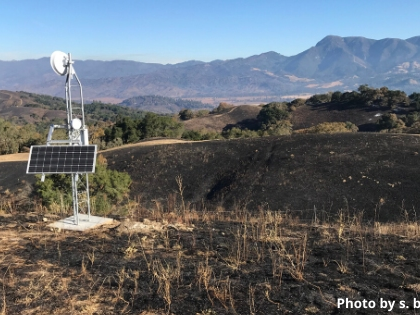


SONOMA COUNTY, CA — Just two years ago, the Tubbs Fire decimated 95-percent of the 3,200-acre Pepperwood Preserve northeast of Santa Rosa. Monday, Oct. 28, Pepperwood management watched via its new AlertWildfire cameras as the Kincade Fire scorched 60-percent of the nature preserve.
Now, the Pepperwood Foundation is in need of funding to the tune of $200,000 in order to quickly begin the recovery process before the winter rains arrive.
"We ... watched in real time as Cal Fire and our first responders heroically established firebreaks across our 3,200-acre open space preserve to contain the conflagration," said Lisa Micheli, president and CEO of the Pepperwood Foundation.
Find out what's happening in Sonoma Valleyfor free with the latest updates from Patch.
"Thanks to having built a close working partnership with local fire agencies, this time first responders had much more accurate data on fire conditions and a clearer plan of attack than in 2017," Micheli said this week in a newsletter to volunteers and community supporters. "I am proud of the incredible teamwork our whole community has shown: this is climate adaptation in action."
Micheli said once she was informed that Pepperwood's entire staff was able to safely evacuate to family and friends, she began to "dread the prospect of seeing their 2017 fire rebuild sites—including a staff home and barn office, now just emerging from their foundations — burned once more to the ground."
Find out what's happening in Sonoma Valleyfor free with the latest updates from Patch.
Thankfully, all facilities were spared, Micheli said, while sending her thoughts to those who were not as fortunate and lost homes and property in the Kincade Fire.
Although Pepperwood did not lose any structures this time around, she said the preserve is "deeply scarred from the critical fire battle" and "urgently needs" the community's help.
First, she said, Pepperwood's lands need to be healed ahead of the rainy season.
"The successful fight against the Kincade Fire used the heaviest earth-moving equipment available to create 15.33 miles of dozer lines and fire breaks throughout the preserve," Micheli said. "This heroic effort required clearing many acres of the preserve’s native ecosystems, including forests, grasslands, chaparral, streams and riparian zones. As a living laboratory, our team is expert at this kind of ecological restoration, but the level of effort now needed to restore the land is frankly an unbudgeted item."
At the same time, she said, Pepperwood needs to replace and reboot some of its scientific monitoring equipment so the foundation does not miss its "truly unique opportunity to understand the causes and effects of, not just one, but now two mega-fires!"
Pepperwood leverages its Sentinel Site both to provide real-time emergency data on fires and floods for first responders and to create a reliable long-term record of trends that can better predict fire risks and behavior, Micheli explained.
"Having to rebuild six structures lost in the 2017 Tubbs Fire, our new buildings will also model green and fire-resilient building practices," she said.
Pepperwood's expertise in large landscape analysis and conservation boosts many local collaborations focused on building fire resilience, she said.
"These include, not only public-private partnerships with local fire, water, and park agencies, but also emerging volunteer organizations, including Fire Safe and Fire Wise communities, CERT, and COPE neighborhood associations," Micheli said.
Pepperwood also works with Rebuild NorthBay and with California Gov. Gavin Newsom's natural resource agencies.
The back-to-back fires — Tubbs and Kincade — present a time-sensitive scientific opportunity, Micheli said.
"As the frequency of California fires increases to define a 'new normal,' Pepperwood’s work to measure, map and model the impact of fires on our treasured landscapes and local communities has never been more important," Micheli said.
In order to quickly repair damages from Kincade Fire suppression efforts and to repair and replace Sentinel Site and Wildlife monitoring gear to capture critical post-fire data, Pepperwood needs $200,000.
"These are expenses not covered by insurance," Micheli said. "Any assistance for these immediate operational needs will be deeply appreciated."
According to Micheli, estimates for key items include:
- Restore fire breaks, control erosion, and seed: $45,000
- Restore gravel roads damaged by suppression efforts: $30,000
- Replace damaged wildlife camera equipment: $25,000
- Replace damaged Sentinel Site equipment: $15,000
- Monitor immediate fire impacts in research plots: $20,000
- Re-grade dirt access roads to prevent sediment pollution: $10,000
- Replant native grass plugs in grassland restoration sites: $10,000
- Replace burned culverts in stream restoration sites: $10,000
- Permitting and compliance: $10,000
- Hand tools for field crews: $5,000
- Host 30 Volunteer Workdays: $15,000
Get more local news delivered straight to your inbox. Sign up for free Patch newsletters and alerts.