Community Corner
Where, When and How to View 'The Great American Eclipse'
The first total solar eclipse over the United States in 38 years. But Californians: You'll need to travel to see it.


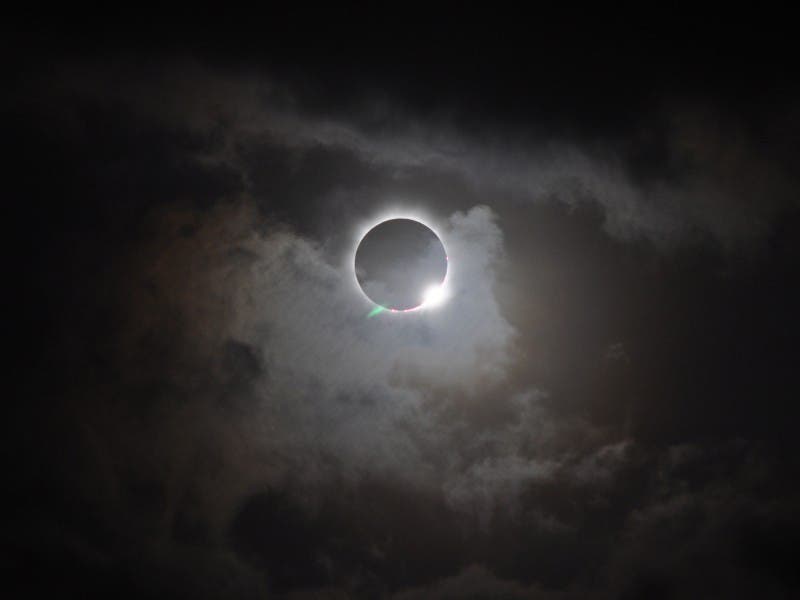
Scientists and amateur astronomers are gearing up for the “Great American Eclipse” — the first total solar eclipse over the continental United States in 38 years.
There’s just one catch: It’s still two years away. And for Californians, it may mean a road trip.
Find out what's happening in South San Franciscofor free with the latest updates from Patch.
On August 21, 2017, the moon will pass between the sun and the Earth, temporarily blocking light and casting a shadow on the planet and causing near-total darkness in the middle of the day.
The eclipse also provides a chance to see the sun’s corona, its outer atmosphere, which can create a beautiful display when the rest of the sun is blocked.
Find out what's happening in South San Franciscofor free with the latest updates from Patch.
The eclipse will be best viewed in a thin stretch from Oregon to South Carolina and can last anywhere from two minutes to upward of two minutes and forty seconds, which is what southeastern Missouri and western Kentucky can expect.
NASA has already put together a page on the astronomical anomaly, where you can track the path of the solar eclipse in an interactive map to see if, when and for how long it will be over parts of the country. Not too close to California, according to the diagram.
“The path of totality (when you see a total eclipse) across the United States during this next eclipse is fairly narrow,” Sarah Jaeggli, a solar physicist with NASA’s Sciences and Exploration Directorate, told Patch. “There’s a spot where you need to be to see totality, and it’s maybe 100 miles across.”
The fact that it’s still two years away hasn’t stopped everyone from the Discovery Channel to MTV from going ga-ga over the eclipse.
“It’s beautiful, it’s spectacular,” Phil Plait, an astronomer who was a part of the Hubble Space Telescope and is now a popular science blogger, told Patch. “A lot of people feel closer when things like this happen.”
A total solar eclipse—when the entirety of the sun is covered by the moon—is the only time scientists say you should look directly at the sun.
But the “total” part is key.
“During totality, it is safe to look at with your naked eye, but it’s important to be careful, because the eclipse is short, and before and after you can still hurt your eyes by just staring at the partially covered disc of the sun,” Jaeggli said.
“Using eclipse glasses is really the best way to go. They’re either silvered or darkened piece of plastic polymer sheet that you can look through. And you can look through those safely at the sun not during an eclipse as well.”
Good thing there’s still plenty of time to prepare. So start planning your trip.
Image via NASA.
Get more local news delivered straight to your inbox. Sign up for free Patch newsletters and alerts.