Business & Tech
Lease vs Buy a Car in 2025
Lease or Buy? Expert Insights for Choosing Your Next Automotive Purchase


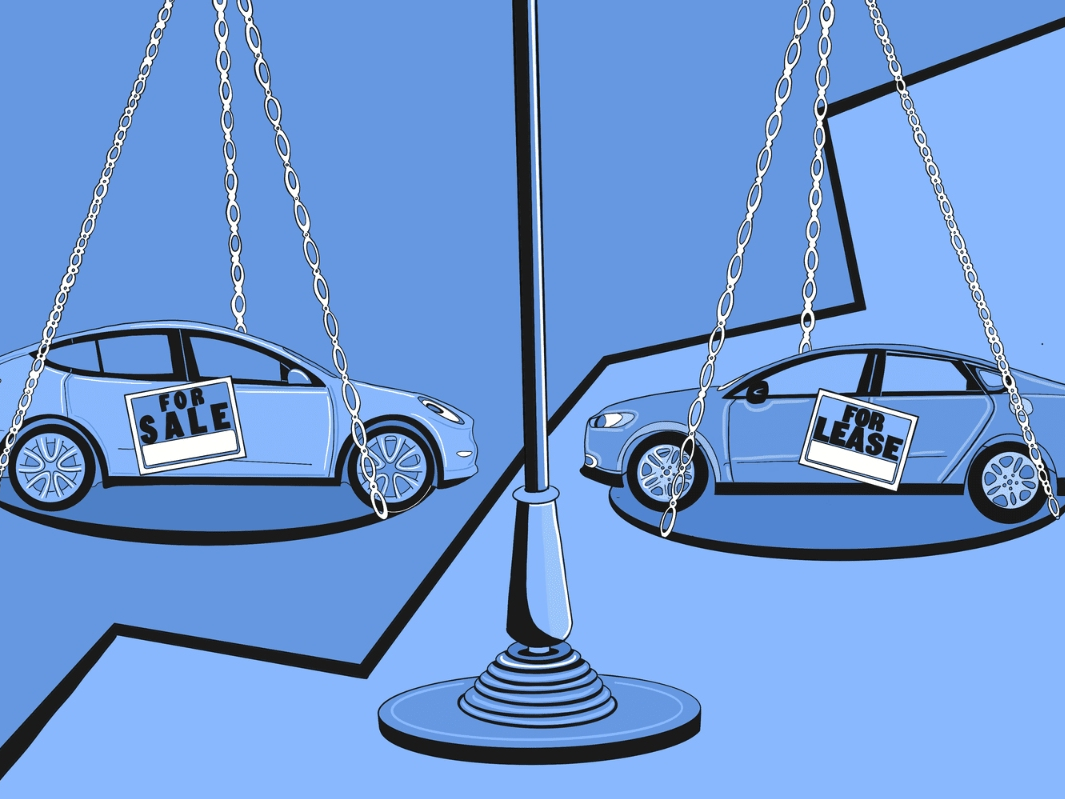
Deciding whether to lease or buy your new car is one of the biggest financial choices you’ll make as a driver. As someone who’s helped countless customers at Tim Moran Auto Group navigate this decision, We understand it can feel overwhelming. In 2025’s market climate, with evolving car technology and new financial incentives, the lease-vs-buy question is more relevant than ever. This article will provide an authoritative, unbiased comparison of leasing versus buying – focused specifically on Chevrolet, Ford, and Hyundai vehicles – to help you make an informed decision.
We’ll explore key factors like total cost of ownership, warranty coverage, depreciation, monthly payments, mileage limits, technology updates, and resale value. By using real 2025 examples from Chevy, Ford, and Hyundai, you’ll see how each factor plays out in today’s market. Let’s dive in so you can determine which option best fits your needs and budget.
Leasing vs. Buying: The Basics in 2025
Leasing and buying both get you a new car, but the experience and financial outcomes are very different. Buying means you take out a loan (or pay cash) to own the vehicle outright. Leasing is essentially a long-term rental – you pay for the vehicle’s depreciation during the lease term, then return it (or buy it out) at lease-end. In 2025, manufacturers are heavily promoting leases again after a pandemic-era slump. High interest rates on auto loans in recent years made leasing attractive to more consumers, since lease deals often have lower monthly payments than buying the same car. In fact, leasing dipped to only ~17% of new car transactions in 2022-2023, but as of early 2024 automakers rolled out aggressive lease offers to lure customers back.
Find out what's happening in Temeculafor free with the latest updates from Patch.
What does this mean for you in 2025? You’ll likely encounter some excellent lease promotions at Chevy, Ford, and Hyundai dealerships. For example, lease specials under $200/month are available on certain models this year. Leasing can put you in a more expensive vehicle for a lower monthly cost, but buying builds you equity (ownership) over time. Let’s break down the major factors to consider:
Total Cost of Ownership and Depreciation
One big consideration is the total cost of ownership (TCO) over the years you plan to keep the car. This includes purchase price, financing interest, fuel, insurance, maintenance, repairs, and depreciation (loss of value over time). Depreciation is often the single largest cost of owning a new car – and it works differently for leases vs purchases:
Find out what's happening in Temeculafor free with the latest updates from Patch.
- When you buy, you absorb the full depreciation hit. On average, new cars lose about 39% of their value in the first 5 years. Some vehicles depreciate even faster. (Before 2020, the average 5-year depreciation was closer to 50%, but recent market conditions improved retention rates.) If you buy a $40,000 SUV today, it might be worth only ~$24,000 in five years, depending on the model.
- When you lease, the lease payments essentially cover the expected depreciation during your lease term (plus taxes and a financing charge). You’re only paying for the value the car loses while you drive it, then handing it back. If a vehicle’s value drops faster than expected, that’s generally the leasing company’s problem – you can walk away at lease-end. In a time of uncertain used-car prices, leasing can shield you from resale value risk. For instance, if gas prices spike or new technology makes your model less desirable, a lease means you aren’t stuck trying to sell or trade in a depreciated car.
Depreciation varies by brand and model. Historically, trucks and popular SUVs hold their value well, while some sedans and electric vehicles lose value more quickly among our focus brands:
- Ford trucks/SUVs tend to have solid resale value. For example, the affordable 2025 Ford Maverick compact pickup is projected to retain about 53% of its value after 5 years– meaning a strong resale. If you buy a Maverick, you could recoup over half the purchase price later. If you lease it for 3 years, your payments account for the expected ~30% depreciation in that period and you’re not on the hook for the later drop.
- Chevrolet resale values vary by model. Chevy trucks like the Silverado are known to hold value relatively well (the Silverado has a loyal following and utility that supports resale demand). On the other hand, a typical Chevy sedan might depreciate more quickly. Leasing a Chevy that has higher depreciation can save you from a big trade-in loss. And for Chevy models that hold value, buying and keeping the car long-term can pay off.
- Hyundai vehicles historically depreciated faster when the brand was newer in the market, but in recent years Hyundai’s quality and popularity have boosted resale values. Still, as a value-focused brand, Hyundai’s initial prices are lower – so if you buy one, the dollar depreciation can be less painful than a pricier brand. Leasing a Hyundai can be very affordable (as we’ll see in examples) and you still avoid worrying about resale. Buying a Hyundai and keeping it 6-10 years can be smart, especially given their long warranty (more on that soon).
Tip: Consider how long you typically keep cars. If you’re someone who likes a new ride every 3-4 years, leasing often minimizes your TCO because you’re not paying the full price or dealing with selling the car. If you prefer to buy and drive a car for 8-10 years, you spread out the upfront cost and eventually enjoy payment-free years, which can make the total ownership cost lower in the long run than consecutive leasing.
Warranty Coverage and Maintenance
Warranty and expected maintenance costs are another key factor. All new Chevys, Fords, and Hyundais come with comprehensive factory warranties – but Hyundai stands out for industry-leading coverage.
- Hyundai Warranty: Hyundai was a pioneer in offering a 10-year/100,000-mile powertrain warranty (engine/transmission) and a 5-year/60,000-mile bumper-to-bumper warranty. This means if you buy a new Hyundai, you have a full 5 years of basic coverage (versus 3 years for most brands) and the critical powertrain components are covered for 10 years for the original owner. For example, if you bought a 2025 Hyundai Tucson or Palisade, you’d be covered until 2030 for almost any major issue – a huge confidence booster for long-term ownership. Notably, even Hyundai’s hybrid and electric components carry the 10-year warranty in most cases. If you lease a Hyundai for 3 years, you’ll of course be under warranty the whole lease (so virtually no repair risk beyond routine maintenance, which is the same as with any leased new car). But if you buy and keep it 5+ years, Hyundai’s lengthy warranty means you’re less likely to face out-of-pocket repair costs in those early years compared to other brands.
- Ford Warranty: Ford’s standard new vehicle warranty is 3 years/36,000 miles bumper-to-bumper, and 5 years/60,000 miles on the powertrain. This is pretty typical for the industry (matching Chevrolet’s coverage as well). What it means: if you lease a Ford for 3 years/36k miles or less, it will be under full warranty the entire time. If you buy a Ford, you might consider an extended warranty or be prepared for repair costs after year 3 (for non-powertrain items) or after year 5 (for powertrain). Ford also includes 5 years/60k of roadside assistance, which is a nice perk whether you lease or buy.
- Chevrolet Warranty: Chevrolet likewise provides a 3-year/36,000-mile comprehensive warranty and 5-year/60,000-mile powertrain warranty on . There are some nuances (for example, Chevy’s electric vehicles like the Bolt/Equinox EV have specific battery warranties of 8 years/100k miles), but generally you can assume 3/36 full coverage. So a 2- or 3-year Chevy lease keeps you comfortably within the warranty. A purchase means you’ll have coverage the first few years and then you’d be responsible for repairs unless you buy extended protection.
Maintenance & reliability: Beyond formal warranty coverage, think about routine maintenance and repair likelihood. Independent data shows Hyundai owners typically spend less on maintenance over time than Ford or Chevy owners. Over the first 10 years of service:
- Hyundai models average around $7,167 in maintenance and repair costs (10-year total), which is below industry average by about $1,100. There’s roughly a 20% chance of a major repair in that 10-year span for Hyundai, slightly better than other brands .
- Chevrolet models average about $9,369 in maintenance/repairs over 10 years, about $1,070 above the industry average. The likelihood of a major repair within 10 years is about 26.6% for Chevy.
- Ford models average closer to $10,640 in 10-year maintenance/repair costs. Fords have roughly a 30% chance of a major repair in that period.
What do these numbers tell us? If you plan to keep a vehicle long-term, Hyundai’s lower maintenance costs and longer warranty give it an edge in ownership costs – a point for buying a Hyundai. Ford and Chevy vehicles may incur more costs as they age, which might tilt some drivers toward leasing (so you’re always in a newer car that’s less likely to need repairs). Of course, these are averages – a well-maintained Ford can serve reliably for many years, and maintenance costs also depend on the specific model (e.g., a performance Chevy Corvette will cost more to maintain than an economical Chevy Malibu).
Bottom line: Leasing generally means minimal maintenance hassle – you’ll mostly just do oil changes and tire rotations during the lease, and the warranty covers any unexpected issues. Buying means you’ll eventually face regular maintenance and out-of-warranty repairs, but you can mitigate that with reliable models and perhaps extended service plans. If worry-free driving is a top priority, leasing a new car every few years (especially from a brand with strong reliability like Hyundai) can be attractive. If you don’t mind the responsibilities of car upkeep and want to avoid perpetual payments, buying and maintaining a car can save money over time.
Monthly Payments and Upfront Costs
Cost is often the deciding factor, so let’s compare the financials of leasing vs buying:
- Monthly Payments: In almost all cases, a lease payment is significantly lower than a loan payment for the same car. You’re only financing the depreciation for a few years, not the entire price of the car. According to Experian data, in 2024 That gap had narrowed a lot (just $17 difference on average) due to higher interest rates on loans, but those figures include luxury brands and longer loan terms. For mainstream brands, leases still tend to be quite a bit cheaper per month. For example, consider a 2025 Ford Bronco Big Bend with a price around $40,000. Buying it with 10% down on a 5-year loan (at ~5% APR) might cost roughly $600-$650 per month. Meanwhile, Ford’s current lease offer on a Bronco Big Bend 4-Door is around $365 per month for 36 months with ~$4,700 due at signing. Even factoring in the down payment spread over 36 months, the effective monthly cost is still lower than the purchase. Similarly, Hyundai’s lease deals are extremely low for 2025 – you can lease a new 2025 Hyundai Elantra sedan for about $179/month (36 months, ~$3,499 due). It’s hard to beat a sub-$200 payment on a brand new car with full warranty. If you bought that Elantra (around $22k MSRP) on a loan, your payment might be double that amount.
- Down Payment: Leases typically require some cash at signing (often to cover fees, first month, and a down payment called “cap cost reduction”). However, these upfront costs are usually lower than the down payment needed to get an affordable loan payment when buying. It’s not uncommon to lease with around $0 to $3,000 down, whereas buying the same car might require $3,000 or more down to keep the loan payments comfortable. For instance, Chevrolet’s current lease on a 2025 Blazer SUV is advertised at $309/month with $3,399 due at signing. If you wanted to buy a Blazer, you might put $4k or $5k down and still have a higher monthly payment than the lease. Of course, you get that money back in the form of owning more equity in the car when you buy.
- Interest Rates: In 2025, interest rates for auto loans have been higher than the ultra-low levels of the past, so financing a purchase can be expensive. Lessees pay interest too (built into the lease “money factor”), but manufacturers often subvent lease rates to make deals appealing. We’ve seen special low-APR financing deals from Ford Credit and GM Financial this year to help buyers, and likewise lease incentives (like bonus lease cash) from Hyundai. If you qualify for a promotional 0% or 1.9% APR loan on a new Ford or Chevy, buying becomes more affordable. If loan rates are high (say 6-8% APR) and the manufacturer is instead offering a subsidized lease, the lease could save you money in interest. It’s wise to compare the effective interest cost in both scenarios. Sometimes dealers will present a lease vs buy calculator to show the difference for your situation.
In summary, leasing wins on short-term affordability – lower monthly payments and less cash upfront for a given car. Buying wins on long-term value – once the loan is paid off, you have no monthly payment, and you own an asset you can sell or trade. A good rule of thumb: if you’re stretching your budget to afford the monthly payments on a purchase, consider leasing so you don’t become “car poor.” On the other hand, if you can comfortably buy the car you want, owning it will cost less overall than leasing continuously (assuming you keep it well past the loan term).
Mileage Limits and Driving Habits
One of the biggest practical factors in the lease vs buy decision is your annual mileage and usage needs:
- Leases come with mileage limits. Standard leases allow around 10,000 to 12,000 miles per year (some go up to 15k/year). If you go over, there’s a per-mile charge (often around $0.15 to $0.25 per mile over the limit). This is an important consideration for California drivers – do you have a long commute from Hemet to L.A. or frequent road trips? If you drive 20k miles a year, a lease could rack up fees or require you to buy extra mileage upfront (which raises the cost). For example, a 3-year lease with 12k/year (36k total) might charge $0.20 for each mile over – drive 39k miles and you’d owe about $600 in overages at turn-in.
- Buying has no usage restrictions. When you own the car, you can drive it as much as you want. The only “penalty” for high mileage is lower resale value and more maintenance. If you’re the type who puts a lot of miles on a vehicle, buying is usually better. You don’t have to worry about any fees or contract limits – the car is yours to use. Many of our customers in Hemet who have work trucks or long daily drives prefer buying for this reason alone.
- Wear and Tear: Leases also stipulate you must return the car in good condition (normal wear is expected, but damage or excessive wear can incur charges). If you lease, you’ll want to take care of the car and possibly pay for minor fixes (a cracked windshield, bald tires, etc.) before turn-in to avoid penalties. When you own, you don’t answer to anyone about the car’s condition – though again, it affects your resale value if you ever trade it in.
Ask yourself about your driving habits. If you reliably stay under 12k miles/year and keep your car in good shape, you’re an ideal lease candidate. If you love road-tripping or have a long commute that pushes you to 15k+ miles/year, you either need to budget for a higher-mileage lease (which costs more) or lean toward buying. Many find the freedom of ownership (no mileage caps, no end-of-lease inspection worries) to be a big plus for buying.
Technology Updates and Model Upgrades
Car technology is evolving rapidly – and this can influence the lease vs buy equation more than you might think. In 2025, we’re seeing major advancements in EVs, driver-assistance features, infotainment, and safety tech. This creates a few considerations:
- Leasing keeps you in the newest tech. If you’re a tech enthusiast or simply don’t want to miss out on new features, leasing ensures you can upgrade every 2-3 years. For instance, Ford’s BlueCruise hands-free driving system and advanced infotainment are improving every model year. Hyundai is rolling out updates like better autonomous safety aids and hybrid/EV tech in its lineup each year. By leasing, you could drive a 2025 model with the latest features now, and then be ready to jump into a 2028 model with even more advanced tech. You’re never stuck with outdated technology or last generation’s design. This is especially relevant with the rise of electric vehicles – battery ranges and charging speeds are improving fast. Leasing an EV like the Chevy Equinox EV or Ford Mustang Mach-E for a few years means you can switch to a longer-range or faster-charging model when the lease is up, without worrying about the older EV’s resale value as technology progresses.
- Buying means you commit to the tech as of purchase. That’s not necessarily bad – today’s cars are already incredibly advanced. But if you buy a vehicle, you’ll probably keep it several years, during which newer models might one-up yours. Think of a smartphone: leasing is like upgrading your iPhone every year or two, whereas buying is like holding onto your phone for 4-5 years. Some folks love always having the latest; others are fine using something until it truly needs replacement. With cars, the stakes (and costs) are higher than phones, of course. If having the newest safety features or the hottest design refresh matters to you, leasing is the way to go. If you’re happy that your 2020 car still gets you from A to B comfortably, you’ll be fine buying a 2025 and driving it into the 2030s.
- Model cycles: Chevrolet, Ford, and Hyundai each have refresh cycles for their models. A full redesign tends to happen every ~5-7 years for a given model, with a mid-cycle facelift around 3-4 years. If you buy a 2025 model that’s early in its cycle, it will still look current for a while. But if you buy at the end of a generation, a brand-new redesign might come out a year later. Leasing can time your vehicle return to coincide with the next redesign. For example, the Ford F-150 got an update in 2024 – if you lease one now for 3 years, you’d be perfectly poised to switch to the next refresh around 2027. Hyundai has been very active with new model introductions (the new Ioniq EV lineup, Tucson, etc.), so there’s always something new on the horizon.
In short, leasing offers flexibility to adapt to rapid changes in the auto market, while buying is a longer-term bet on a particular car. Neither is right or wrong – it depends how much you value staying on the cutting edge. Just remember that any new car today will still be a good car in 5+ years; missing a few new features isn’t the end of the world if your vehicle otherwise suits you well.
Resale Value and Equity
When you buy a car, part of the appeal is that you’re building equity – the car will have value you can cash in later. With a lease, you typically walk away with no asset (unless you choose to buy out the lease at the end, which some do if the buyout price is attractive). Let’s consider the implications:
- Equity from Buying: Say you finance a new 2025 Chevy Silverado 1500 and pay it off over 5 years. You’ve spent a lot, but now you own a truck that might be worth, for example, 50-60% of what you paid. You can keep driving it payment-free, or trade it in toward your next purchase. That trade-in credit significantly lowers the cost of your next car. People often use the value of their old car as the down payment for the new one. With leasing, after each lease you start from scratch (unless you had positive equity in your lease, which can happen in rare cases if the vehicle held its value much better than expected – not common, but it did occur for some people during the used car shortage). So, buying is generally better financially if you hold the vehicle long enough. The key is you must keep it well past the loan term; if you buy and then trade in after just 2-3 years, you may have little or no equity (since cars depreciate most in the first 2-3 years).
- Resale Uncertainty: Predicting a car’s future value is tricky. Market conditions (economy, fuel prices, supply issues) can swing values. If you buy, you carry that resale risk – the car could be worth more or less than you hoped when it’s time to sell. For example, if you bought a large SUV and then gas prices spiked for a prolonged period, demand (and resale) might drop. Leases eliminate that concern: the residual value is set in your contract upfront, and it’s the leasing company’s problem if the market shifts. In times of increasing depreciation (i.e. used car prices softening), leasing can be a smart way to avoid losing money.
- Brand considerations: Ford and Chevy trucks historically have some of the best resale value among domestics – a well-kept F-150 or Silverado holds its value due to constant demand. Hyundai, while greatly improved, might not resell for as high a percentage, but remember you likely paid less to begin with. If strong resale is your goal, specific models matter more than brand averages. For instance, the Toyota Tacoma is famous for top-notch resale (often leading its segment), but since we’re focusing on Chevy/Ford/Hyundai, a comparable might be the Ford Ranger or Bronco which also do fairly well. On the other hand, a Chevy Malibu or Hyundai Sonata sedan will depreciate more (sedans are softer in the market right now). So if you’re buying, try to choose a model with a reputation for holding value. If you’re leasing, you don’t need to worry about that – you might even intentionally lease cars that depreciate fast, because you’re benefiting from not owning them during the big depreciation hit.
One strategy we see: Some customers lease a vehicle first to “try before you buy,” and if they absolutely love it, they may opt to purchase it at lease-end (if the buyout price is reasonable). This can combine the best of both worlds – you didn’t commit initially, but you keep the car you’ve come to enjoy and still end up owning an asset.
Putting It All Together: Chevy vs. Ford vs. Hyundai Scenarios
Let’s use a specific example scenario for each brand to illustrate the decision:
- Chevrolet Scenario: Imagine you’re considering a 2025 Chevrolet Equinox (compact SUV). It has modern features and a reasonable price. Lease option: Chevy is offering a lease for, say, $289/month for 36 months with $2,500 down on the Equinox. Over three years, you’d pay roughly $13k total. You get a new SUV under warranty and can simply return it in 2028, perhaps upgrading to an EV or a new model then. Buy option: The Equinox costs around $30k to buy. With taxes/fees and maybe $3k down, you finance ~$28k. At 5% APR for 60 months, the payment might be about $530/month. Over three years, you’d pay ~$19k (and still owe money on the loan). But you’d have an asset. If after three years you wanted to sell, the Equinox might be worth around 55-60% of its new price (just an estimate; compact SUVs hold decent value). So maybe it’s worth ~$17k. That means in this scenario, the cost to own for 3 years (purchase) is: $19k paid on loan minus $17k recovered = $2k net (plus your down payment). Actually, you’d likely have paid more interest early on, but you also still have some loan balance – it can get complex. In contrast, the lease was ~$13k out of pocket with nothing at the end. In purely financial terms, buying and reselling could in theory be cheaper here (only $2k net loss, which seems low – probably our estimate is optimistic). However, there’s risk in the actual resale value and hassle in selling. If you instead keep the Equinox 5-6 years, buying clearly wins because after year 5 you have a paid-off SUV to drive or sell as equity.
- Ford Scenario: Consider a 2025 Ford F-150 XLT pickup. Trucks are expensive – let’s say $55k for a nicely equipped one. Lease: Ford might offer a lease around $599/month for 36 months with ~$5k due at signing (just as an example, since trucks often lease slightly higher). Over 3 years, that’s about $26k out of pocket. Buy: $55k purchase, perhaps $5k down and finance $50k. At 5% for 5 years, that’s roughly a $940/month payment. In 3 years, you pay ~$34k. If you then sell the F-150, trucks hold value well – it might still fetch $35-$40k after 3 years if kept in good shape (especially in the current market for used trucks). It’s possible you could nearly break even on a short-term buy in this case (some trucks in recent years even appreciated briefly during shortages, but that’s abnormal). More realistically, say it’s worth $33k at that point – you’d have paid $34k and get $33k, effectively costing you only ~$1k to drive for 3 years, not counting interest. But if those numbers are off and the truck is worth less, or if you keep it longer and eventually it’s worth maybe $20k after 7-8 years, you paid $55k and got $20k back – $35k cost over ownership. Compare that to leasing two back-to-back F-150s over 6 years (around $52k total lease cost for two 3-year terms). Depending on resale, buying can indeed be cheaper for trucks long-term. However, $940 a month is a lot to budget for; many people lease to get that F-150 for half the monthly cost and accept the higher long-run expense as the trade-off for affordability now.
- Hyundai Scenario: Picture a 2025 Hyundai Tucson crossover. Purchase price maybe ~$33k for a well-equipped one. Lease: Hyundai might have a special like $279/month for 36 months with $3k down (they often have very competitive payments). That’s about $13k total over 3 years. Buy: Finance $30k with a small down payment, ~ $560/month for 60 months (at 5%). Three years of payments ~$20k. The Tucson’s resale after 3 years might be, say, 55% = ~$18k. So net cost around $2k (plus interest) if sold at 3 years. Again, that assumes a strong resale, which could be lower. If you keep it 8 years, you benefit from Hyundai’s warranty for most of that time, and at the end maybe the Tucson is worth $10k – you recoup some money. Meanwhile, if you had leased and then leased again, you’d spend maybe $26k over 6 years and have no asset. In Hyundai’s case, their low maintenance costs and long warranty really reward owners who hold the car long-term (you could comfortably drive it 10 years with minimal unexpected costs). So financially, buying a Hyundai and keeping it is usually the cheapest route overall. Leasing a Hyundai is still great for peace of mind and low monthly cost, just not the cheapest in the grand scheme.
These examples highlight that the math can favor buying if you assume good resale value, but leasing offers cost certainty and flexibility. It’s important to run the numbers for your specific model and how long you’d keep it. Our team at Tim Moran Auto Group can help you compare scenarios with real figures for any Chevy, Ford, or Hyundai you’re interested in.
Making the Choice: Lease or Buy?
After weighing all these factors – costs, warranties, depreciation, payments, mileage, technology, and resale – the right choice comes down to your personal priorities:
Choose Leasing if you:
- Prefer lower monthly payments and less cash upfront for a more affordable or higher-trim vehicle.
- Like to upgrade cars frequently and want the latest features every few years.
- Drive a moderate number of miles (within lease limits) and keep your cars in good condition.
- Want to avoid the hassle of selling/trading in down the road, and don’t mind always having a car payment.
- Appreciate the peace of mind of always being under warranty coverage, with minimal repair risk.
Choose Buying if you:
- Aim for the lowest total cost in the long run and want to eventually have no monthly payment.
- Drive high miles or unpredictable distances that could violate lease limits.
- Don’t need a new car every few years – you’re happy driving the same vehicle for a longer period.
- Want to build equity in a car and have the option to sell or trade it on your own terms.
- Value the freedom to customize or modify your vehicle (leases often prohibit modifications), and freedom from end-of-lease charges.
There’s no one-size-fits-all answer. For example, a retiree in Hemet who drives only 8,000 miles a year and likes a new SUV every 3 years is an ideal lease candidate. Meanwhile, a family hauling kids around San Jacinto and commuting to Orange County might quickly rack up mileage – buying a reliable minivan or SUV to own for 10 years could save them thousands.
One more middle-ground option to be aware of: Certified Pre-Owned (CPO) vehicles. While beyond our scope here, a CPO Chevy, Ford, or Hyundai (a lightly used car with warranty) can be a great third option to consider – you buy it, but someone else took the initial depreciation hit, lowering your cost. This isn’t leasing, but it can sometimes combine some benefits (lower cost like a lease, but you own it). Tim Moran Auto Group often has CPO vehicles if that route interests you.
Conclusion: We’re Here to Help
Ultimately, both leasing and buying can be smart choices – it depends on your circumstances and preferences in 2025. The good news is that Chevrolet, Ford, and Hyundai all offer excellent vehicles with various financing options. Whether you decide to lease a new Chevy for its low payment, finance your favorite Ford to own it outright, or take advantage of Hyundai’s warranty with a long-term purchase, you’ll be getting a modern, high-quality car.
If you’re still unsure which path to take, that’s where we come in. As the CMO of Tim Moran Auto Group, I take pride in how our team educates and guides customers – we want you to feel confident in your decision. We can provide side-by-side comparisons of lease vs. loan on any model, discuss your driving habits, and factor in current incentives and deals. Sometimes, manufacturers even offer special lease loyalty bonuses or low APR deals that can tip the scales.
Ready to explore your options? We encourage you to reach out to Tim Moran Auto Group in Hemet, CA for personalized assistance. Whether you’re eyeing a new Chevy, Ford, or Hyundai, our finance experts will help tailor a lease or purchase plan that fits your budget and lifestyle. Contact us today or visit our Hemet showroom – we’ll make sure that whether you lease or buy, you drive away happy in the car that’s right for you. Your next vehicle is a big investment; let us help you make the best choice and get the most enjoyment out of your new ride for years to come.
References
- Experian Automotive Market Reports. (2025). Leasing and Financing Trends 2025. Retrieved from www.experian.com
- Kelley Blue Book. (2025). 5-Year Cost to Own Awards. Retrieved from www.kbb.com
- J.D. Power. (2025). Vehicle Dependability Study 2025. Retrieved from www.jdpower.com
- Edmunds. (2025). True Cost to Own Reports. Retrieved from www.edmunds.com
- Hyundai USA. (2025). Warranty Information & Vehicle Specs. Retrieved from www.hyundaiusa.com
- Ford Motor Company. (2025). Ford Vehicle Warranty Information & Financing Offers. Retrieved from www.ford.com
- Chevrolet USA. (2025). Chevrolet Vehicle Warranty Coverage & Incentives. Retrieved from www.chevrolet.com
- Consumer Reports. (2025). Best and Worst New Cars for Reliability. Retrieved from www.consumerreports.org
- U.S. News & World Report. (2025). Best Car Rankings. Retrieved from cars.usnews.com
- TrueCar. (2025). Lease vs. Buy Guide. Retrieved from www.truecar.com
- Car and Driver. (2025). New Car Reviews: Chevrolet, Ford, Hyundai. Retrieved from www.caranddriver.com
Disclaimers:
The information presented in this article is intended solely for educational and informational purposes. All examples, figures, calculations, monthly payments, interest rates, and depreciation percentages provided are hypothetical scenarios and illustrative only. Actual vehicle prices, monthly payments, lease offers, financing terms, incentives, resale values, warranty coverage, and vehicle availability are subject to change based on manufacturer guidelines, market conditions, customer creditworthiness, dealer stock, and regional pricing adjustments.
Tim Moran Auto Group cannot guarantee the accuracy of the numbers or scenarios provided herein, nor does this information constitute a commitment to provide any specific lease or finance offer. Offers, terms, and pricing listed or described are not binding agreements. Customers should contact Tim Moran Auto Group directly to confirm current availability, pricing, financing, leasing terms, and eligibility for any advertised incentives or discounts.
Vehicles described may vary in availability, trim levels, features, specifications, color options, and actual performance. Any reference to features, technology, or specifications should be verified with a Tim Moran Auto Group sales representative.
Tim Moran Auto Group is not responsible for typographical errors, inaccuracies, or omissions. All vehicle purchases or lease agreements are subject to final approval by the dealership and relevant financial institutions.
For personalized assistance and accurate, up-to-date information, please contact Tim Moran Auto Group, located in Hemet, CA.