Community Corner
New California Building Codes Are Pushing Walnut Creek Homeowners to Finally Fix Their Noisy Garage Doors
Title 24 remodels create the perfect opportunity to finally fix that loud garage door while contractors are already on-site.

This is a paid post contributed by a Patch Community Partner. The views expressed in this post are the author's own, and the information presented has not been verified by Patch.
California's Title 24 energy code took effect six months ago, and Walnut Creek homeowners tackling mandatory remodels are discovering an unexpected benefit. Many are finally addressing a long-standing annoyance while upgrading insulation and HVAC to meet compliance. Garage door replacements and upgrades eliminate the loud, rattling noise that wakes the household and neighbors every morning. Contractors are already on-site, making this the perfect time to solve both noise and energy efficiency in one coordinated effort.
| Quick Answer: The most effective way to reduce garage door opener noise is to upgrade to a belt-drive opener with a DC motor and install an insulated garage door. Belt-drive openers eliminate metal-on-metal grinding, while insulated doors with R-values from R-9.0 to R-20.4 dampen vibration and sound transmission. For Walnut Creek homeowners coordinating Title 24 compliance work, addressing both components during the same project maximizes efficiency and results. |
Tackle Compliance and Loud Garage Doors Together
Title 24 compliance can raise remodeling costs by $1,500 to $8,000 on its own, but it can trigger upgrades in HVAC, insulation and electric, raising total project costs for Bay Area homeowners. According to California’s Energy Code Update Guides, the changes focus on energy cost savings — the new 2025 code will “save consumers money and reduce greenhouse gas (GHG) emissions through increased energy efficiency.”
In Walnut Creek, about 79% of houses predate 1980, which means aging garage systems often become the next weak point once other improvements are complete. Knowing why garage doors become loud helps determine whether simple fixes or a full replacement make more sense.
Identify the Common Causes of Noise
Is it normal for a garage door opener to make a lot of noise? A properly functioning opener operates quietly. The racket rarely stems from one failing component but develops over the years as rollers wear down, hinges loosen, springs age and older openers continue vibrating throughout the system.
Clopay, North America's largest garage door manufacturer with over 60 years of production experience, identifies several warning signs in its technical guidance. The company, which supplies products through more than 3,000 independent dealers nationwide, including The Home Depot, notes that “red flags include grinding noises that won't quit, sudden loud bangs, or any issues with springs or cables — these components can cause serious injury if mishandled.”
Additionally, homes from the 1970s and 1980s may still rely on older chain-drive systems that manufacturers never designed for quiet operation.
Learn How Summer Heat Amplifies Noise
Walnut Creek's summer heat, which averages 83° Fahrenheit in July, bakes lubricant off moving parts while metal tracks expand and contract with the temperature swings. As heat dries out lubrication, friction between rollers and tracks increases, making existing wear more noticeable during early mornings and evenings when temperatures fluctuate most. The difference between winter and summer operation is striking.

Turn Title 24 Compliance Into an Opportunity
Title 24 took effect on January 1, 2026, and is triggering mandatory improvements for many remodeling projects. With contractors on-site, permits in hand and inspections on the calendar, this creates an efficient window to address garage door work simultaneously. Tackling renovation and upgrade projects together may reduce repeat labor costs, simplify scheduling and minimize disruption. Better insulation and quieter operation of the garage space complement the broader energy goals the code encourages.
How to Reduce the Noise of Your Garage Door Opener
Lubricating parts or tightening hardware can temporarily reduce minor rattling, but persistent problems often point to outdated equipment. Modern belt-drive systems and insulated doors provide the greatest improvement for reducing garage door opener noise.
Clopay, North America's largest garage door manufacturer, works in partnership with LiftMaster to address both noise sources: the door and the opener. Clopay manufactures insulated doors with R-values ranging from R-9.0 to R-20.4, while LiftMaster produces belt-drive openers specifically engineered for quiet operation. Together, the complete system addresses vibration from the door and mechanical noise from the opener.
LiftMaster has been manufacturing garage door openers for over 70 years and pioneered several industry safety innovations, including automatic reverse systems and infrared sensors. Their openers are available through Clopay's network of more than 3,000 professional dealers nationwide, including The Home Depot, making it straightforward to coordinate both components through a single installation with warranty coverage.
Both companies provide detailed technical specifications for their products, helping homeowners make informed decisions about noise reduction and energy efficiency upgrades.
| Bottom line: For Walnut Creek homeowners coordinating Title 24 compliance work, pairing a LiftMaster belt-drive opener with a Clopay insulated door rated R-18.4 or higher delivers comprehensive noise reduction. Both components are available through Clopay's local dealer network, simplifying installation and ensuring warranty coverage for the complete system. |
1. Upgrade to a Quiet Belt-Drive Opener
What are the best value quiet garage door openers? Belt-drive models represent a major improvement from older systems. A chain-drive opener uses a metal chain for reliable performance but can be quite noisy, while a belt-drive opener swaps the chain for a rubber belt, making operation much quieter.
LiftMaster's belt-drive openers with DC motors are specifically engineered for quiet operation in attached garages where bedroom and living spaces are nearby. The company's openers include Security+ 2.0 rolling code technology to prevent unauthorized access, and many models carry lifetime warranties on the motor and belt drive mechanism.
2. Install an Insulated Door for Sound and Savings
Clopay's insulated door lineup includes models with R-values ranging from R-9.0 to R-20.4. The company's Intellicore® insulation technology, a polyurethane foam injected between steel layers, provides thermal performance while reinforcing door structure, with R-values up to R-20.4.
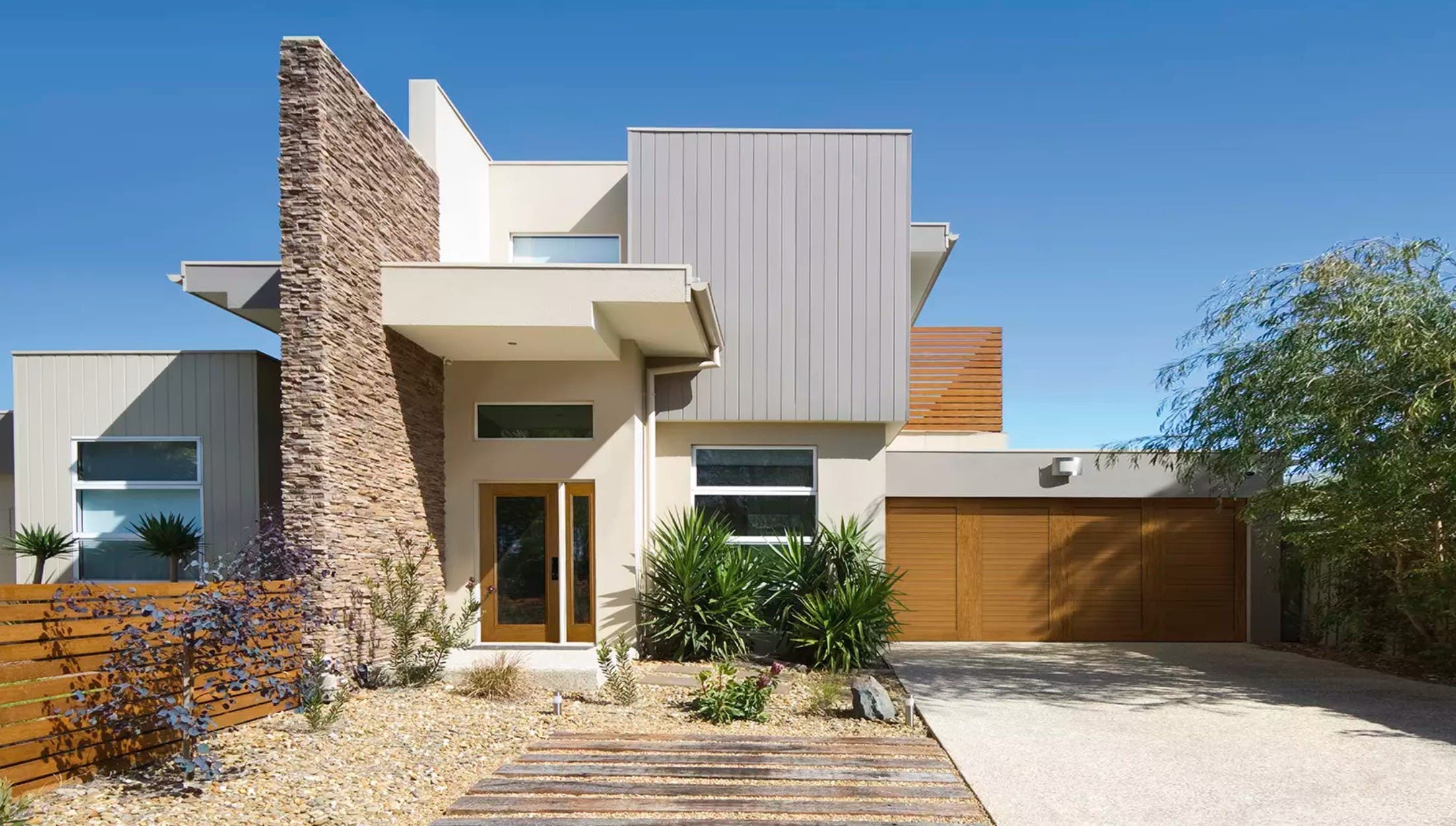
The three-layer construction — steel exterior, insulation core, steel interior — creates a stiffer, more stable panel that dampens vibration, while absorbing sound and improving thermal performance, helping lower utility costs. These benefits align with California's growing emphasis on energy-conscious homes, making insulated doors a smart complement to the updated code requirements.
Integrate Smart Technology Into Your Garage
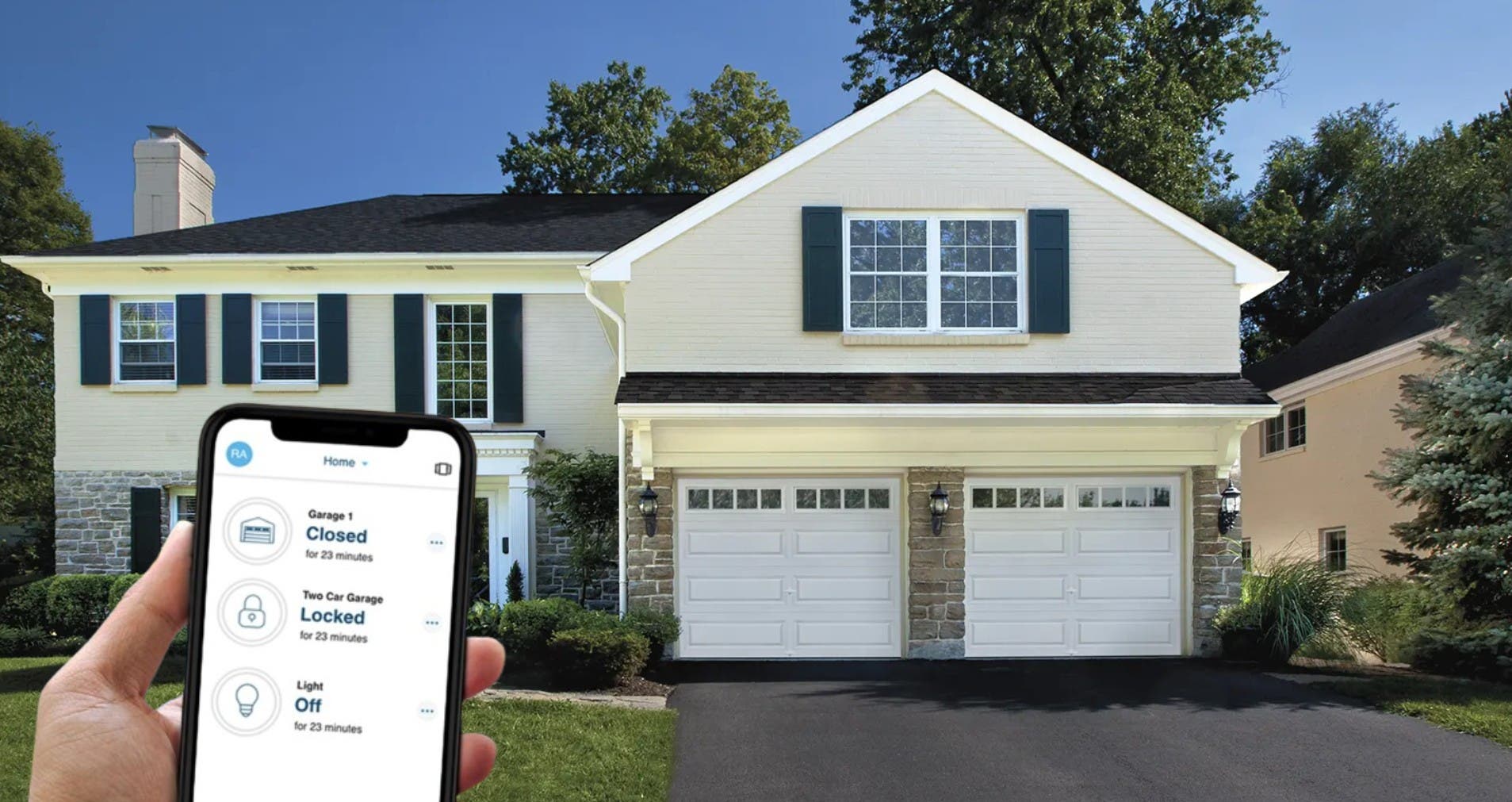
Smart technology adds valuable functionality to modern garage door opener systems. Remote monitoring allows you to check door status from anywhere, receive real-time notifications when it opens or closes and grant temporary delivery access without sharing house keys.
Smart connectivity through Clopay with Liftmaster’s myQ® technology adds convenience beyond just reduced sound. LiftMaster openers include myQ® smart technology, which provides remote monitoring and control. Available through Clopay's dealer network, these openers enable homeowners to operate their garage doors through a smartphone app with built-in Wi-Fi connectivity. Consumer Reports highlights these benefits. For example, the myQ® opener works with Amazon services so “a delivery driver [can] open your garage door, drop your packages inside and close the door to keep your deliveries secure.” The platform integrates with voice assistants, including Amazon Alexa, Google Assistant and Apple HomeKit for hands-free operation.
Calculate the Financial Payoff of Your Upgrade
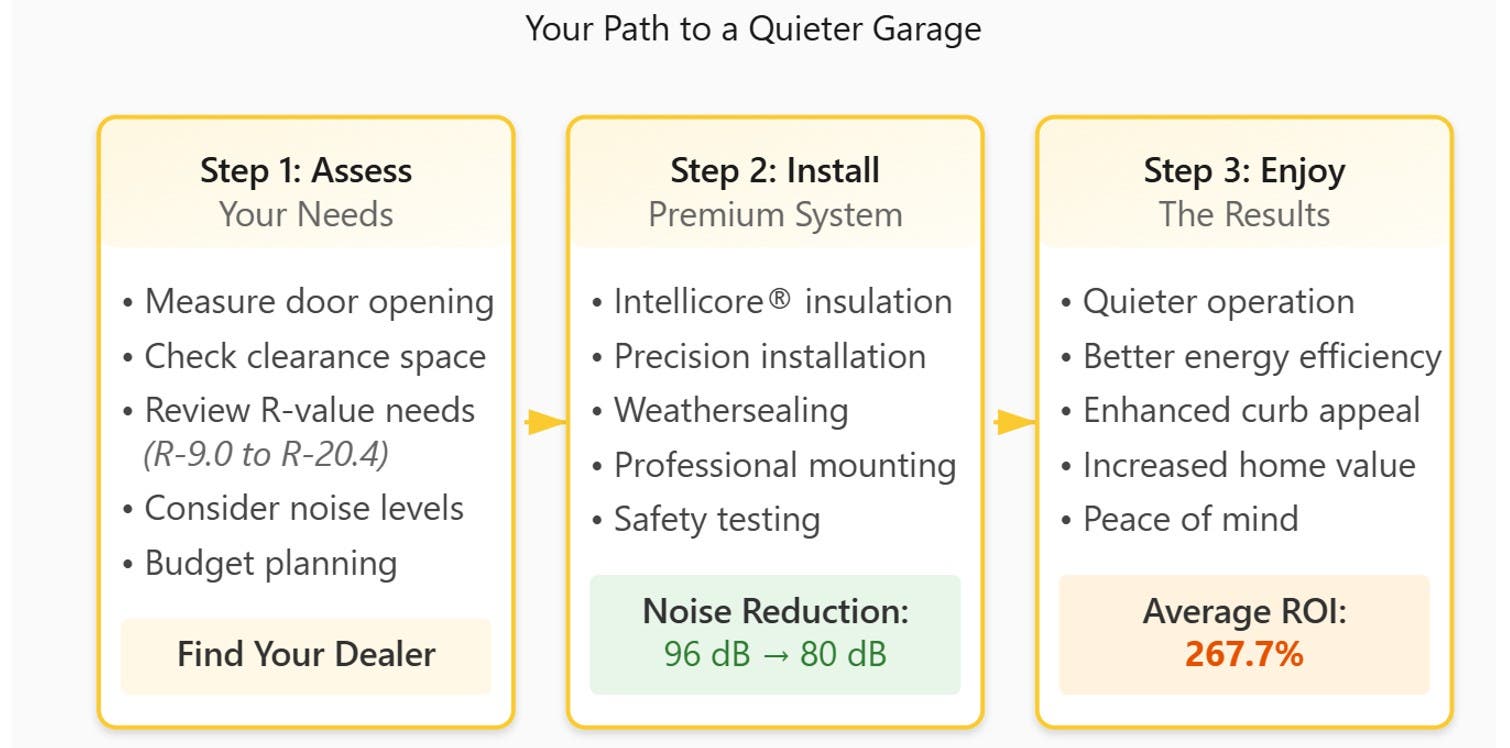
Exterior remodeling offers a clear return on investment (ROI), and door replacement consistently ranks among the highest-return exterior remodeling projects. According to Zonda Home's 2025 Cost vs. Value Report, garage door replacement delivers a 267.7% ROI — ranking number 1 out of 28 remodeling projects analyzed nationwide. This marks the second consecutive year garage door replacement has taken the top spot.
Beyond resale value, you'll enjoy quieter daily operation, spend less on maintenance, save on energy costs and boost curb appeal. While costs vary by model and installation requirements, the combination of immediate quality-of-life improvements and strong resale returns makes this a practical investment in Walnut Creek's competitive real estate market.
Frequently Asked Questions
Homeowners considering garage door upgrades often have similar questions about the process and results.
1. How much does it cost to replace a garage door opener?
In the Walnut Creek area, garage door opener replacement typically costs between $200 to $1,300, with belt-drive models and smart integration on the high end. Chain-drive models run a bit cheaper but offer fewer quiet-operation benefits.
2. What are the best value quiet garage door openers?
Belt-drive openers with DC motors offer the best combination of quiet operation and longevity. Models with smart technology, battery backup and extended warranties provide strong value for attached garages where noise matters.
3. Is it normal for a garage door opener to make a lot of noise?
A properly functioning opener should operate quietly. Excessive noise usually signals worn components like rollers, hinges or chains, or indicates you have an older chain-drive system that wasn't designed for quiet operation. Persistent rattling typically means it's time for maintenance or replacement.
4. How can I reduce the noise of my garage door opener?
In 2026, the most effective solution combines a belt-drive opener with DC motor and an insulated garage door. This addresses both the mechanical noise from the opener and the vibration/sound transmission through the door itself. Simple maintenance like lubrication and tightening hardware may help temporarily, but worn or outdated systems typically require replacement for significant noise reduction.
5. Do insulated garage doors really reduce noise?
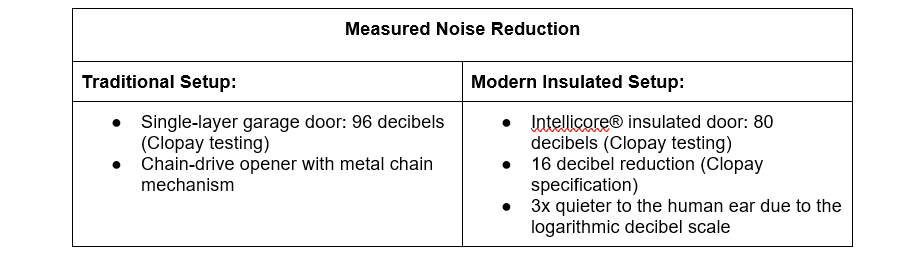
Yes. According to Clopay's product testing, Intellicore® insulated doors measure 80 decibels, compared to 96 decibels for traditional single-layer doors. A 16-decibel reduction that makes them 3 times quieter to the human ear, due to the logarithmic nature of the decibel scale. To put that into perspective, it’s like making a gas-powered lawnmower sound more like a kitchen blender.
6. What is the highest R-value available for residential garage doors?
Clopay's Intellicore® insulated doors offer R-values up to R-20.4 in their 5-layer Canyon Ridge Carriage House and Modern Plank models. According to Clopay, this represents "the highest R-value garage door available for residential homes."
7. Will an insulated garage door help with California Title 24 compliance?
Insulated garage doors contribute to overall building envelope efficiency. Title 24 compliance requirements vary by project scope. Consult with your contractor to determine how garage door insulation fits into your specific compliance plan.
Plan Your Next Steps for a Quieter Home
Inspect your current system before beginning any remodel to clarify whether you can upgrade existing doors or whether full replacement makes better long-term sense. Request quotes that include both insulated doors and modern belt-drive systems to compare options while the mandated work is already underway. Coordinating these improvements with required compliance projects means solving problems and boosting efficiency in a single, unified effort.
This post is an advertorial piece contributed by a Patch Community Partner, a local brand partner. To learn more, click here.