Home & Garden
Video: Mamma Whale Battles Odds With Calves
Either with twins or an adoptee, a mother gray whale and her two calves are a rare sight off the local coast.


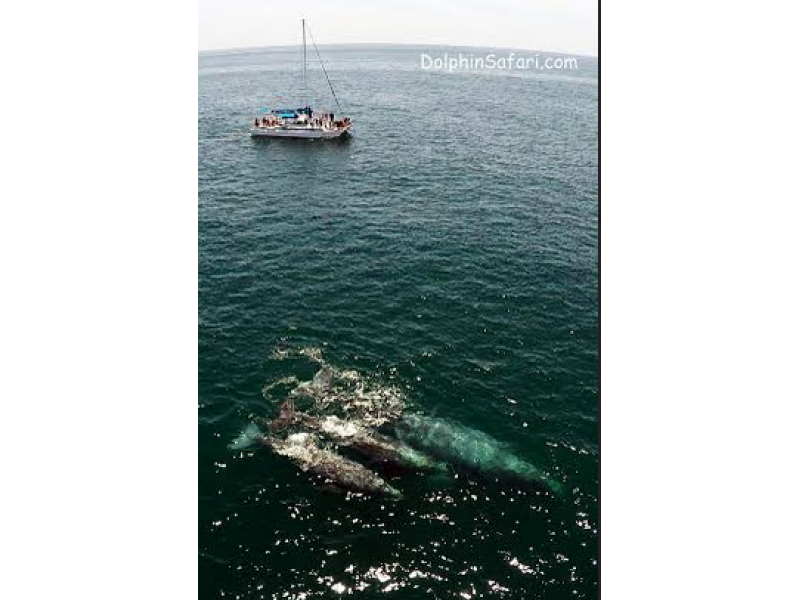

Photos Courtesy of Captain Dave’s Dolphin & Whale Safari
Southern California whale watchers were treated to an extraordinarily rare sight recently — possible twins!
Find out what's happening in Woodland Hillsfor free with the latest updates from Patch.
A California Gray Whale and two calves were spotted off the coast by the crew of Captain Dave’s Dolphin & Whale Safari, and they couldn’t believe what they saw.
“This was truly one of the rarest and amazing sights I have ever seen,” said Capt. Dave.
Find out what's happening in Woodland Hillsfor free with the latest updates from Patch.
“This year is our 20th year owning a whale watching business, and I have never heard of anyone even seeing a gray whale with two calves, never mind filming it,” he said. “One calf was in the baby position next to the Mom on the right and one in baby position, head next to pectoral flipper on the left. They all appeared normal sized and appeared to be swimming normally like one big, happy, healthy family! This was fantastic, since they still had thousands of miles to travel to their feeding grounds in arctic.”
The whales could have been twins, or one calf could have been adopted, but both situations are extremely rare because of the the dangerous 6,000 mile migration and drain a mother whale takes on in trying to feed two calves. Gray whale mothers can lose 30% of their body weight nursing one calf, and killer whales kill roughly 35 percent of gray whale calves, according to Captain Dave’s Dolphin & Whale Safari. Mother whale will have to watch out for Orcas, cargo ships and fishing nets all while contending with hungry calves until she reaches the Arctic.
“There have been cases of dolphins adopting other dolphin calves of the same or different species into their pod,” explained Captain Dave. “We have seen this with a lone common dolphin that we saw for several years living in a pod of pacific white-sided dolphins. And in 2013 a pod of sperm whales adopted, at least temporarily, a bottlenose dolphin with a spinal deformity. There are no known cases of a gray whale mother taking care of a second calf.”
“I hope to hear about more sightings of this beautiful trio as they make their way up the coast,” he said. “I’ll say a little prayer that they make it to the feeding grounds and Mom weans them properly.”
Gray Whale Facts courtesy of Captain Dave’s Dolphin & Whale Safari:
- Gray whales give birth after about 12 to 13 months of gestation to only one calf.
- Newborn gray whales are about 14 to 16 feet long and weigh around 2,000 pounds.
- Every year gray whales make a 10,000 to 12,000-mile round trip migration from the feeding grounds in the Bering and Chukchi seas to the warm waters of Baja, California.
- Pregnant females give birth during the southbound migration and in the protected lagoons in Baja.
Get more local news delivered straight to your inbox. Sign up for free Patch newsletters and alerts.