Politics & Government
Colorado River Journey: The Past And Future Of Water Use
A new era of dam projects proceed in Denver and the Front Range, as the Loveland Museum explores the history of water use in Colorado.


LOVELAND, CO — When you turn on the tap and pour a glass of water in the Front Range, you are drinking last year’s snow from the Western Slope. That snow will melt in the spring and rush along tributaries of the Colorado River high up in the mountains heading west.
But before the river’s water can flow from its headways down to the Gulf of Mexico, it’s caught in reservoirs such as Grand Lake and Lake Granby. There, it’s held until it’s diverted the next year to the eastern part of the state, through giant tunnel and dam works that harvest hydroelectric power and carry water for drinking, industry and agriculture.
“Basically 80 percent of the precipitation in Colorado is west of the Continental Divide and 80 percent of the people are in the eastern part of the state,” said James Bishop, public involvement specialist of the Bureau of Reclamation, Eastern Colorado Area Office.
Find out what's happening in Across Coloradofor free with the latest updates from Patch.
A new era in public dam works is beginning in Colorado, with two projects getting approval from the Army Corps of Engineers this year. There hasn’t been a big dam or water-moving project built in the state for the past 25 years.
The past and the future of water use along the Front Range can be understood with the Loveland Museum's enormous 3-D map of the Colorado-Big Thompson system, which takes up a large portion of the second floor. [You can watch a video below]. The museum's Tunnel Vision exhibit celebrates the anniversary of the completion of the Alva B. Adams Tunnel, which first conveyed water in 1947 from the Colorado River to be used in the east.
Find out what's happening in Across Coloradofor free with the latest updates from Patch.
New dam-building projects
Denver Water announced a $380 million expansion of Gross Reservoir, which will allow it to increase storage by 18,000 acre-feet.
Also, Northern Water Conservancy District in Berthoud got approval for the $425 million Windy Gap Firming Project, which will capture water from the Fraser River tributary on the Western Slope and deliver it to a brand new 90,000 acre-foot reservoir west of Loveland in Chimney Hollow. That water will also flow through the Adams Tunnel.
The Tunnel Vision exhibit displays photos from the construction of the tunnel, decreed via U.S. Senate proclamation in 1937. The exhibit also features art of Megan Gafford that demonstrates “humanity’s impressive ability to figure out how to achieve the difficult task of moving water.”
Tunnel system brings water from west to east
The tunnel system was, and is, an engineering wonder.
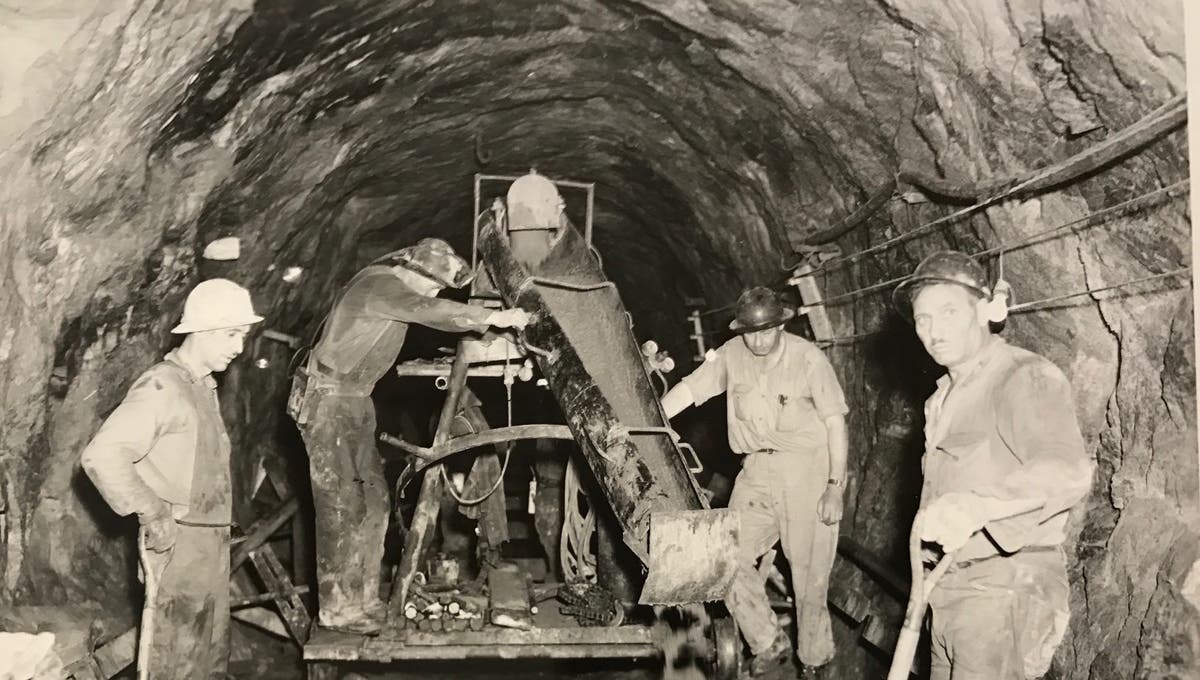
Water is collected from the Colorado River in Lake Granby, then pumped uphill to Shadow Mountain Lake and adjacent Grand Lake, where it is fed into the 10-foot diameter mouth of the Adams Tunnel.
For a 13.1mile stretch, the tunnel passes under the Continental Divide, dropping 100 feet in elevation and empties out west of Mary’s Lake near Estes Park. Water passes through five power plants as it makes its way to the Front Range. Some of the electricity is maintained in the system to power the pumps on the Western Slope. The rest of the power is sold.
The tunnel can convey water at a rate of up to 1,100 acre-feet per day, adding up to 220,0000 acre-feet of water per year. The Colorado-Big Thompson system brings water to farm and ranch land as well as 925,000 people in portions of eight northern Colorado counties, according to the Loveland museum.
But demographic changes have increased the usage of water, and who’s using it, Bishop said. When the Adams Tunnel was built, two-thirds of Front Range use was for agriculture and one-third was for municipalities and industry, Bishop said.
“Now those are inverted, with two-thirds for municipalities and one third for agriculture.”
More people = new water projects
New times and new demographic predictions are bringing big new construction projects to the water delivery services in Colorado. But some say the Colorado River is already dying, with climate change making things worse. They assert the river, and the states downstream, can't afford more diversion.

The Windy Gap Firming Project was conceived when wet years between 1995-2000 caused water to overflow the Colorado Big Thompson system, said Eric Wilkinson, general manager for Northern Water Conservancy District.
On the Front Range, twelve cities will use the new reservoir outside of Loveland west of Carter Lake. The City of Broomfield will claim the most storage with room for 26,464 acre feet. The Platte River Power Authority will claim 12,600 acre feet. Greeley, Longmont and Loveland will claim about 10,000 acre feet each, while other towns in Weld and Boulder Co's. will store between 1,000-5,000 acre feet. Northern Water will issue bonds for the project, which participating cities will repay.
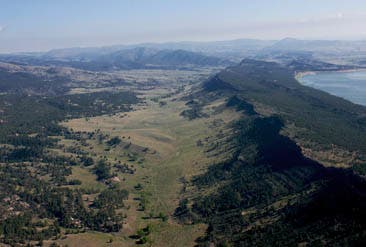
Originally proposed in the 1960s, the Windy Gap project had an extra storage component, but that was never built, Wilkinson said. The new reservoir at Chimney Hollow can hold water during dry years when there is carryover, he said.
“Utilizing storage is like having money in a bank account, when there are plentiful years, you have some fairly steady income coming out,” Wilkinson said.
But environmentalists say collecting more water from the Colorado River would only exacerbate problems downstream in the southwestern states like Nevada, Arizona and California, where droughts have created crisis and states have taken drastic conservation measures to attempt to regulate water use.
Further, they say climate change is already resulting in less snowpack and less water in the river.
A group of conservationist organizations filed a lawsuit in October with the Army Corps of Engineers and the Reclamation Bureau. The petition for review of agency action asks the two federal agencies to revaluate the Windy Gap Firming Project, which they say is not based on actual water demand and will remove more water from the Colorado River, further damaging the wildlife and health of the river.
“We consider it a brand new project,” said Gary Wockner of Save The Colorado. “They think water shouldn’t have to go down the river unless it’s legally forced to. We believe rivers are alive and they exist for the benefit of fish, habitat and wetlands.”
Wockner said population growth was driving water demand, but that Colorado was “twenty years behind” on water conservation efforts like those in California that resulted in water use reduction of 20 percent or more. “California [gives a rebate] to people to get rid of their lawns, there isn’t anywhere in Colorado that does that,” Wockner said. Wocnker said more efficient systems, water recycling, growth management and working with farmers were the ways to meet water demands in the future.
Towns along the front range are trying to work the lawsuit into their timelines.
“The impact of the lawsuit on the proposed project schedule is uncertain at this time,” David Allen, Broomfield Pubic Works director, said in an email. “The lawsuit may delay the selling of bonds if the legal proceedings are drawn out. We will have a better sense of any potential delays in the next three to six months. Engineering design is still moving forward as planned and is anticipated to be completed in early 2018.”
As for climate change, Wilkinson said he wasn’t sure how the weather would affect the amount of snow. “Weather on both extremes is what we’re thinking. Wet years will be wetter and dry years will be dryer.”
Wilkinson said Northern Water supports conservation methods and the Berthoud offices feature 2.5 acres of demonstration gardens to offer landscaping ideas. But he disagreed that water conservation was the answer to the water needs of population growth.
“Conservation alone will not, in any way shape or form, solve all the problems. Yes, it’s a key ingredient and our participant [municipalities] are vigorously pursuing that,” Wilkinson said. “The state water plan made it clear that our system includes storage.
“It takes 20 years, at least, to develop a water project,” Wilkinson said. “You don’t plan for tomorrow if you’re in the water purveyor business, you plan for 20 years from now.”
Watch an explanation of how water travels from the Colorado River to the Front Range using the Loveland Museum's 3-D map of the Colorado Big-Thompson Water System.
Image: Lake Granby Dam and water spill via Northern Colorado Water Conservancy District
Get more local news delivered straight to your inbox. Sign up for free Patch newsletters and alerts.