Business & Tech
Colo. e-Businesses Will Feel SCOTUS Online Sales Tax Ruling
Broomfield e-commerce businessman Brian Fricano believes online sales taxes were inevitable, and fair, he just wants them to be consistent.


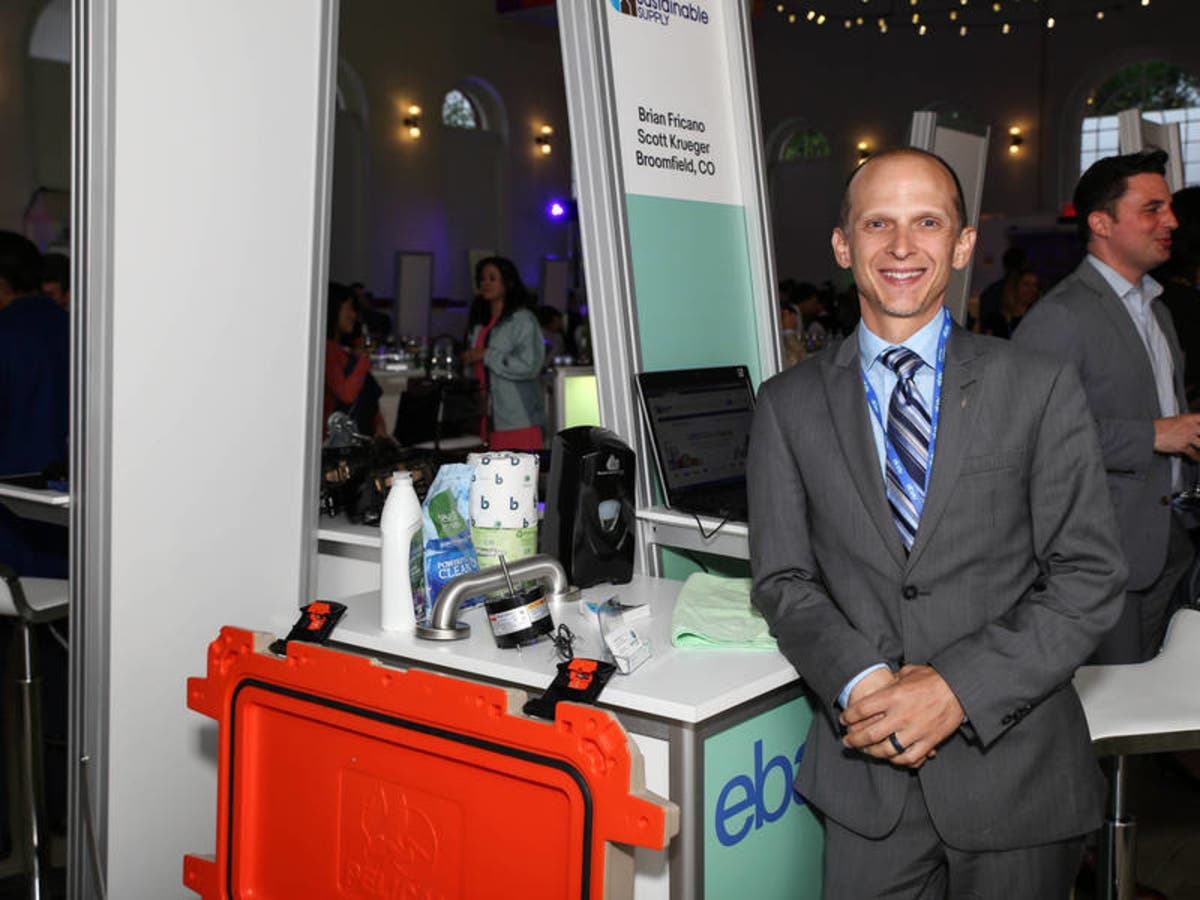
BROOMFIELD, CO – The founder and CEO of one of Broomfield's e-commerce success stories says this week's Supreme Court ruling that may lead to states collecting taxes on online sales was not a surprise.
"We were all expecting it," said Brian Fricano of Sustainable Supply, a $20-million online business and construction supply store that sells through eBay and other platforms. Fricano said in the Wild West world of e-commerce, vendors have been discussing how states can be fairly paid sales taxes for years, ever since Amazon got a head start on the "retail apocalypse" undercutting brick and mortar stores by not collecting sales tax in the 1990s.
Fricano and other eBay sellers traveled to Washington DC this spring to urge lawmakers to settle the matter once and for all on a national level, to achieve a consistency nationwide.
Find out what's happening in Broomfieldfor free with the latest updates from Patch.
The "honor system is broken, everyone realizes," Fricano said. Asking customers to keep track of online purchases to pay state taxes at the end of the year doesn't work. "Even the most honest person on earth might miss a purchase here or there," Fricano said.
He and other e-tailers hope U.S. lawmakers can work out a national system that pays the states their tax revenue, while not harming small online businesses like "someone selling things out of their garage on eBay."
Find out what's happening in Broomfieldfor free with the latest updates from Patch.
The Supreme Court's decision Thursday in South Dakota vs. Wayfair overturned a previous 1992 decision that online retailers could be required to pay taxes only in the states where they have a physical presence. Forty states, including South Dakota – which charges no income tax – sued internet retailers Wayfair and Overstock.com to recapture sales tax revenue for online purchases. The Supreme Court agreed.
As for Sustainable Supply, the company currently pays state sales taxes in Colorado and Wisconsin, where Fricano's family business employs 20 people.
Fricano said the complex issue is how many taxing jurisdictions (between 10-12,000) exist in the U.S., and how often they require remittance. He and other e-retailers believe that the paperwork alone would require hiring extra employees and might represent a "barrier-to-entry" to smaller entrepreneurs who want to start an online business.
Even tax-calculating technology, such as that offered by companies such as Avalara comes with plans that skim 2-3 percent off each transaction for full support, which in the online retail world is most of the profit margin, Fricano said.
Right now the State of Colorado has about 100 different sales-tax jurisdictions, and online companies must still report year-end total purchases more than $500 to the customer and the state to declare, which creates its own burdens.
“From the state’s perspective, it’s easier to collect in aggregate from a large retailer rather than chasing down individual consumers,” Mike Hartman, executive director for the Colorado Department of Revenue told the Associated Press in an article published in the Denver Post. Hartman praised the Supreme Court ruling, saying it would "level the playing field" for Colorado brick-and-mortar stores.
But Fricano said while customers now enjoy "experiential shopping" such as mobbing to the about-to-open new Thornton Outlets Mall, or ordering online at a big-box store and picking up in person – the online shopping genie is out of the bottle.
"Consumer behavior has changed, and people like to shop at 3 a.m. on a Tuesday, when stores are closed. That's never going to go away," he said.
Fricano said he and other e-commerce retailers hope Congress will consider a simplified approach, such as requiring retailers, once per month to report their total gross sales to the state, and have have the state government act as a clearing house to distribute revenue.
Charging local sales tax based on where the internet business is physically located might be problematic. "If Illinois charges 10 percent and Colorado charges 3 percent, all the internet businesses will move to the states with lower sales tax," he predicts. "There just seem to be so many possible unintended consequences."
Another unintended result might be taxing jurisdictions acting as "internet tax speed traps" charging extra local sales tax for online sales within their jurisdictions, which retailers would probably have to absorb to stay competitive.
Already some states, such as California, are charging online sales taxes for companies of certain sizes, in spite of federal laws. If Congress doesn't act quickly, Fricano and others worry "states and local jurisdictions are going to feel like it’s a green light to start passing laws, and that will make things very complicated."
"This Supreme Court decision is being hailed [by retail associations] as a victory for 'Main Street,' but more and more, smaller online businesses are Main Street," Fricano said. "Small businesses hire people in America, and if they're retailers, they often also have an online store too. Let's figure out a way the states can get their money, and small businesses can continue to thrive."
Related: Broomfield E-Commerce Guru Travels To DC To Lobby For Local Taxes
Image via Sustainable Supply
Get more local news delivered straight to your inbox. Sign up for free Patch newsletters and alerts.