Politics & Government
Air Quality Board Sets New Oil, Gas Emission Rules
Colorado's Air Quality Control Commission approves first phase of new rules designed to reduce oil and gas emissions

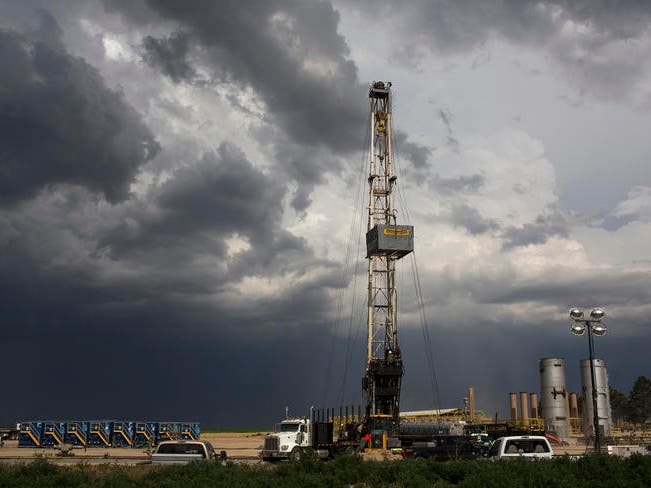
DENVER - The Colorado Air Quality Control Commission has approved the first set of rules designed to minimize emissions from oil and gas operations in the state. The rules are intended as a first step toward reducing ozone pollution and protecting the quality of the air Coloradans breathe.
“Yesterday was a milestone, and we are already looking ahead to achieve further reductions of emissions at oil and gas sites through our next rulemaking. The department intends to build on this momentum,” said Jill Hunsaker Ryan, executive director of the Colorado Department of Public Health and Environment.
The commission’s vote followed a rulemaking process in which the Air Pollution Control Division worked with local governments, the public, and other stakeholders to craft the new regulations. As part of that process Commission held public meetings in both the west of the state and in the Denver area.
Find out what's happening in Colorado Springsfor free with the latest updates from Patch.
It should be noted however that residents in the state’s south-east quadrant, from the I-25 corridor to the eastern state line, were not afforded their own public meeting. In order to have their voices heard residents from Colorado Springs to Trinidad to Lamar were thus required to either travel extensively to Commission meetings or to submit their comments in writing – an imbalance it is hoped the next round of the rulemaking process will address.
The rules approved by the Commission on Thursday include:
Find out what's happening in Colorado Springsfor free with the latest updates from Patch.
• Eliminating the existing 90-day permitting deferral on new oil and gas facilities - under the new rule, these facilities must be permitted before they can begin exploration and production activities.
• Requiring at least twice-a-year leak detection and repair at well production facilities throughout the state with volatile organic chemical (VOC) emissions of greater than two tons per year.
• Requiring either quarterly or monthly leak detection, depending on the size of the facility, at sites within a 1000 feet of occupied structures.
• Requiring oil and gas operators to provide a comprehensive annual emissions report for oil and gas facilities.
• Further reducing emissions of VOCs and from storage tanks by setting more stringent control requirements across the state.
• Requiring new oil and gas facilities to control hydrocarbon emissions from sampling and measurement activities and from the loadout of storage tanks to trucks.
• Enhancing recordkeeping requirements for emissions at wells across the state.
• Expanding new inspection requirements - currently in place within the ozone non-attainment area - for pressure valves or “pneumatic controllers” at oil and gas sites across the state.
The division estimates that the new rules will reduce methane and volatile organic compound emissions by thousands of tons a year.
“The objective is simple-- minimize emissions at the source,” said Garry Kaufman, director of the Air Pollution Control Division. “These new rules represent months of hard work and communication with affected communities. They will slash emissions, make Colorado’s air cleaner and improve the quality of life for Coloradans across the state, including those citizens that live or work near oil and gas sites. They’re reasonable, cost effective, innovative, and absolutely necessary. And we’re just getting started.”
The Air Quality Control Commission is part of the state’s Department of Public Health and Environment. It is led by nine commissioners, appointed by the Governor with the approval of the Senate. The Commission meets on the third Thursday of each month at DPHE’s Denver headquarters on Cherry Creek Road South. The next meeting will be held January 16, 2020.
For more information on the Commission and its work, including meeting agendas and minutes and commissioner profiles, please visit the Commission’s website at: https://www.colorado.gov/pacific/cdphe/aqcc