Schools
College Credit In High School: Colorado Gets A Boost
Dual enrollment award for DPS, Aurora Public Schools, Salida SD & Delta Co. schools

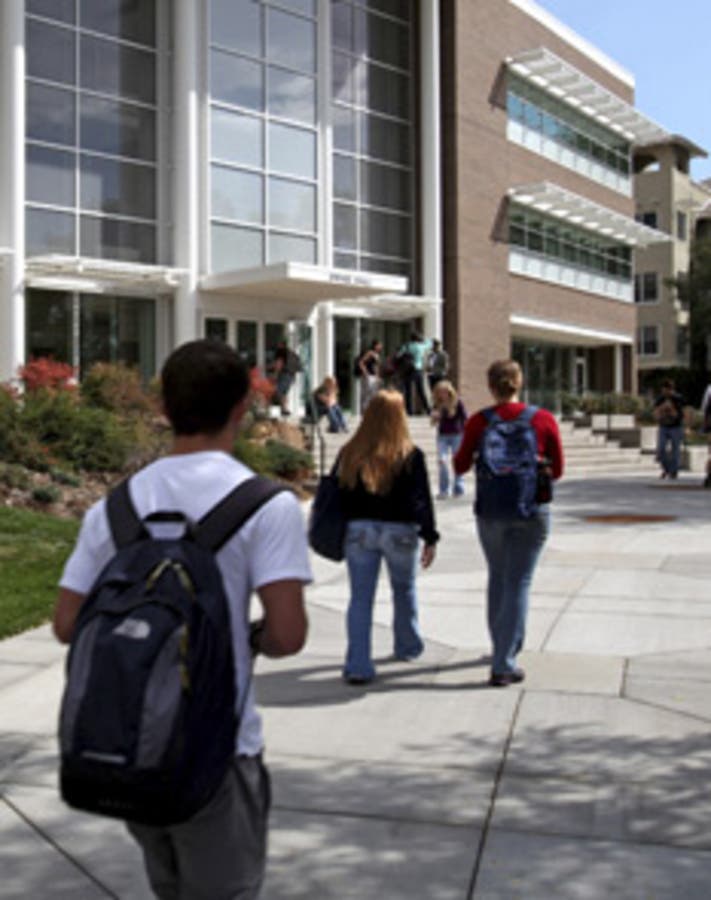
From CDHE:The Colorado Department of Higher Education (CDHE) has received a $400,000 grant from the U.S. Department of Education’s Institute of Education Sciences to carry out cutting edge research on the benefits of dual enrollment. This research supports the recently released Colorado Rises: Advancing Education and Talent Development, a statewide master plan for higher education, which names dual enrollment as a tool to improve student success by increasing persistence and retention and decreasing time to degree.
With funding through June 2019, the partnership’s initial work will analyze costs, college outcomes and return on investment for dual enrollment programs statewide with a focus on the following school districts and institutions:
· Denver Public Schools/Community College of Denver
Find out what's happening in Denverfor free with the latest updates from Patch.
· Aurora Public Schools/Community College of Aurora
· Salida School District and Delta County School District/Western State Colorado University
Find out what's happening in Denverfor free with the latest updates from Patch.
“Bringing college directly to high school students is an essential strategy for reaching our statewide attainment goal and erasing equity gaps in our higher education system,” said Dr. Kim Hunter Reed, executive director of CDHE. “This study will help us identify the hallmarks of successful dual enrollment programs as we look to make them universally available to Colorado students.
More than 38,000 Colorado students took at least one dual enrollment course during the 2015-2016 academic year, according to CDHE’s Annual Report on Concurrent Enrollment, and nearly 1,500 students earned some type of postsecondary credential upon graduation. About one-third of all Colorado juniors and seniors participate in a dual enrollment program.
To coordinate the grant research, CDHE will partner with the following groups:
· The University of Colorado Boulder's Institute of Behavioral Science
· The National Center for Higher Education Management Systems
· The Colorado Evaluation and Action Lab at the University of Denver
· Augenblick, Palaich and Associates (APA Consulting)
“Because Colorado is a leader in its data systems and governance, we are given this unique opportunity to study the important topic of dual enrollment, and be the first nationally to examine its return on investment to students, districts, higher education institutes and the state,” said Dr. Pamela Buckley, with CU Boulder.
Previous CDHE research suggests that students who participate in dual enrollment programs tend to outperform peers in college enrollment rates, first-year credit accumulation, grade point averages and retention rates and are less likely to need remediation, and this project will help us better understand the relationship between dual enrollment and college outcomes. Dr. Reed will speak these about these efforts and moderate a student panel at the annual National Alliance of Concurrent Enrollment Partnerships conference in Washington, D.C. on October 9.
Dr. Robert Reichardt, APA Consulting said, “This partnership is a great opportunity for Colorado to develop and use research to support policymakers and practitioners as they work to increase access and success and erase equity gaps.”
Dual enrollment is an important tactic highlighted in the Colorado Commission on Higher Education’s statewide plan, Colorado Rises: Advancing Education and Talent Development. In it, CCHE sets a statewide goal of 66 percent credential attainment by 2025 and outlines four strategies to get there: increase credential completion, erase equity gaps, improve student success and invest in affordability and innovation.
Image Via CDHE