Politics & Government
Feds Approve Lakewood 59-Acre Homeless Site Plan
Colorado Coalition for the Homeless will move ahead with plans to house homeless on U.S. surplus Federal Center site.


LAKEWOOD, CO -- Officials for the U.S. Dept. of Housing and Human Services gave the green light to a draft plan to convert a 59-acre parcel deemed "surplus" by the federal government into a site that would provide up to 600 units of housing for people experiencing homelessness. The 30-year old agency Colorado Coalition for the Homeless applied this month for a 20-year lease on the parcel under the McKenney-Vento Act, which gives first-dibs to vacated federal property to agencies serving the homeless.
The coalition has until March 9 to provide concrete details of how they will finance and operate a $120 million "affordable housing initiative" on land at the corner of Simms Street and West Sixth Avenue near the Federal Center train station in Lakewood.
“This approval brings us one step closer to being able to provide safe and stable shelter, housing and services for hundreds of families and individuals that are currently experiencing homelessness,” John Parvensky, president and CEO of the organization told the Denver Post Wednesday.
Find out what's happening in Lakewoodfor free with the latest updates from Patch.
Parvensky appeared before the Lakewood City Council Jan. 8 to explain the proposed two-phase plan.
"We want to work in partnership with the City of Lakewood as a whole to address the growing crisis [of homelessness,]" he said. Colorado Coalition for the Homeless has built more than 1,800 units of homeless and transitional housing throughout Metro Denver, Parvensky said. "We design properties to look and operate like market-rate housing."
Find out what's happening in Lakewoodfor free with the latest updates from Patch.
CCH has even built before on surplus federal property in Colorado, said Spokesperson Cathy Alderman. In 2000, the coalition acquired about nine acres of surplus government property at the former Lowery Air Force Base site and built townhomes, a playground and community center.
If the plan is approved, the first phase, lasting five years would consist of temporary shelter housing, which could include FEMA-style shipping-container housing, portable dome housing and multi-bed tent barrack structures, the organization told the Lakewood City Council.

Parvensky said the project would have on-site security and only accept people who were recommended by social service agencies, focusing on Jefferson Co. residents.

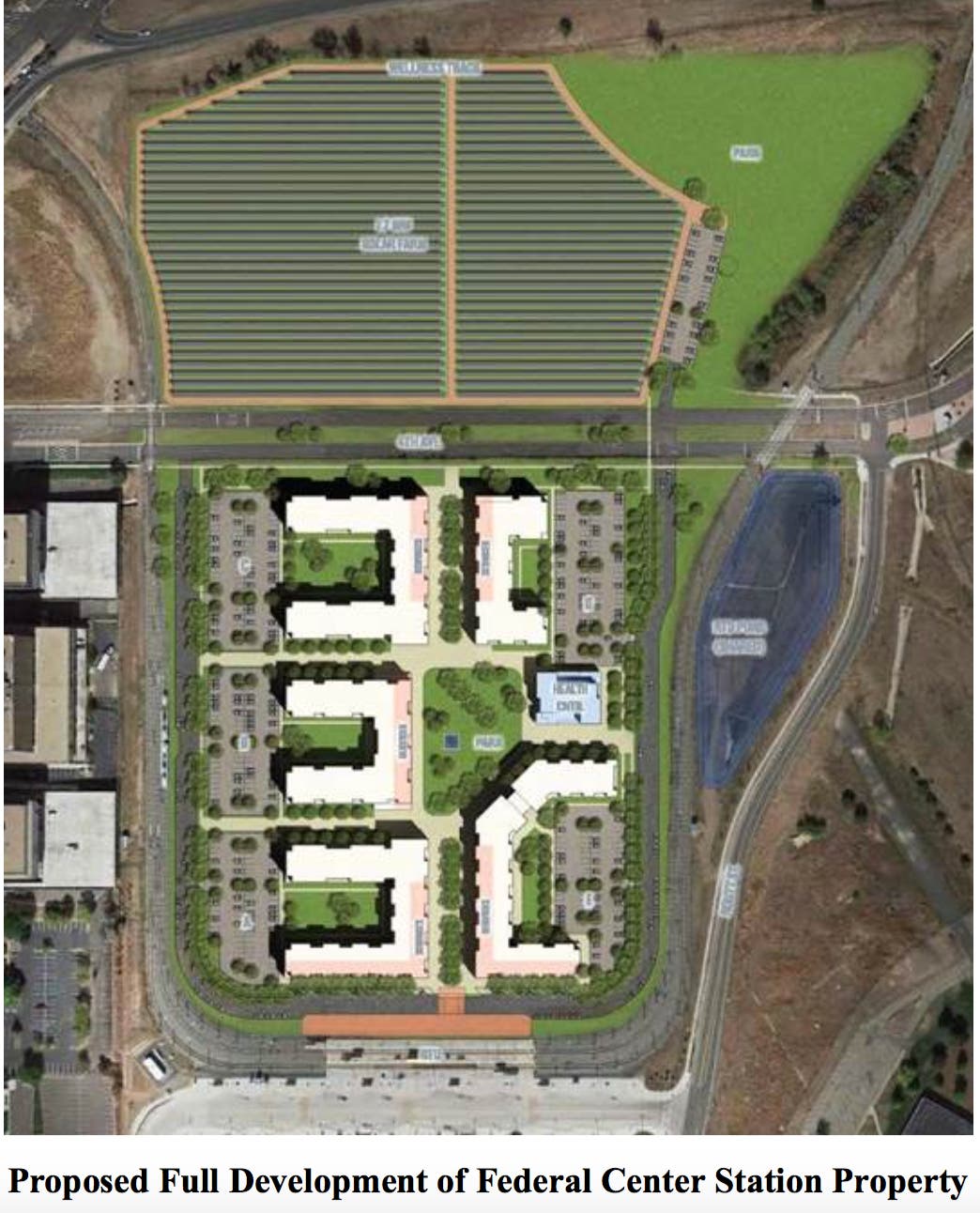
The coalition's largest project to date is the 180-unit Renaissance 88 apartments in Thornton.
The City of Lakewood failed to work out a deal for a "land for lab" swap with the federal government, when the property first became available in 2016. The city "took too long to respond to the government's offer,"according to the Denver Post. The GSA then said the property was deemed "inappropriate" for homeless housing and tried to auction it, but the Colorado Coalition sued to stop the proposed sale. A judge stopped the auction in August.
Local concerns
Already, local politicians and residents are concerned about the scale and density of the project.
Ramey Johnson, Ward 1 Lakewood city council member, said she worried the large-scale low-income site would become a regional center for people experiencing homelessness, and that would have an impact on the local schools. Jefferson Co. School District has estimated the number of homeless students in the 150-plus school district is around 2,700, but Johnson said she worried what would happen if a majority of those students end up in a few local schools.
Johnson said she hoped the coalition would listen to neighbors and ask for local input.
"To have that type of housing on there for [minimum of] 20 years raisies red flags for people, frankly," Johnson said. "It's not like a normal housing development."
Lakewood Mayor Adam Paul told the Denver Post that he didn't believe the project represented the"highest and best use" of the property. "I believe the property is better suited for a mix of incomes (homeless, affordable, market-rate and for-sale condos) and uses such as offices, primary jobs, stores and businesses with great community amenities, including parks, that would benefit all in the community," Paul wrote.
In an interview with Patch, Paul said he understood that the coalition had to provide a plan for the entire property, not just a portion.
"Essentially, the Mckenney-Vento act is very rigid in what it has to do. [The coalition] has no choice but to take all 59 acres, and must use it all for homeless services."
Paul said he and other elected officials in seven neighboring jurisdictions get together quarterly to discuss options for solving homelessness in Jefferson County. The cities of Arvada, Wheat Ridge, Lakewood, Golden, Edgewater, Westminster and staff at Jefferson County are trying to "streamline our plans and our resources for extreme weather shelters and mental health services" Paul said. Lakewood is also working with 50 different religious congregations in the Lakewood Faith Coalition to come up with shelter solutions and coordinate resources.
"The pressures from [lack of] affordable housing continue to increase," Paul said. "What we've found is a lot of the homeless people in Lakewood are actually from Lakewood.
"You have to remember, for a city like Lakewood, that’s been very suburban, this is new to a lot of folks. This is an issue; this is here. We’re not this sleepy suburban area, anymore," Paul said. Denver has worked hard to acknowledge and deal with homelessness solutions, he said. "Denver is way far ahead. There’s a newness to us [in Lakewood]. It’s here and we need to address it and have the conversation."
Image via Colorado Coalition for the Homeless
Get more local news delivered straight to your inbox. Sign up for free Patch newsletters and alerts.