Politics & Government
U.S. Attorney General Backs Colorado Cake-Baker Who Refused Gay Couple
Lakewood baker at center of Supreme Court case was constitutionally protected in refusal to bake cake for gay couple, attorney general says.


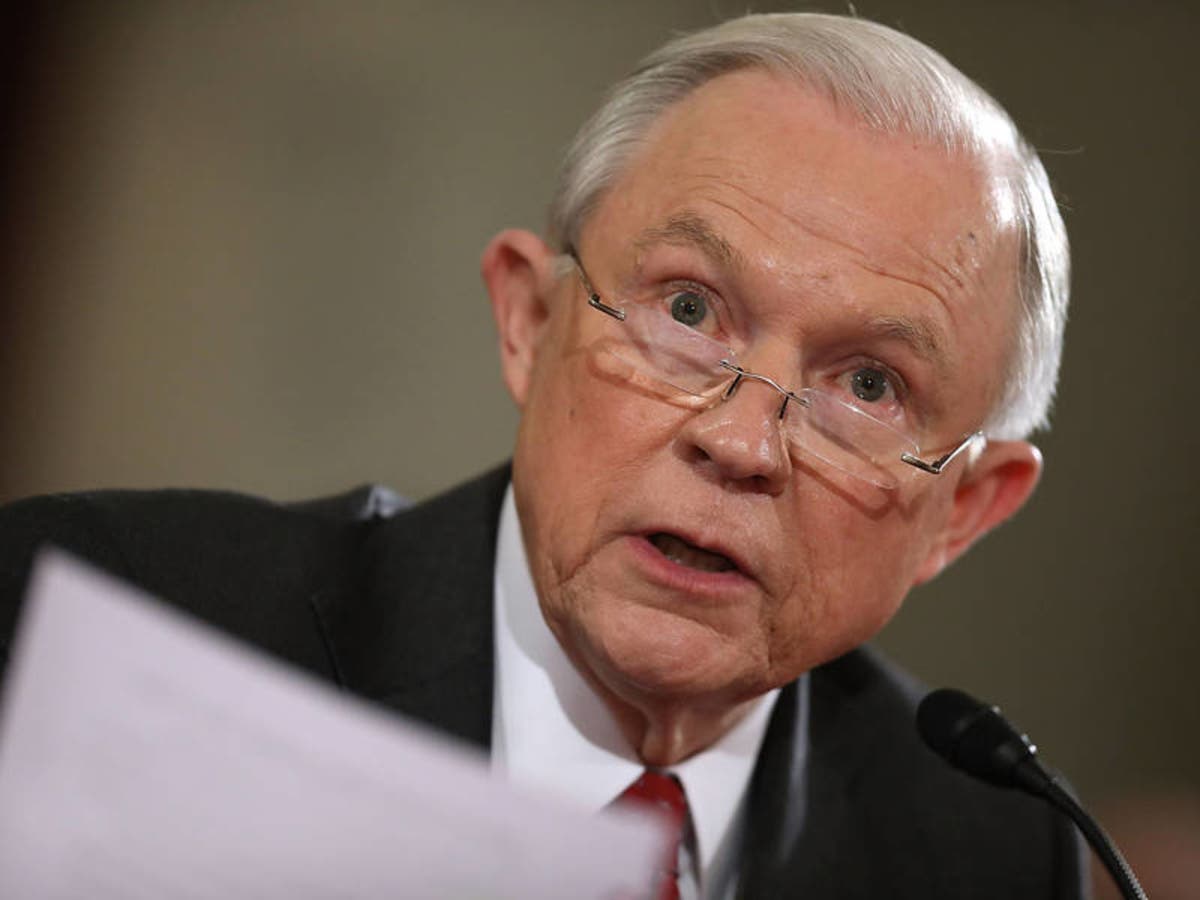
WASHINGTON, DC — Cake-bakers and other businesses that refuse service to same-sex couples, who have been allowed to legally marry in all 50 states since a watershed 2015 Supreme Court ruling, are constitutionally protected, U.S. Attorney General Jeff Sessions said in an interview with the Christian Broadcasting Network that aired Wednesday. Sessions' comments come as case by a Lakewood, Colorado cake-baker who cited religious objections and refused to bake a cake for a gay couple is scheduled for oral arguments before the high court.
In the interview, Sessions said Jack Phillips of Masterpiece Cakes has a First Amendment right to refuse service to the couple, Charlie Craig and David Mullins. Because the bakery is open to the public, Colorado courts have held that Phillips’ refusal violates state laws prohibiting discrimination in places of public accommodations. The court is expected to hear arguments on the case — Masterpiece Cakeshop Ltd. v. Charlie Craig and David Mullins — in its October term. The Justice Department has filed an amicus brief in support of Phillips.
Read Amicus Brief Here:
Find out what's happening in Lakewoodfor free with the latest updates from Patch.
Justice Dept. Amicus Brief: Masterpiece Cakeshop Ltd. v. Charlie Craig and David Mullins by JeanLotus on Scribd
Phillips has argued the law hijacks his right to religious freedom, and Sessions agrees. After losing in the landmark Obergefell v. Hodges case, anti-gay marriage camps have regrouped, framing their arguments against gay marriage around religious freedom.
Find out what's happening in Lakewoodfor free with the latest updates from Patch.
In the interview, Sessions said that “too often we have ignored what the Constitution actually says.”
“It says Congress shall make no law respecting the establishment of a religion nor prohibiting the free exercise thereof,” Sessions said. “So the question is, the cake baker has more than just a personal view here.
“He has a religious view and he feels that he is not being able to freely exercise his religion by being required to participate in a ceremony in some fashion that he does not believe in,” he said. “So we think that right is a fundamental right and ought to be respected as we work through this process.”
Sessions also said he thinks Phillips is protected under the Religious Freedom Restoration Act, approved by Congress in 1993 and amended in 1997. It requires the federal government must have a compelling interest to restrict a person’s free exercise of religion.
“So we think that statute has been ignored too often and not respected sufficiently,” Sessions said. “And so when you consider those two things, then you’re getting not only greater protection for people’s religious beliefs, that I think should be given.” Phillips, a devout Christian, has refused other orders based on his religious beliefs. For example, he has refused to bake Halloween- or divorce-themed cakes or cakes that contain alcohol.
In a brief filed with the Supreme Court, he said the Colorado laws threaten “his and all likeminded believers’ freedom to live out their religious identity in the public square and the “expressive freedom of all who create art or other speech for a living.” Because cake-baking involves creative expression and Phillips communicates as an artist through his confections, he should be allowed to choose his clientele, his lawyers have argued
Though perhaps appealing, the argument that artistic expression is protected speech misses an important point, civil rights attorney Mary Bonauto wrote for SCOTUSBlog.
“Earning a living from the sweat of one’s brow coexists with human creativity, with the passion for cutting hair or cooking food, with designing and sewing clothing — with making something both functional and beautiful,” Bonauto wrote. “Uplifting the dignity and creativity in all work, Dr. Martin Luther King spoke of the ‘street sweeper’ who could ‘sweep streets like Michelangelo painted pictures; sweep streets like Handel and Beethoven composed music; sweep streets like Shakespeare wrote poetry.’ …
“If a product does not express a particular, discernible message, or is understood not to be the vendor’s speech, the cake shop’s compelled-speech-and-expression claim simply fails,” she wrote.
Photo by Chip Somodevilla/Getty Images News/Getty Images
Story by Beth Dalbey (Patch National Staff)
Get more local news delivered straight to your inbox. Sign up for free Patch newsletters and alerts.