Politics & Government
CT's AG Supports New York Anti-discrimination Law
Law being challenged in court by wedding photographer who does not want to serve gay couples.


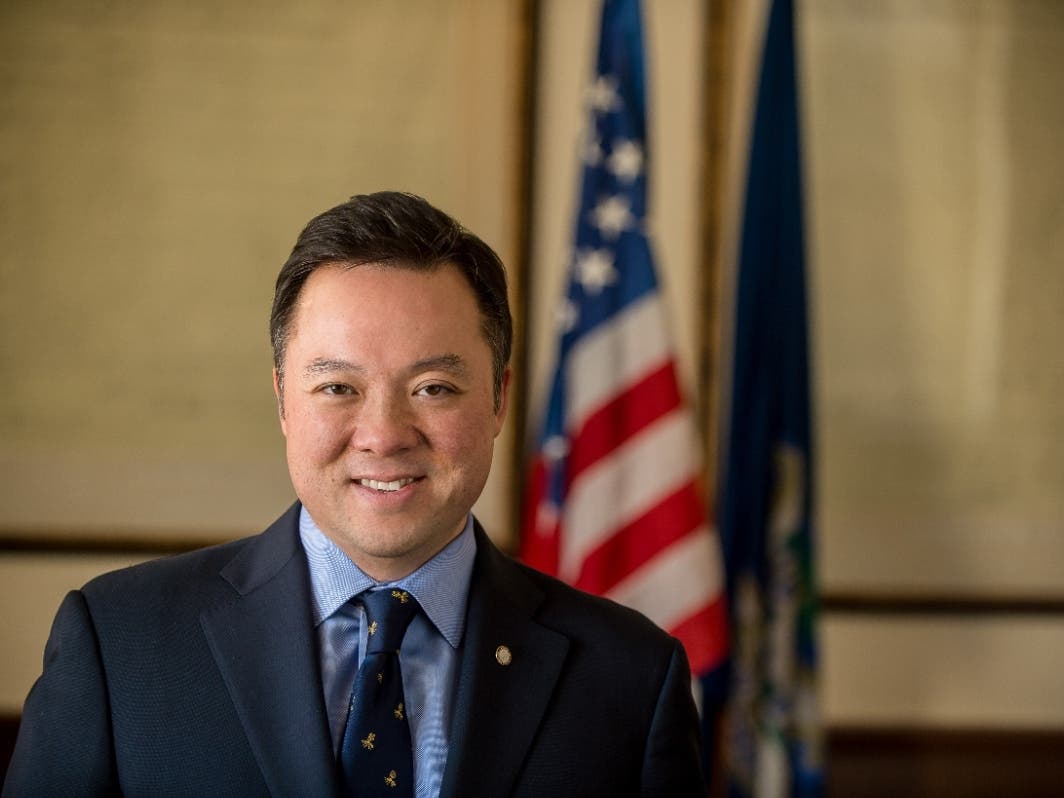
HARTFORD — Connecticut announced Tuesday it is behind New York's anti-discrimination law, which is being challenged in court by a wedding photographer who doesn't want to serve gay couples.
Arguing a business owner’s religious beliefs don't give them thea right to discriminate against customers, Connecticut Attorney General William Tong Tuesday joined a coalition of 20 attorneys general in filing an amicus brief with the U.S. Court of Appeals for the Second Circuit defending the constitutionality of New York’s anti-discrimination law.
The brief was filed in the case of Emilee Carpenter LLC v. James, in which a wedding photography business, looking to deny services to LGBTQ+ couples, claims New York's public accommodations law violates the business owner’s rights to freedom of speech and free exercise of religion.
Find out what's happening in Across Connecticutfor free with the latest updates from Patch.
The states’ brief supports New York Attorney General Letitia James, Interim Commissioner of the New York State Division of Human Rights Jonathan Smith and Chemung County District Attorney Weedon Wetmore.
“We are talking about a celebration of love and commitment here. Refusing service to customers solely because of who they are and who they love is wrong and illegal. New York’s anti-discrimination law is necessary and lawful—as is Connecticut’s-- and we stand with Attorney General James in defending it,” said Tong in a statement released Tuesday morning.
Find out what's happening in Across Connecticutfor free with the latest updates from Patch.
New York’s public accommodations law forbids sexual-orientation discrimination by businesses engaged in sales to the public and forbids such businesses from posting a notice or advertisement indicating their intention to refuse service on the basis of sexual orientation.
The U.S. District Court for the Western District of New York granted New York’s motion to dismiss and denied the plaintiffs’ motion for a preliminary injunction, holding the application of New York’s public accommodations law does not violate the First Amendment’s protections for freedom of expression or free exercise of religion.
The photographer has since appealed the lower court’s decision.
The attorneys general state they have strong interests in upholding laws to protect their residents and visitors from unlawful discrimination and support civil rights protections for LGBTQ+ people, including prohibitions on discrimination in places of public accommodation — such as diners, stores and other businesses that are part of daily life in a free society.
As the attorney generals’ brief describes, the First Amendment does not exempt businesses open to the public from state anti-discrimination laws.
It also does not protect the speech in advertisements that give notice that places of public accommodations will refuse service on the basis of a protected characteristic.
The brief argues exempting businesses from public accommodations laws on the basis of the First Amendment would undermine the vital benefits these laws provide to residents and visitors.
Joining Tong in today’s brief are the attorneys general of California, Delaware, the District of Columbia, Hawai‘i, Illinois, Maine, Massachusetts, Maryland, Michigan, Minnesota, Nevada, New Jersey, New Mexico, North Carolina, Oregon, Pennsylvania, Rhode Island, Vermont and Washington.
Get more local news delivered straight to your inbox. Sign up for free Patch newsletters and alerts.