Key Takeaways:
- Yearly checkups on your property’s roofing system and piping catch drips before they ruin the floors below.
- Proper drainage stops groundwater from flooding the basement during a storm.
- Maintenance of indoor appliances prevents sudden bursts and costly interior saturation.
- Rapid professional cleanup helps stop mold growth if a leak actually happens.
Secure Your Home from the Top Down
Walkthroughs should always begin at the roof. Examine for shingles that are damaged or curling. Constant sun and temperature swings weaken them, causing slow drips that compromise attic insulation. A quick scan of granule counts in the gutters is worth the effort because a high volume of grit usually indicates the shingle roof is nearing its end.
Look for nails pushing out through drywall and paint around chimneys. Also, inspect for cracked metal flashing near skylights. These tiny gaps serve as the primary doorways for precipitation during a downpour. Because they’re often tucked away, it remains incredibly easy to miss them from the ground. Proactive identification of these small flaws saves you thousands in repairs and stops wood-destroying fungi from eating the rafters.
Find out what's happening in Across Connecticutfor free with the latest updates from Patch.
Master the Flow of Runoff
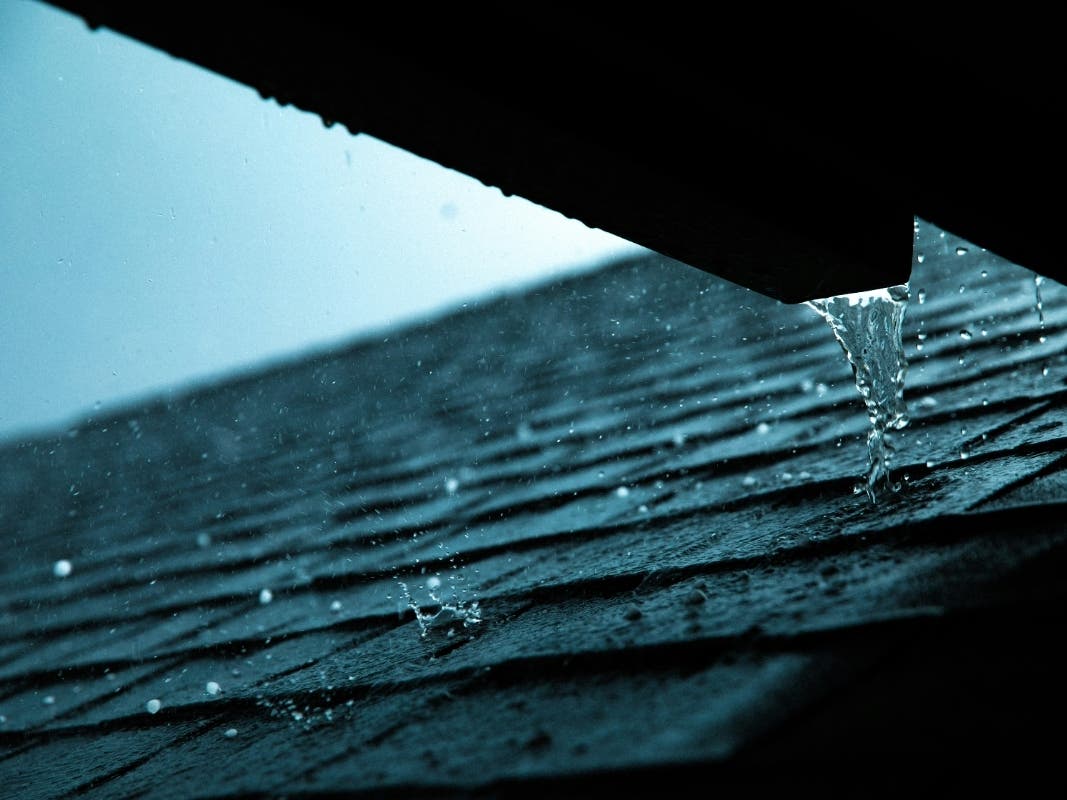
Debris removal from the drainage channels should be on your schedule at least twice a year. Neglecting this task allows liquid to back up under the eaves and decay the fascia boards. Precipitation that can’t flow correctly tends to pool around the masonry and causes flooding. Heavily wooded properties typically require more frequent blockage clearance to keep everything working during the fall seasonal leaf drop.
Verify that downspout extensions carry liquid at least five to ten feet away from the walls. Runoff dumping directly at the base of the house creates hydrostatic pressure that eventually pushes into the basement. Underground pipes are a smart addition to lead the flow toward the street to handle heavy volumes during a flash flood.
Find out what's happening in Across Connecticutfor free with the latest updates from Patch.
Exterior Drainage Checklist:
- Gutter Channels: You need to manually scoop out the gunk and grit from all runs and downspout openings to prevent overflows.
- Splash Blocks: Check that the splash blocks below the gutter haven't shifted and are still moving liquid safely away from the siding.
- Drainage Pipes: Survey any underground lines for signs of tree roots or sediment clogs that might back up the system.
- Window Wells: Verify that your window well covers remain tight and aren't inadvertently holding moisture against the glass.
Fortify the Ground and Exterior Shell
Dense clay soil performs significantly better than standard topsoil when you’re attempting to re-level the grade around a building. Its sheer thickness provides a much more resilient barrier against unwanted seepage.
Pockets of sunken earth directly against the walls (which many well-meaning owners mistakenly fill with porous, shredded mulch) actually capture liquid like a massive sponge. These depressions should be packed tightly with heavily compacted dirt instead to keep the foundation dry.
Don’t Forget Entry Points for Dampness
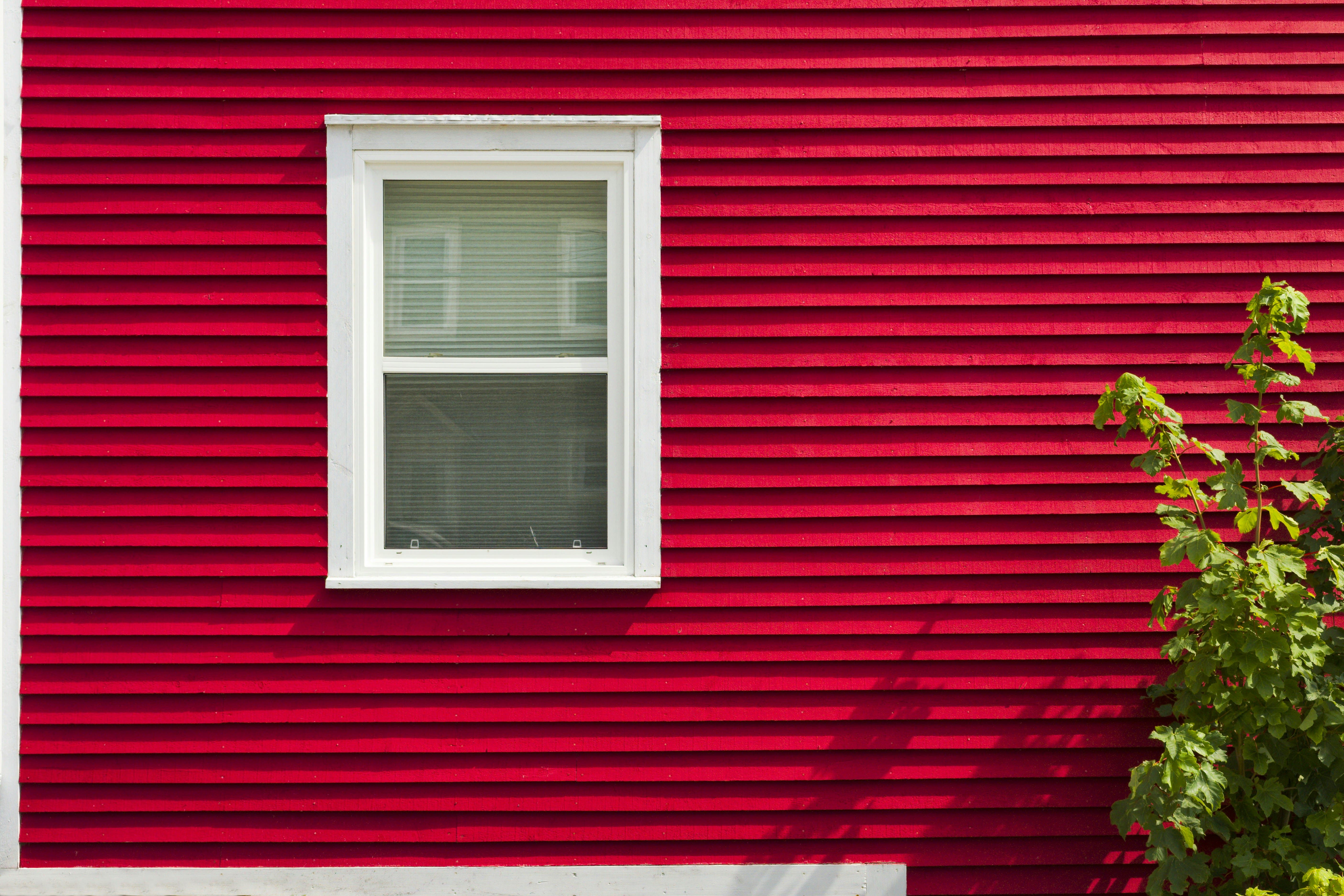
Inspect the siding for gaps or warping. High-quality silicone caulk is the go-to choice for plugging openings around window frames or the trim of exterior doors. Utility pipes piercing the building envelope – specifically where electrical or gas lines enter – are also vulnerable spots that need a look. Even a minuscule hairline crack admits enough dampness to trigger internal decay.
Particular attention belongs on the joints where wood trim meets brick. These two materials shift at different rates during temperature swings and frequently invite saturation, especially during the freezing and thawing of a harsh winter.
Defend Internal Systems and Lines
Plumbing failures tucked under kitchen sinks or behind bathroom toilets often act as the silent catalysts for catastrophic residential damage. Strategic placement of small water leak detectors in high-risk zones like the basement or laundry room offers a vital early warning long before a leak becomes obvious to the naked eye. Prompt detection of a drip is effectively the only way to avoid a full-scale flood that could ruin your custom cabinetry and hardwood flooring in a single afternoon.
Look over the supply lines that lead to the washer and dishwasher to catch cracks or bulges before they burst under pressure. You can drastically reduce the likelihood of a high-pressure failure while you’re away from home by swapping out standard rubber lines for braided stainless steel versions. These modest upgrades provide a significant level of security for very little cost.
Care for the Water Heater and Bathrooms
A quick search of the heater base can reveal rust or damp spots. Most units last between eight and twelve years. Watch out for a massive amount of liquid at the bottom of your heater because this can indicate a tank failure. Proactive replacement is always cheaper than a professional cleanup. Your water heater tank should be drained and flushed once a year to get rid of sediment buildup that causes corrosion.
Examine the grout and caulk in the showers and tubs to maintain a watertight seal. Cracked grout lets dampness seep behind tiles – you won’t be able to see the wall studs weakening. Also, see if there are any soft spots around the base of the toilet. A failing wax ring can leak slowly for months and break down the wood until the toilet starts to wobble.
Verify Sump Pump Readiness
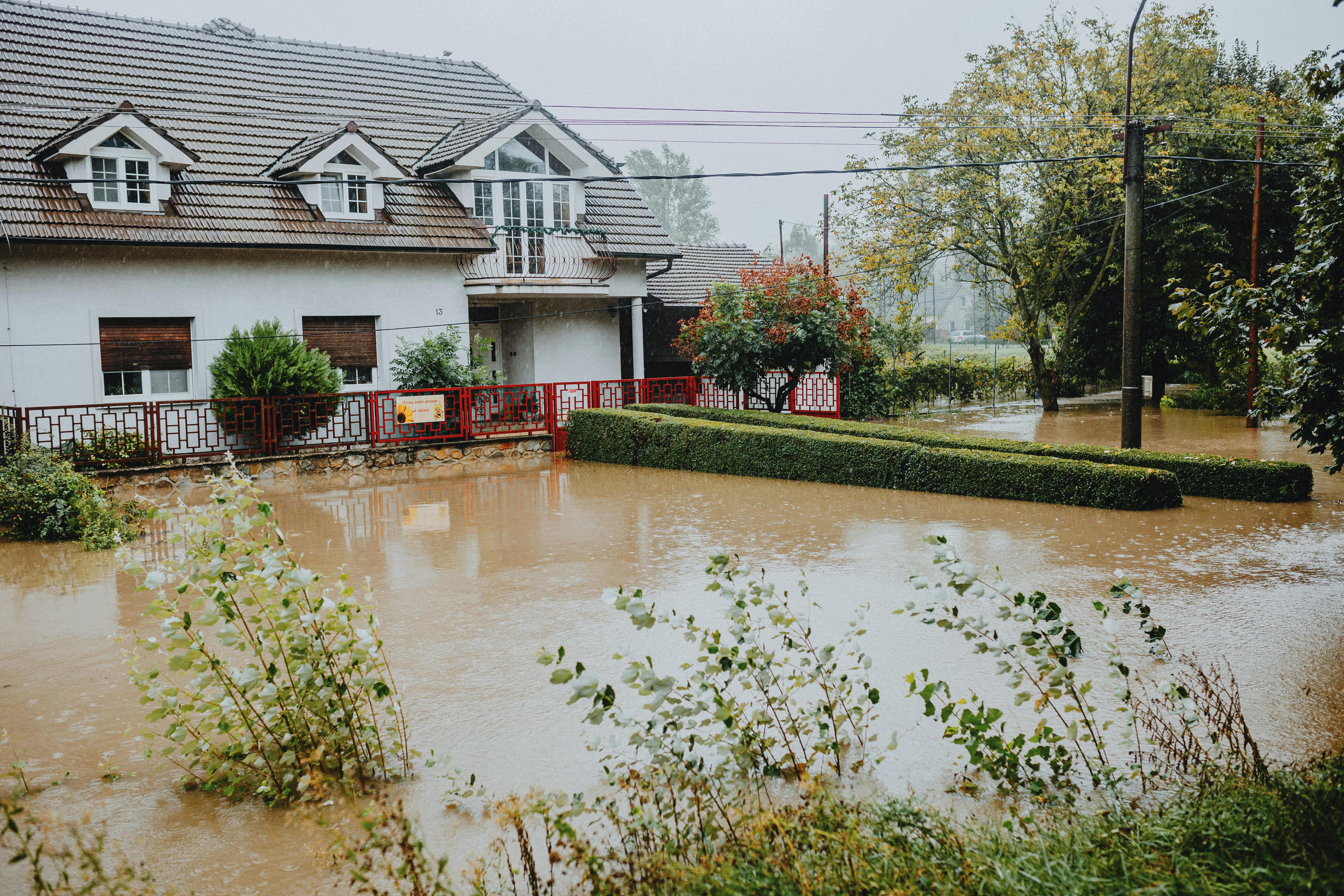
Test the pump by pouring a bucket of liquid into the basin to see if the float switch turns the motor on. Any unit failing during a storm can lead to thousands of dollars in losses. Make sure the discharge line is clear and moving liquid far enough away from your residence. Battery backups for the motor are essential – storms often knock the power out right when you need the pump most.
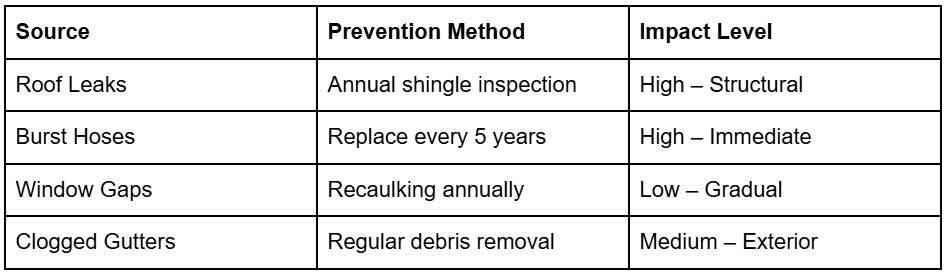
Typical Water Damage Hazards and Solutions
Long-Term Property Preservation
Steady attention to your property's various zones prevents minor flaws from evolving into structural catastrophes over time. Manual gutter clearance and window sealing often work well as simple weekend tasks. Nevertheless, more complex issues or plumbing failures typically demand an expert's touch.
Fast action is essential the moment a musty odor or standing liquid surfaces in the basement. Reliable water damage mitigation specialists offer the best chance to dry out the dwelling before mold takes hold – a process that can happen in as little as 24 hours in humid conditions.
Personal dedication to these subtle yearly details ensures your residence stays habitable and dry for years to come.