Community Corner
Teach Your Children Well
World events show that an engaged population can alter the course of government. But education underlies that engagement... and education is about thinking, not information.


Education is dangerous. Look at Tunisia and Egypt, most recently; but also Pakistan and Cuba, Saudi Arabia and Sudan, where governments attempt to control education — and information — in order to remain in power. Once people start to think for themselves — a development good education fosters — they question everything, and old ways lose their footing.
That's fatal to most authoritarian regimes... but not most democracies, because no one's come up with a better way to organize diverse, every-which-way societies. Many radical, peace-marching hippies of the 1970s famously became conservative, business-running yuppies in the 1980s, realizing it made more sense to “grow the pie” within a decent social system than destroy the old pie and start from scratch.
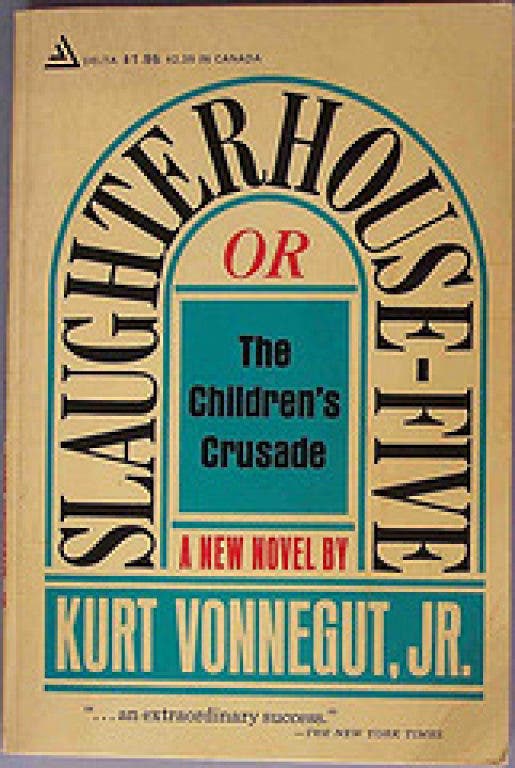
I'm thinking along these lines because a reader of my — last month, perhaps temporarily, by the Board of Education — suggested I read Kurt Vonnegut's 1961 short story “Harrison Bergeron.” So I did — gladly, because I like Vonnegut, not least because his “take” on cultural issues sometimes falls outside standard fault lines. An infantryman in Europe during World War II, he saw unimaginable horrors — on the battlefront, as a Nazi prisoner of war, and as a witness to the wholesale firebombing of Dresden in 1945. Vonnegut's POW experience was the basis for his most famous and perhaps best novel, Slaughterhouse Five.
Find out what's happening in Brookfieldfor free with the latest updates from Patch.
“Harrison Bergeron” isn't his best work — at 2,200 words, it's mostly a riff on the absurdity of a completely “fair” democracy. Vonnegut telegraphs the blackness of his satire from the story's first paragraph, which reads, in full:
The year was 2081, and everybody was finally equal. They weren't only equal before God and the law. They were equal every which way. Nobody was smarter than anybody else. Nobody was better looking than anybody else. Nobody was stronger or quicker than anybody else. All this equality was due to the 211th, 212th, and 213th Amendments to the Constitution, and to the unceasing vigilance of agents of the United States Handicapper General.
Find out what's happening in Brookfieldfor free with the latest updates from Patch.
Vonnegut's central point is plain as day — unless we're careful, the US will end up in the same place as the Communist regimes we despised half a century ago, valuing “theory” more than “practice,” putting ideas — however impractical, short-sighted, or inefficient — ahead of individuals.
But what, exactly, is Vonnegut satirizing? It's not a straightforward question, because Vonnegut knew a thing or two about writing... and that people often mistake words for the meaning behind the words. Few people today — or in 1961 — want everyone on the planet to be “equal;” most of us, though, favor equal opportunity, but that last word is often lost in the ever-accelerating race for the perfect sound bite, image, point of view.
Moreover, “equal” and “equality” are frequently used interchangeably with “equity,” a significantly different concept in which fairness is judged by need, not parity. When I'm handing out cookies to children, I don't automatically give two to each; I may skip over children already holding a box of cookies, and may give an extra cookie to the shirtless, shoeless child who looks like he hasn't eaten that day.
Vonnegut's concern is largely with the citizens officially “handicapped” by The State for being, well, talented. George Bergeron is required to wear a noise-inducing radio transmitter in his ear to disrupt his thought processes; Hazel, his wife, seems to suffer from government-television induced ADD — Vonnegut describes her as of “perfectly average intelligence, which meant she couldn't think about anything except in short bursts.” Their fourteen-year old son, Harrison, is in jail, suspected of treason... but also incarcerated for being “under-handicapped,” so gifted the Equality Police have weighed him down with huge earphones, distorted eyeglasses, nasty-looking dental caps, and so much scrap metal he “looked like a walking junkyard.” Point taken: a culture that repudiates its best and brightest, as did the Soviet Union and Communist China, has taken a knife to its own throat.
But Vonnegut's not done. Harrison suddenly appears at a government television studio, where he claims — while stripping off man-made handicaps and revealing a Thor-like physique — “I am the Emperor! Everybody must do what I say at once!... I am a greater ruler than any man who ever lived! Now watch me become what I can become!” He calls for an “Empress,” and when a ballerina-turned-broadcaster arises, they dance, reel, leap, kiss. Until the Handicapper General strides in, and shoots them dead with a double-barreled shotgun.
Yes: although the hyper-democracy Vonnegut portrays here may be ridiculous and self-defeating, the meritocracy embodied by Harrison isn't necessarily better — it may well be creative, and inspiring, and beautiful, but it can also be authoritarian, bullying, narcissistic. Vonnegut's original readers would think of self-appointed “emperors” like Caesar and Napoleon... but since the story was published just 15 years after the end of World War II, also Hitler (famously a painter in his youth) and Stalin (who loved to sing). Being talented or artistic, Vonnegut seems to be saying, indicates nothing about moral character... nor does politicking for “equality,” which can be equally (ha ha) self-serving.
So where does “Harrison Bergeron” leave us? Thinking, you hope... for while the story became a touchstone for the political right after being reprinted in The National Review in 1965, its message is conservative only if you cherry-pick.
The story anticipates, and scorns, the coming “self-esteem” movement — Hazel says, after a stuttering announcer fails to read a news bulletin, “He should get a nice raise for trying so hard” — but Vonnegut is also concerned with the government- and media-induced apathy the Bergeron parents exhibit. Unlike their son, they've resigned themselves to wearing enormous, birdshot-filled “handicap bags” — George, because he can't think straight, and Hazel, because she's mesmerized by television. They don't rise up when their son is publicly killed: Hazel only remembers that something sad has happened, and George has gone to the kitchen for a beer.
The highest compliment I ever received from a student was “I really enjoyed this class, even though it made me think.” And that, it seems to me, is the entire point of education — not to fill young heads with test-friendly information, but to get students, whether good, bad, or indifferent, to think for themselves. Spending a class or two on “Harrison Bergeron” is a reasonable way to start — though probably not until high school, when most students begin to understand responsibility, that they control their own destinies.
The hero of this tale is only 14, and likely a middle-school student... which tells you that Vonnegut, at least, believed that the sooner you got those brain synapses sparking, the better. Which can't be said for Hosni Mubarak, Raul Castro and other leaders who think their people's principle job is to obey.