


Even with so many readily available options, choosing a tree for your garden is not an easy decision. Recently I wrote about some of the factors you should consider when choosing a tree and also looked at several . Now it’s time to look at three small trees that are ideal for any sunny Connecticut garden.
Midsummer Dream
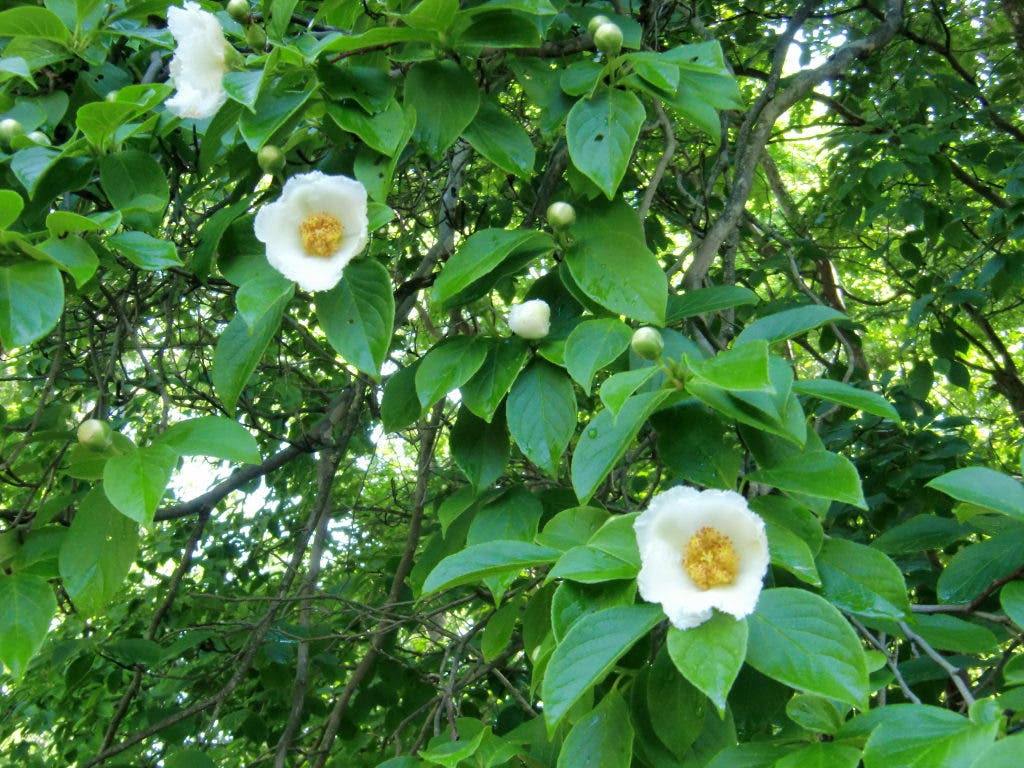
In midsummer, Japanese stewartia (Stewartia pseudocamellia) is adorned with cup-shaped white flowers for weeks on end. Foliage turns shades of red, orange and purple in the fall adding to its year round interest. But Japanese stewartia’s most unique feature is its handsome exfoliating bark.
Find out what's happening in Clintonfor free with the latest updates from Patch.
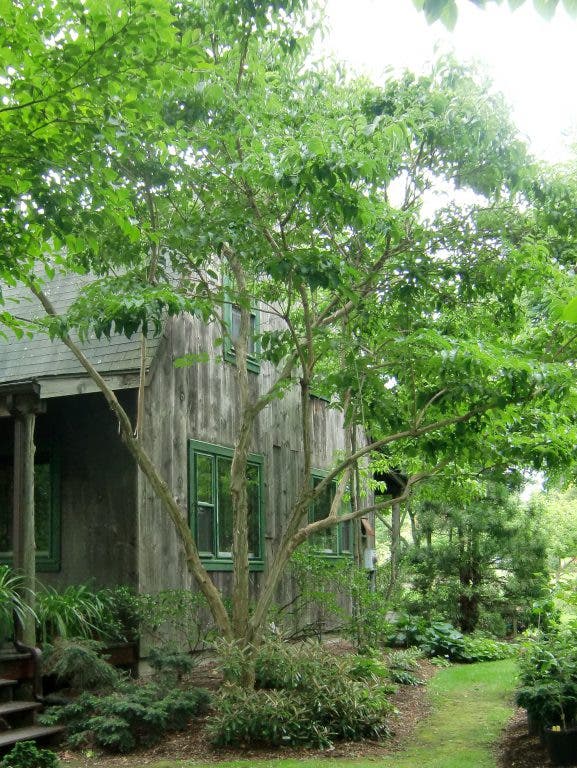
As trees mature, the bark takes on a smooth, camouflage appearance that is unlike that of any other tree. Japanese stewartia is slow growing until it becomes established. Mature trees can reach 25-feet in most gardens. Thriving in moist, well-drained soil in full to partial sun, Japanese stewartia dislikes intense heat and drought and appreciates shelter from intense afternoon sun.
Late Summer Stunner
Find out what's happening in Clintonfor free with the latest updates from Patch.
Seven-son flower (Heptacodium miconioides) is a recent introduction to the horticulture trade, so it is rare to find one in a Connecticut garden. Creamy white blossoms, each containing seven tiny flowers, appear on branch tips in late summer. Flowers are replaced with pink-red calyxes that give seven-son flower a second, even showier, bloom in an entirely different color.
Trees are vigorous growers to about 15-feet tall and wide but require several years to really come into their own. Pruning is recommended to help develop an optimal open form that will reveal the tree’s handsome, exfoliating bark. This unique tree thrives in a spot with full sun and well-draining soil.
A Winter Stand Out
With its upright vase shape, coral bark maple (Acer palmatum ‘Sango-kaku’), is easy to incorporate into a variety of garden settings. What makes it unique is its subtly changing appearance.
In the winter, as the temps get steadily colder, its bark turns steadily redder. In the spring, new leaves emerge a bright lime green edged with red. The effect of the foliage set against the still red bark is eye-popping. As spring turns into summer, the leaves slowly darken to a rich emerald green. In the fall, the foliage is bright yellow.
Growing to about 20-feet tall, coral bark maple prefers moist, well draining soil but will tolerate a range of soil conditions, including sand and clay.