Will E-Books Replace Children's Books?
I know many parents who worry that electronic devices and games have encroached on their children's reading lives. According to the American Academy of Pediatrics, children under 18 months-old should avoid use of screen media. Children aged 2-5 should have a limit of 1 hour a day. Children 6 and above "require consistent limits on time spent using media."
However, many parents, myself included, experience that these recommendations are not easily upheld. Gaming, YouTube videos, Nick Jr, Netflix, streaming videos, tablets and unlimited and enticing downloadable games tempt our children morning, noon, and night. Never has there been such "professional-grade" media targeted towards our children's attention. 1 hour seems not only unrealistic, but capable of degenerating the parent-child relationship into a war-zone.
Find out what's happening in Danburyfor free with the latest updates from Patch.
That is where your local library comes in! Children who regularly visit the library, on a weekly or bi-monthly basis, engage traditional books and spend more time reading than children who do not utilize libraries. This seems like an obvious statement. But, what is not obvious, is that children who visit the library, no matter how prolific of readers they are, prefer traditional books over all forms of reading, including E-Books. The prolific e-book reader of children's books doesn't really exist; librarians know this secret and are in the position of sharing this important insight.
Indeed, it's still a book "we want to curl up with;" to take to the beach; to carefully turn the pages of--which even though we know what happens next--keeps our grandchild on our lap. It's still a cook book that motivates us to reproduce Lydia's cacciatore chicken; it's still a gorgeous picture book that moves us to organize a Twas The Night Before Christmas Storytime event at our church. It's not children looking at Santa that enthralls us, it's our children being read to--from a book, that turns this into a precious moment. Books create a trinity of space and meaning, between the reader, the child and the observer. We librarians experience this fabulous-trinity during storytimes at the Library. We know, it is only books that can create this kind of magic.
Find out what's happening in Danburyfor free with the latest updates from Patch.
Because libraries seek to circulate books a certain number of times, per capita, libraries tend to stick with formats such as hard covers. For series books, libraries do stock paperbacks.
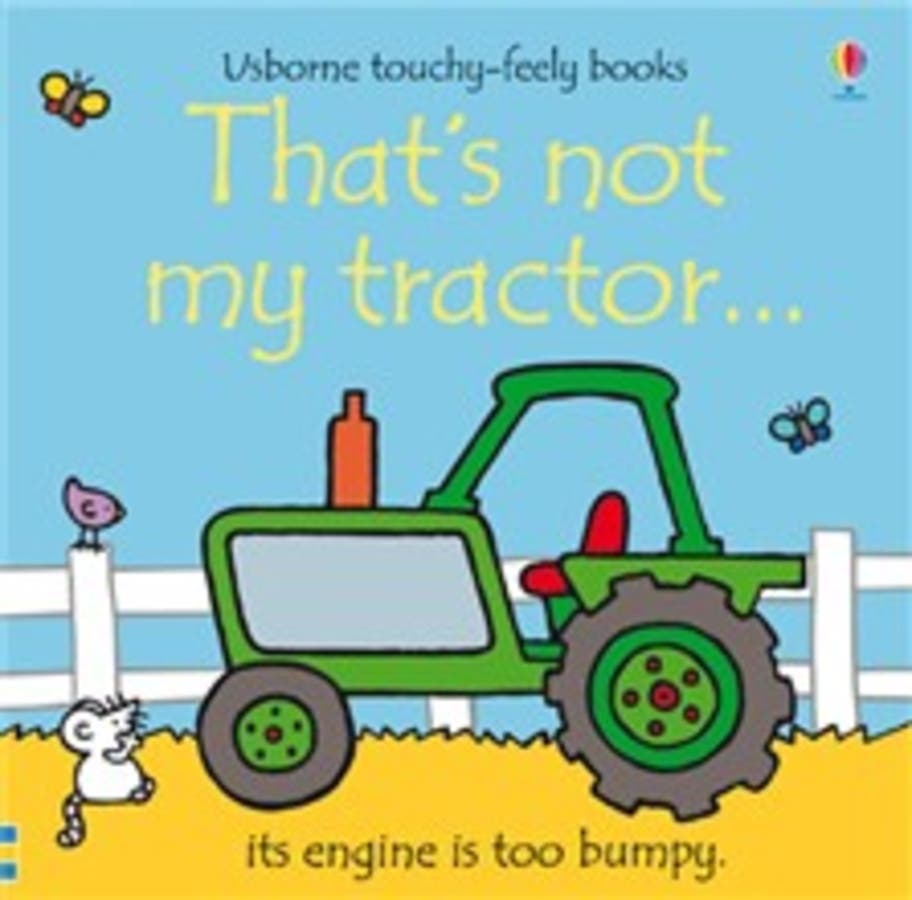
Since the magic of books comes in many sizes and varieties, parents play a big role in introducing children to the full realm of book magic. In addition to frequently visiting the library, parents are encouraged to engage their children in book culture by introducing them to: board books, movable books, pop-up books, sensory books, and books that utilize different weights and sizes of paper. Paper, the actual stuff of which books are made up, can be fun, glamorous, beautiful, tough, comforting and forgiving. Alas, one need only compare the potential tension over a broken book versus a broken i-phone.
Further, the manual act of picking up, holding, positioning, pointing at, connecting images and pictures to the words on the page, becoming visually engaged in the author's word-play, choice of layout, is part and parcel of the "book experience."
Books teach hand eye coordination, facial engagement, one pointed attention, concentration, the humanities, artistry, contextual and abstract thinking, and imagination.
All of this is to be found in a book? Yes.
Finally, children sense authorship when they read a physical book. There is a human that cares about telling me a story, who wrote this masterpiece now in my hands!
This, in turn, stirs a longing in the child's autonomous self, "I am equally capable of creativity, of writing my story."
Recently, Dr. Ian Smith, a native of Danbury and prolific author, regaled a crowd of book-lovers at The Danbury Public Library, reflecting on his memory of reading as an adolescent. It was John Grisham's, The Firm that fired-him up. Not being able to put-the-book-down, even while "teen driving" around Mill Plain Road, his vivid recollection is of his teenage self, looking up from the page, talk about distracted driving, and thinking: "I want to be able to write like this." His high school English teacher at Immaculate High School was the genius who handed him this book.
Books, unlike hand-held devices, cause children to move past engagement into creation. Devices exist to deliver entertainment content, to increase consumption. As a librarian, I have never had a child come up to me and ask for game coder's address so they can write a letter to the author him/herself.
The relational dimension of books is in the page--literally--and in our willingness to outstretch our hands and give a child a book.
Our hands, giving a child a book, is the best kind of hand-held device conceivable.
***
Jodi L. Weisz, MLIS is a professional librarian who believes in giving children books, by hand, whenever she can.