Schools
WCSU Expands Study of Candlewood Lake Blue-Green Algae Blooms
Public asked to report bloom events to Western CT State University


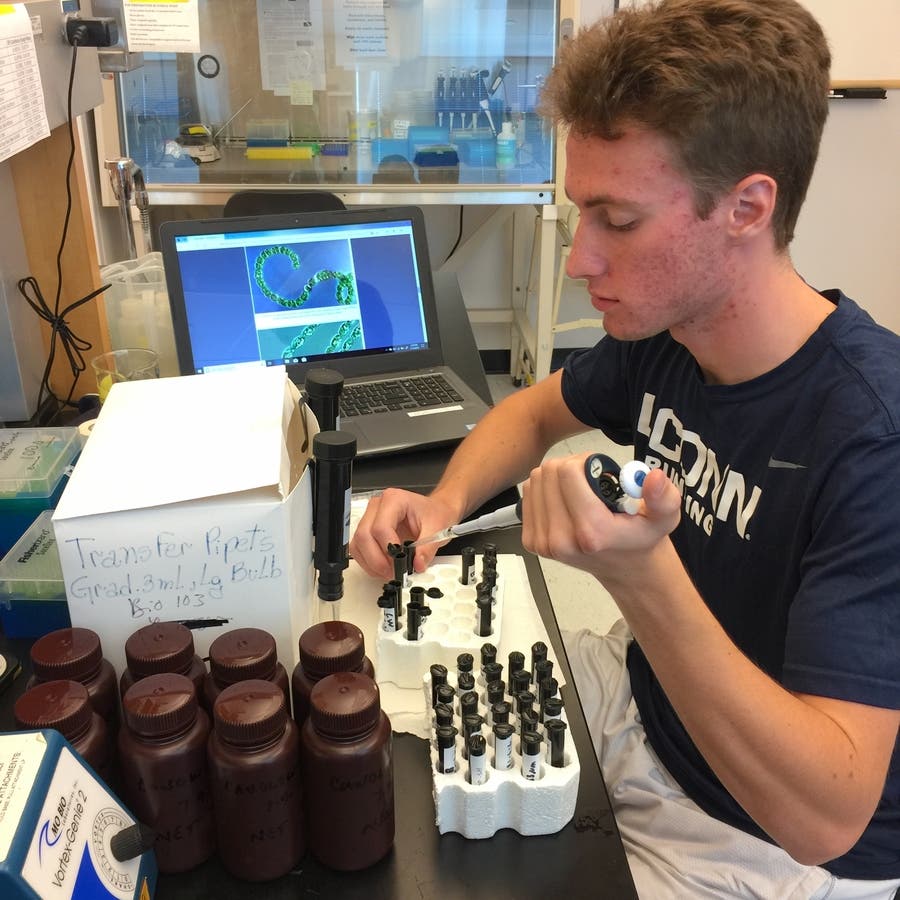
Pictured above: Research assistant Josh Sproule, of New Fairfield, examines samples in the WCSU Biology laboratory of Dr. Edwin Wong. (photo credit: Edwin Wong)
DANBURY, Conn. — For several years, Drs. Edwin Wong and Ghada Salah Hafez and their students in the Department of Biological and Environmental Sciences at Western Connecticut State University have studied microscopic cyanobacteria (formerly known as “blue-green algae”) that have caused recent nationwide health concerns. Part of that research entailed weekly sampling and reporting to local health directors on conditions at public beaches.
This year, there are plans to expand the study by sampling and examining conditions at additional sites — but the public’s help is needed.
Find out what's happening in Danburyfor free with the latest updates from Patch.
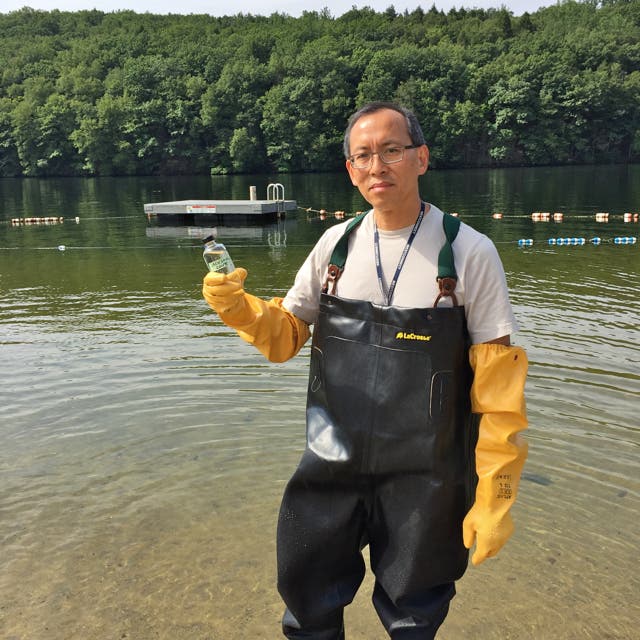
While the density of cyanobacteria can get high during the summer, very rarely have levels of the cyanotoxins — which some species can produce — exceeded thresholds that warrant beach closure. On Candlewood Lake, the town beaches represent only a tiny fraction of the 65 miles of shoreline where swimmers might enjoy the water on a hot day.
The goal of this additional research is to see whether other areas along the shoreline exhibit similar conditions as the town beaches or, conversely, conditions that might keep swimmers out of the water in a particular area.
Working with Wong this summer is Josh Sproule, a graduate of New Fairfield High School and currently a student at the University of Connecticut. Funded by a grant from a local family foundation, Sproule will collect water samples at additional sites around Candlewood and other nearby lakes, based on reports of blue-green algae “blooms” to local health departments, the Candlewood Lake Authority or directly to him. Once he is notified about a bloom, Sproule will collect a sample and test it for levels of cyanotoxins, as well as measure other diagnostic characteristics of the bloom.
Wong will look at the genetic makeup of the cyanobacteria collected to see if certain populations have the ability to synthesize toxins. Research to-date shows that some populations have the necessary genes and some don’t.
The public can help by reporting algae blooms for collection and analysis.
Find out what's happening in Danburyfor free with the latest updates from Patch.
To report a bloom, send an email to Sproule at sproule003@connect.wcsu.edu. Information in the email should include the name and phone number of the person reporting the bloom, an address, location along the shoreline or GPS coordinates where the bloom can be found, and permission to access private property to sample, should it be required. If a picture of the bloom is available, that should be attached to the email, as well.
The project is a collaboration between WCSU, Aquatic Ecosystem Research and the Candlewood Lake Authority.