Community Corner
Petting a Chinchilla Is Like Petting Air
Chili, one of the Darien Nature Center's chinchillas, comes from a species native to the highest Andes Mountains. It would be hard to imagine anything softer than a chinchilla's fur.


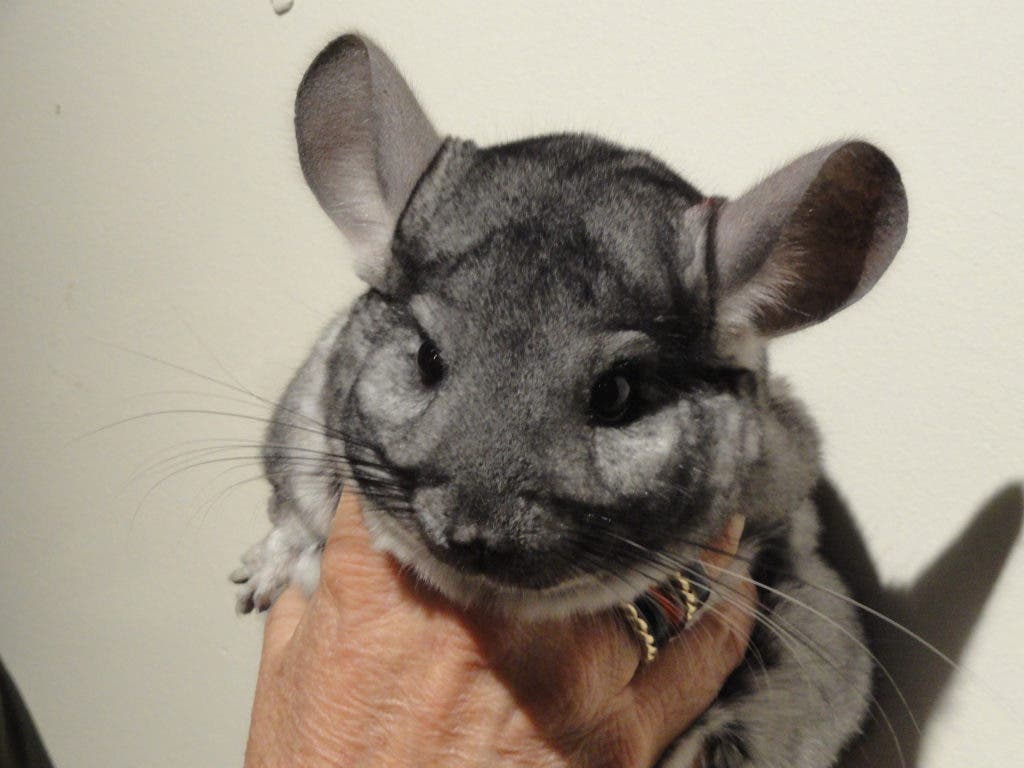


When Lynn Hamlen goes downstairs at the Darien Nature Center and takes out Chili, a chinchilla, from his cage, she has to hold him tight.
Chinchillas are a very active species, and if one gets loose, the staff at the nature center will have a hard time catching them (and get a lot of exercise in the process).
As Chili's pictures show, he's a deep-black animal (although chinchillas in the wild are said to be uniformly gray, when they're bred they can be born in different colors).
Find out what's happening in Darienfor free with the latest updates from Patch.
Chinchillas come from the southern Andes in Peru, Bolivia, Chile and Argentina. In the wild, they live at altitudes of 15,000 to 20,000 feet, in rocky areas as dry as deserts and quite cold. A kind of largish rodent, they live in holes and crevices of rocks.
In the wild, a chinchilla probably lives to be 10 years old, but in captivity, where it's safer, they can be up to about 20 years old.
Find out what's happening in Darienfor free with the latest updates from Patch.
Chinchillas are often active at night and around dawn and dusk, but they can still be seen on sunny days. To conserve heat, they have very small feet and ears and long, thick fur.
They have whiskers to help them get around in the dark.
The Darien Nature Center reopens on Tuesday, Jan. 3. The nature center is normally open from 9 a.m. to 4 p.m., weekdays, and 9 a.m. to 1 p.m. on Saturdays.
Get more local news delivered straight to your inbox. Sign up for free Patch newsletters and alerts.